Resident Evil (2022) : This Remake Did What The Original Couldn't

Table of Contents
Overview
Have you ever heard of the genre-defining game? The one who put the genre on the map exemplified the characteristics and qualities that would serve as the blueprint for what was to come. Games like Doom, which set the modern template for FPSs; Final Fantasy and the continuous evolution it brought to JRPGs; and, more recently, the Souls-Like genre and the blueprint it has carved for modern action-RPGs. You get the picture, and you’ll get where I am going with this. Still, Resident Evil would be the survival horror game that, whilst not the first, would go on to heavily influence the genre and define many of the hallmarks that define what Survival-Horror is. But Resident Evil’s Remake isn’t just genre-defining; it is a gold standard for what a remake could and should be. It was the blueprint that outlined and defined the gold rush we’re living through today, and it did so 20 years ago. There is something timeless and genius about Resident Evil 1’s remake, and today I want to deconstruct what makes this game tick and why it is still such a worthwhile and incredible video game 20+ years later. Let’s get into my thoughts on Resident Evil Remake.
Development
The best place to kick off this video is with the development of Resident Evil Remake, the reasons for its creation, and what success it would go on to inspire. I want to kick this video off by talking about the 1996 version of Resident Evil, which originally experimented with first-person camera perspectives before Alone in the Dark influenced Shinji Mikami, prompting Resident Evil to switch to a fixed-camera perspective. As we all know, Resident Evil 1 would go on to popularise this concept, and two sequels would be released, both defining and pushing the genre further. Following the release of Resident Evil 3, the decision was made to develop what was then called Resident Evil 4, which would later become Devil May Cry. These new projects, all in incubation, left Production Studio 4 temporarily without any Resident Evil games in development. Meanwhile, studios largely unfamiliar with the franchise were working on games such as Resident Evil 0 and Resident Evil: Code Veronica for the Dreamcast. As an effort to fill this void, Executive Producer Shinji Mikami ordered the creation of two new Resident Evil games. One was the critically acclaimed Resident Evil 4, and the other was a remake of the original 1996 classic, which Mikami would oversee as its Producer. When development began for the game in late 2000, they were concerned with how to develop a game for Nintendo’s compact purple box, the GameCube. By early 2001, 4 developers were learning both GameCube programming and computer graphics animation. The team size would fluctuate and eventually expand. In the months that followed, Hideaki Motozuka focused on blood-squirting effects, and Shinji Mikami participated in motion-capture sessions for zombies.
There were disagreements between Motozuka and Mikami over the excessive use of blood. It was late in 2001, and at this point, the original was a one-to-one direct remake of the 1996 original. Mikami grew concerned that the game would be nothing more than a repackaged version of the same experience, with visuals being the only upgrade. Mikami insisted that changes be made to make the game feel new, adding new enemy designs and areas. He wanted the game to feel like a new experience for those who had played the 1996 classic, but to me, it feels like that and a fully realised version of the vision they had for Resident Evil 1.Nooki Katakai led pre-rendered backgrounds for the game. However, Katakai complied with Mikami’s rule to focus on invoking fear rather than beauty in the landscapes and backgrounds. Katakai was accused of being too slow to realise the intent of Mikami’s vision. The approach to Resident Evil’s Art Direction under Katakai aimed to be as realistic as possible, with the option to employ absurd designs if realism became boring. To achieve realism, Katakai would ensure developers incorporated particle effects to simulate dust in the air and to distinguish the lighting quality in different rooms.
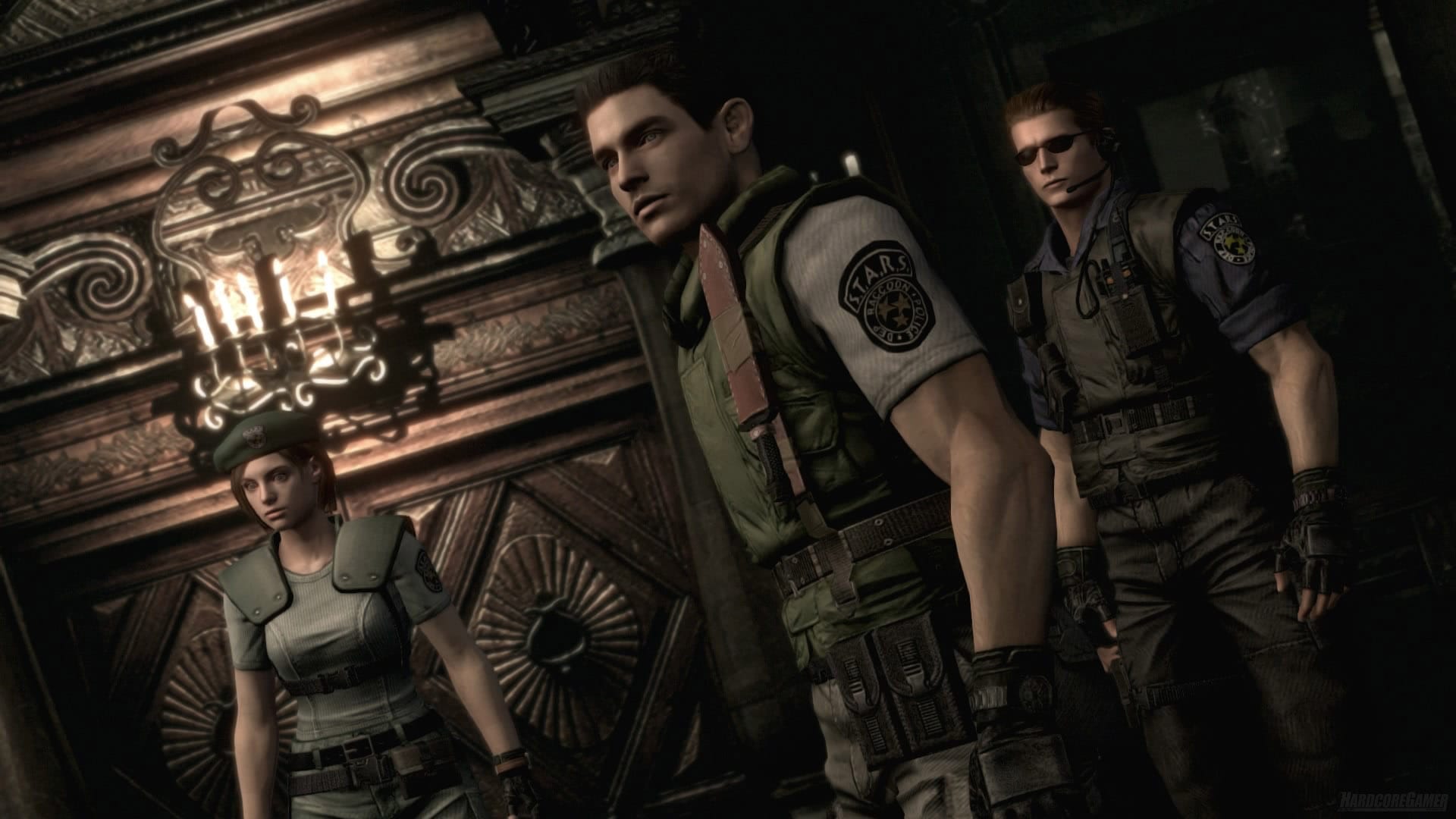
These stylistic differences were another cause for debate between Katakai and Mikami. This caused other members of the design team to wonder if the development of this remake would even pass its deadlines. These clashes wouldn’t be for nothing, as Resident Evil would ultimately have a distinct atmosphere largely attributed to the vision of both Katakai and Mikami. There would be a wealth of new inclusions to the game, like characters, locations, and overall lore that would expand upon the world of Resident Evil and tie into future releases referencing William Berkin from Resident Evil 2, as well as Ada.Mikami tasked Masaki Yamanaka to find another enemy type to incorporate in the game, to which Yamanaka explored George Trevor, the architect of The Spencer Mansion, but rather than the enemy being George himself, it revolves around a mother who wears human faces, which then would ultimately wind up being his daughter, thus creating the Lisa Trevor character.
Aside from Lisa Trevor, the Resident Evil HD cast consisted of established characters, so the design phase focused on enhancing their realism without losing what makes them recognisable. Instead of copying the likeness of famous people without their consent, a practice that could lead to many lawsuits, the team instead held auditions for body models. In the remake, the Neptune creature was largely expanded and refined, and the Aqua Ring was introduced, making this section of the game more accessible to new fans.The Resident Evil remake would launch to critical acclaim, with many critics and fans considering it the gold standard, the benchmark for what a remake could be. It would kick off the initiative to remake the Resident Evil games from the PS1 era and modernise them. Many critics appreciated the gameplay enhancements, and the added surprise for veterans and the new changes kept veterans on guard when playing, something that at the time wasn’t expected and wow’d many who thought they’d be in for an easy ride. Needless to say, even to this day, Resident Evil Remake is one of the defining games not only in the series and the genre, but also in gaming as a whole, and it has easily stood the test of time. With the HD remaster for modern consoles, it is accessible and readily playable.
Story
This is where it all began, the STARS team’s journey into The Spencer Mansion, putting you, the player, in the shoes of both Chris Redfield and Jill Valentine. This revised version of Resident Evil’s original story is mostly faithful to the story that unfolded in the original. They’re sent to explore the expansive maze that is the Spencer Mansion, and what they uncover is a ploy for a bio-weapon and experiment conducted by the pharma organisation known as Umbrella. What unfolds is an outbreak and zombies haunting the halls, stalking Chris and Jill as they try to escape the mansion and uncover Umbrella’s motives. Unlike later entries in the series, both playthroughs play out mostly the same for both Chris and Jill, but introduce a new side character who will assist you through your journey in the mansion. The changes in the narrative itself are minor, aside from some different dialogue, but each playthrough still feels satisfying, thanks to the characters and the scenarios that unfold. It is worthwhile seeing the interactions Jill has with Barry and Chris with Rebecca, even if, in many ways, these are just added flavour to a static conclusion.
But it does show a window into the type of scenario and design work Capcom would later put into its future entries, and here in the remake, they have tried to add more individual moments for each character, whilst keeping the story true and faithful to the original. One big element that sets Resident Evil 96 apart from the Remake is the team’s commitment to realism, evident from the get-go in the bleak opening cutscene, which sets the tone for the hopeless situation the STARS members find themselves in. On top of that, there is a change to the vocal performances that makes many of the scenes and the remake’s delivery feel more serious, rather than the goofiness the original is known for. What I think made me fall in love with Resident Evil Remake’s storytelling is the way in which it is delivered. This isn’t just through the use of cutscenes, but the documents and notes that you find. These little tidbits of information all accumulate to provide a vivid, clear picture that strings and threads all the events that have transpired in this mansion throughout the years, and slowly unfold the bigger reveals of this plot. That being said, there are different endings that you can unlock in the game based on who you save in pivotal moments of the game, and they provide different what-if conclusions based on what you did or didn’t do.
Gameplay
Combat
The combat in Resident Evil has seen refinements that retain the original’s tank controls, still available in this experience, while also offering more modern, dynamic controls that allow 360-degree movement. On top of this, the original’s fixed camera angles remain the same, preserving both the tension and atmosphere. There is also an auto-aim function for shooting enemies, something that was only present in the Japanese version of the original. In the remake, there is a new inclusion called defensive weapons: daggers, grenades, and tasers scattered across the map. These provide a last-ditch effort to players who get them out of a bind; they’re there for extra help, but they’re also finite. The last new addition is a quick-turn that allows you to 180-turn.
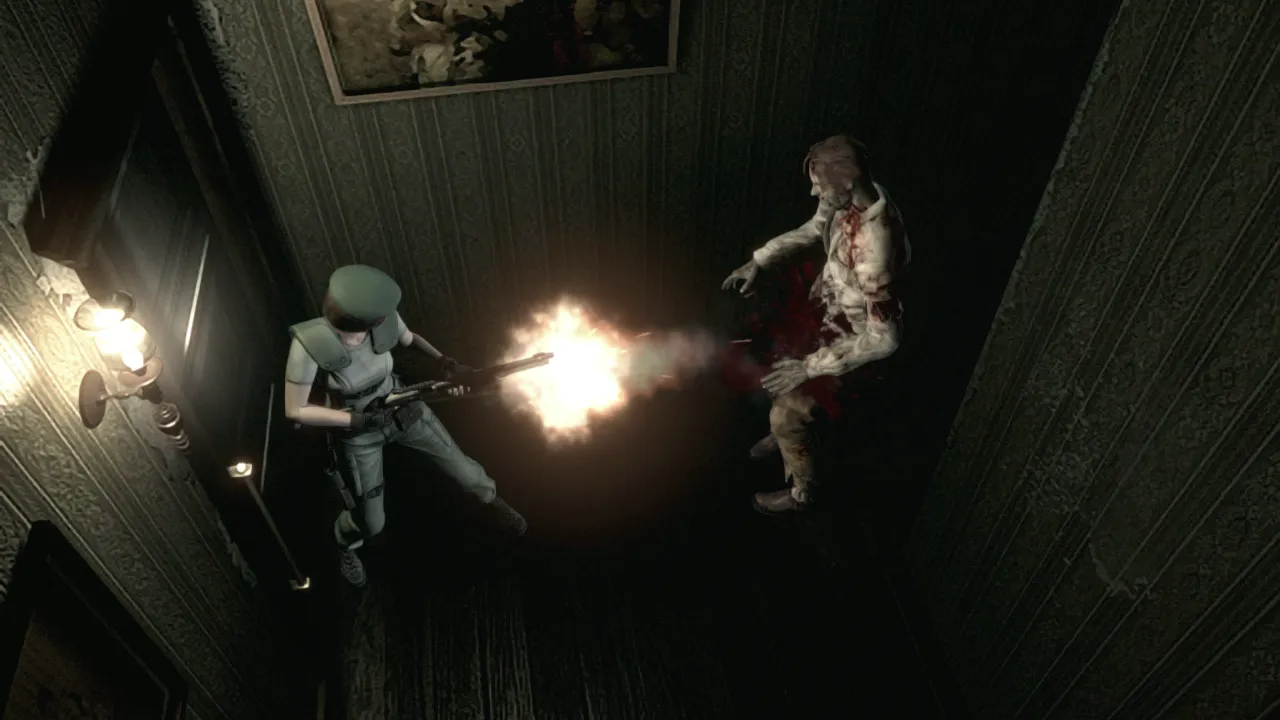
There are so many unique and unspoken little factors that play into Resident Evil’s combat and traversal. Take, for example, when running as Chris or Jill: if you’re carrying a knife or no weapon, you’ll run faster, making it easier to get around enemies much more quickly. There is a wealth of these little details that make the experience distinct, as both Chris and Jill feel. There are minor details, like the walk cycles, for these characters. There are changes from the original intended to create differences in difficulty. This is because Jill gets 8 inventory slots, whereas Chris gets 6. But Jill takes more damage more quickly than Chris, as a trade-off. Now that we’ve discussed what is new to the combat experience, let’s talk about how it holds up. So Resident Evil 1 Remake’s combat feels like a great blend between old and new. It has features that, to this day, still feel modern and adaptable for most players. But most of all, the combat of Resident Evil 1 feels tense, and the scarcity of ammo makes each shot you take truly feel tense, and close quarters combat feels unreliable, especially for a first timer who sucks, my case in point. But Resident Evil’s combat feels like a mix of both knowing when not to engage, as well as when to engage. There are many other factors, such as resource management and problem-solving, that factor into combat, making it a game of efficiency in how you battle, flee, and progress. This ducking and weaving of enemies is as satisfying and important a puzzle piece as the puzzles you solve in the game.
Puzzle Design
Resident Evil is designed like a moving puzzle piece, where in the beginning, you’re lost with no information, blueprint or sense of direction as to where to go. You’ll pick up items in one room that won’t show their purpose until much later in the game. There is a peculiar tick and click to the way Resident Evil throws you into its environment; it is as if a mental note is made for each item acquired, and this, in turn, makes interacting with the environment and inspecting every object feel less like a chore and more like a sense of intrigue. It’s the underlying beating heart of Resident Evil 1 and is what makes this experience so satisfying. It’s wild because one of the things I’ve always praised the original Dark Souls for is the interconnectivity of its world. How many of the places you explore all intersect, interconnect, and provide shortcuts, hidden routes and interlock with one another? Resident Evil is the precursor to this design philosophy; the Spencer Mansion is designed in such a meticulous manner that each item you pick up, be it ammo, health, or an item critical to solving a puzzle, is placed around each room with intent. On my first playthrough, exploring the mansion felt like navigating a labyrinth, one packed full of secrets, traps, and lore that only further etched room layouts, enemy placements, and objects of interest into your memory.
There were more than one time when I had that eureka moment inspecting an item from the item box, wanting to investigate whether it would click into place with some device I’d found in a newly discovered area. Some documents provide insight into how to solve many of the puzzles. Still, they also cleverly build on the story, generally peeling back the onion of what happened at the mansion and its long history. On top of all of this, Resident Evil Remake feels like a completely new experience for veteran players, one that’s fully committed to the original vision Mikami and co had in 1996. Still, they couldn’t fully realise due to limitations. It is wild to consider how quickly one cutting-edge game can feel dated. This remake would introduce new areas, such as the graveyard outside, the residence's courtyard, and a wealth of new puzzles to accommodate them. The four masks for the first mansion section were a completely new addition, along with new puzzles for those who acquire the keys to unlock the mansion. There really isn’t any other Resident Evil that has quite hit me in the way Resident Evil 1 did, granted, I do still need to tick the original RE2 off my list. But compared to its remake counterpart and even more modern games like RE 7, which is a fantastic game, there is something unique about Resident Evil 1’s puzzle design: how effortlessly it blends into its worldbuilding and how it further draws you in. One thing I will say about Resident Evil 1’s puzzles is that, whilst many do have the writing on the wall in terms of the solution to solving them, there are one or two towards the latter half of the game that do feel rather opaque in terms of what they’re asking the player to accomplish.
Enemy Variety
The remake of Resident Evil sees the return of the iconic zombies that occupied the mansion, along with the hunters. But the inclusion of the Crimson Heads was a new addition in the remake, adding an extra level of suspense to the overall experience of navigating the mansion. On top of that, it makes the tension of re-exploring rooms where you’ve left a corpse in for a period of time an unwelcome surprise. It also makes encounters and your gas usage feel more strategic. The hunters, compared to their 96 counterparts, are much more aggressive, able to jump around with moves that can kill you almost instantly. It makes navigating the mansion feel a lot more threatening and makes you have to opt for longer routes to avoid encountering hunters that lurk in the halls. There is even the possibility for different enemies to knock down doors, eliminating the safety of a door that can seal away the enemies roaming the halls of one room, and now have free rein to stalk two. The variety of enemies is another element that elevates an already great game to something exceptional.
Game Systems
Inventory Management
The inventory management here in Resident Evil 1 is where this system began, something that is now so synonymous with the genre. The remake has remained faithful to the vision of resource management, and it is the most direct and barebones version of this system, and I love this game for it. Everything you pick up will hold a slot in your inventory, and unlike later entries, the amount of inventory space that you have is finite. Another interesting component of Resident Evil 1 is the amount of inventory space given to each character, with Jill being given eight inventory slots and Chris being given six. This was supposed to be a design choice in the original game to reflect a level of difficulty between the two characters, and has been carried over to the remake. Still, it isn’t the sole determinant of difficulty for the given character that you choose to play as. There are subtle changes, such as Chris being more resilient to damage than Jill. Still, Jill has more inventory slots and can include defensive weapons, which are a last-ditch effort to prevent damage and don’t take up inventory space.
But the overall bare-bones nature of Resident Evil’s inventory management works so well because it is interwoven with the terror and sense of survival that come from exploring the mansion. It requires the player to have foresight, preparing items in advance for each venture out of a safe room, and to intentionally choose which major objective to focus on next, without being able to hoard every key item they find. The inclusion of the item box makes the save rooms feel like a haven from terror and a drop-off point for items of interest that you find, but currently don’t have a use for. It plays into the labyrinthine exploration, the backtracking, and route scouting methods I discussed earlier when talking about the overall atmosphere and gameplay loop of Resident Evil. There are many things that, on initial inspection, seem to serve no purpose or minimal function, which won’t become apparent till much later into your experience, and resources are sparse and littered in a way to be acquired and used at a particular time. The word survival in the survival horror genre feels at its most literal in Resident Evil 1, and the game’s exploration, problem-solving and overall usage of resources all intertwine into a game of knowledge that you slowly unravel as you play.
Survival Elements
One thing, as someone who has mostly experienced Resident Evil through a more modern lens, that I really appreciated about this original experience is how the survival elements are integrated into the game, making every decision feel like a choice and a puzzle piece. We have touched on resource management, but it becomes doubly apparent when you have resources like fuel, which allows you to burn corpses and prevent dead zombies from evolving into crimson heads. Evolved versions of the walking zombies that chase you and deal more damage. This addition is genius, as it makes a room once considered safe feel unpredictable. It makes you question how often you will need that room, and whether burning the corpses in there is a worthwhile investment to provide safety when you will need it later on. It’s these kinds of decisions and choices that make every facet of the Resident Evil remake feel threatening and keep you on your toes throughout.
The Mood and Atmosphere
I think it can’t be stated enough how much the mood and atmosphere of a video game really drive an experience from good to masterful, and I feel like this sentiment is doubly true for the horror genre. There is something so brilliant and masterful in the way Resident Evil sets its moody tone and terrifying atmosphere. It is simple yet effective techniques like flickering lightning, the groans of a zombie down the hall. But also the way it beautifully shifts these moments of horror into moments of peace. The save room is notoriously known for its calming music, bright lighting, and the almost cozy feeling it invokes. It feels weird to call a room in a horror game cozy, but it really is. It feels like a haven for the player, and I think that this handshake between fear and comfort is what ultimately makes Resident Evil 1’s atmosphere and mood a work of genius.
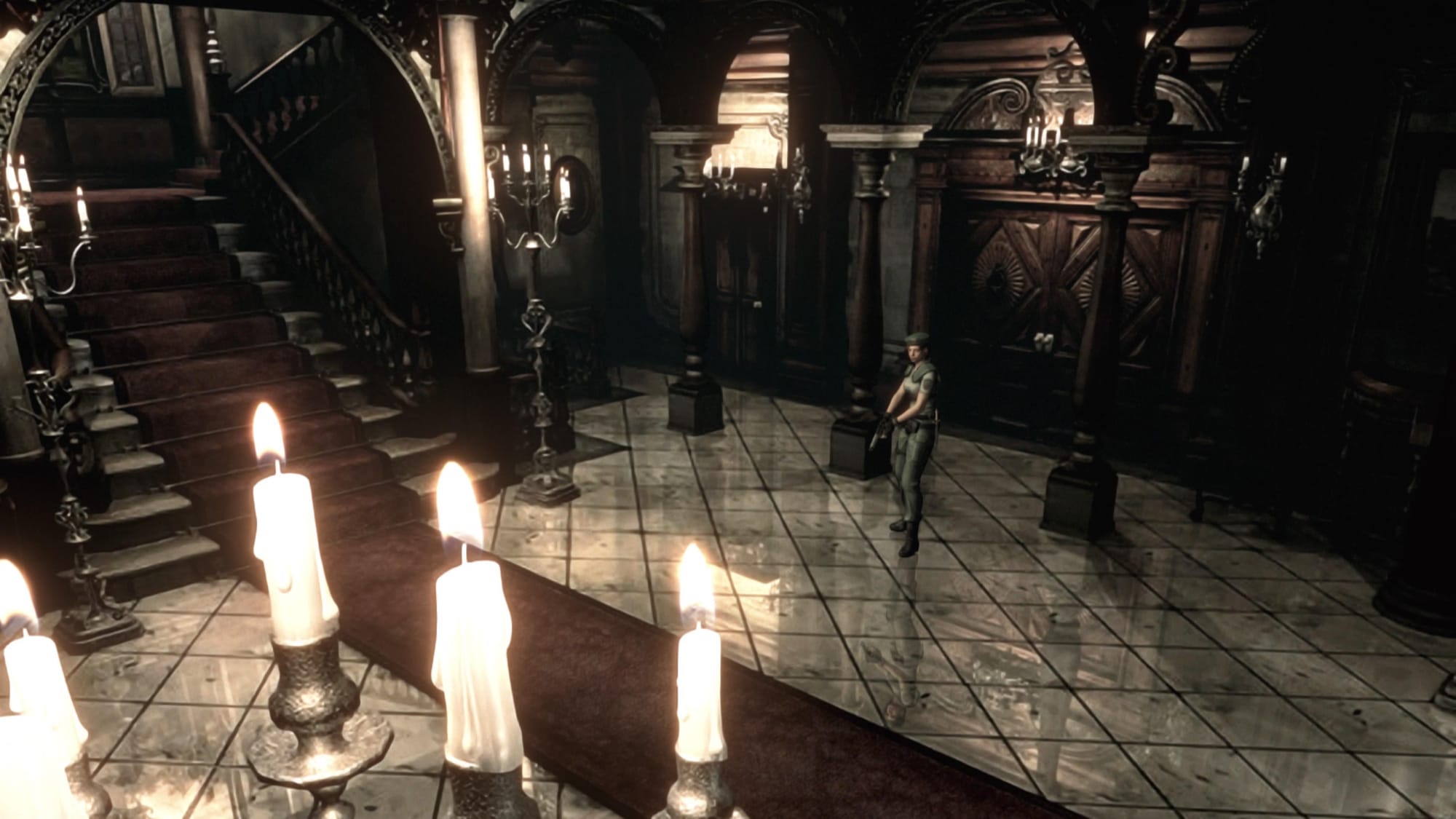
To this day, the Resident Evil remake has nailed the overall atmosphere of the Spencer Mansion. Whether it is the abandoned decedent halls of The Spencer Mansion proper, the abandoned, decrepit residence, or the dingy biolab buried under the mansion. There is something that feels so haunting but oddly familiar and comforting on sequential playthroughs. The save rooms feel dingy and rundown, but comforting and peaceful, not just because of the peace they provide, but the sense of lighting and comfort from the soundtrack backing it. The overall models and redesigns of the zombies are more detailed than their original counterparts, and new enemies feature interesting designs and variations. But the thing I think about Resident Evil 1’s remake overall is its most impressive feat: how well it has held up. I chalk that down to how nicely its backgrounds look and how well the models inhabiting them complement the world. This game has received an HD remaster for modern consoles to polish it further, but its style and look, to me, are timeless. Resident Evil 1 Remake is still an incredible-looking game to this day. It is unbelievable how much detail and atmosphere ooze from every room you explore. Each facet of the mansion has a particular mood it wants to invoke.
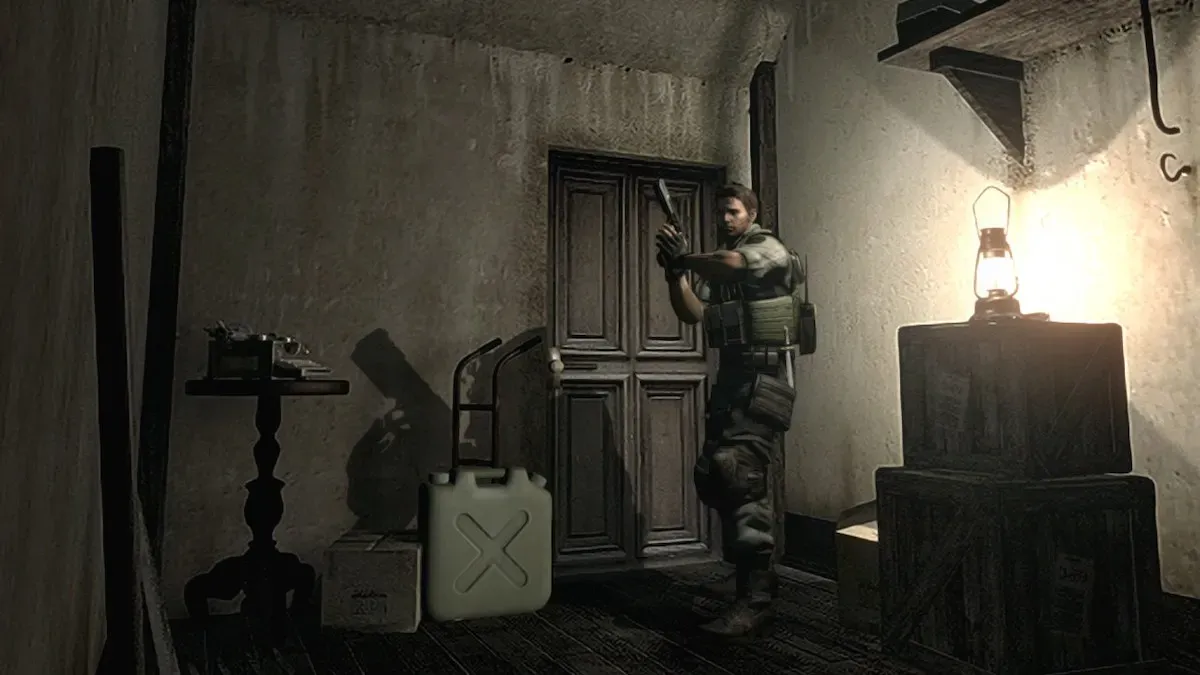
Whether it is scratch marks on the walls and rundown floorboards, or the elegant tiled floors with colourful geometric designs on the walls that showcase the elegance of The Spencer Mansion, each key area feels uniquely distinct, and I think one major component that sells the overall mood and atmosphere. One major component I discussed in the development section of the video is the team's approach to lighting in the remake. If you look around at many of the different rooms, you’ll notice how diverse the usage of lighting is in the various spaces you visit in the game. Compared to its 1996 original, the lighting here in the remake feels much dimmer, sparingly used, and the light sources themselves are deliberate, making the decor and mood of the room feel more believable.The use of pre-rendered backgrounds is a factor that I believe truly enshrines Resident Evil 1’s atmosphere and overall design as timeless.
The use of pre-rendered backgrounds allowed for so much detail to be added to each room of the mansion, in particular. This decision came from the fact that Resident Evil 1’s remake was going to have 3D backgrounds like Code Veronica and Dino Crisis; the technology and 3D assets the team were making at the time were so ahead of their time and technology that the team decided to change to utilising pre-rendered backgrounds to retain the high-quality assets that had been created. What it ultimately achieves is the preservation of the feeling of fixed camera angles, which distinguish and create mood and tension, along with a highly stylised, detailed environment that shifts perspective with each camera change. It is one of these games where I would sometimes sit there and take in the environment. I think, even to this day, Resident Evil 1 is living proof that stylistic design, a cohesive vision for the mood, feeling, and sense of atmosphere, always trumps higher fidelity.The sound design of Resident Evil 1’s remake is also another element that has aged quite well. The musical choices in Remake are fantastic, with some that immediately evoke particular rooms and activities. I immediately remember the theme that would play when entering a puzzle room, or the iconic save room music. I touched on this earlier in the story section, but the voice performances in the remake are absolutely great, and they still hold up to this day.
Conclusion
To bring this whole video together the original Resident Evil is an incredible video game, almost 30 years later, and the remake and the enhancements that it included not only reshaped the way we perceive the original Resident Evil, but are the gold standard that was defined for remakes going forward, and would be what set the remakes of the classic Resident Evil games into motion, even if it wouldn’t be till a decade later we’d see another such remake. Before playing Resident Evil 1’s remake, I thought, “Why don’t they do a modern remake as they did with Resident Evil 2?” Well, the answer is they did, and now, having finished this game multiple times, not only does this title in most respects hold up by modern standards, but I’d argue it is still one of the quintessential Survival Horror games you’d have to experience at least once if you love the genre. There is something about The Spencer Mansion that calls you to explore all its mysteries, and the synergy between environmental storytelling and how puzzles contextualize themselves with narrative information makes Resident Evil’s narrative and discoveries feel natural. The combat still has some intentional stiffness even with auto-lock enabled. It makes encounters feel tense. The fixed camera angles, the act of putting distance between you and the enemy, and the scarce resources make the experience feel like a strategic navigation of an intricate labyrinth, and it is in large part why I believe the game is so easy to return to. It’s a game that absolutely shocked and wowed me by delivering on the legacy it has held high for all these years. If you’re a fan of the genre and haven’t played it, you absolutely must play this.