God of War (2018) Retrospective
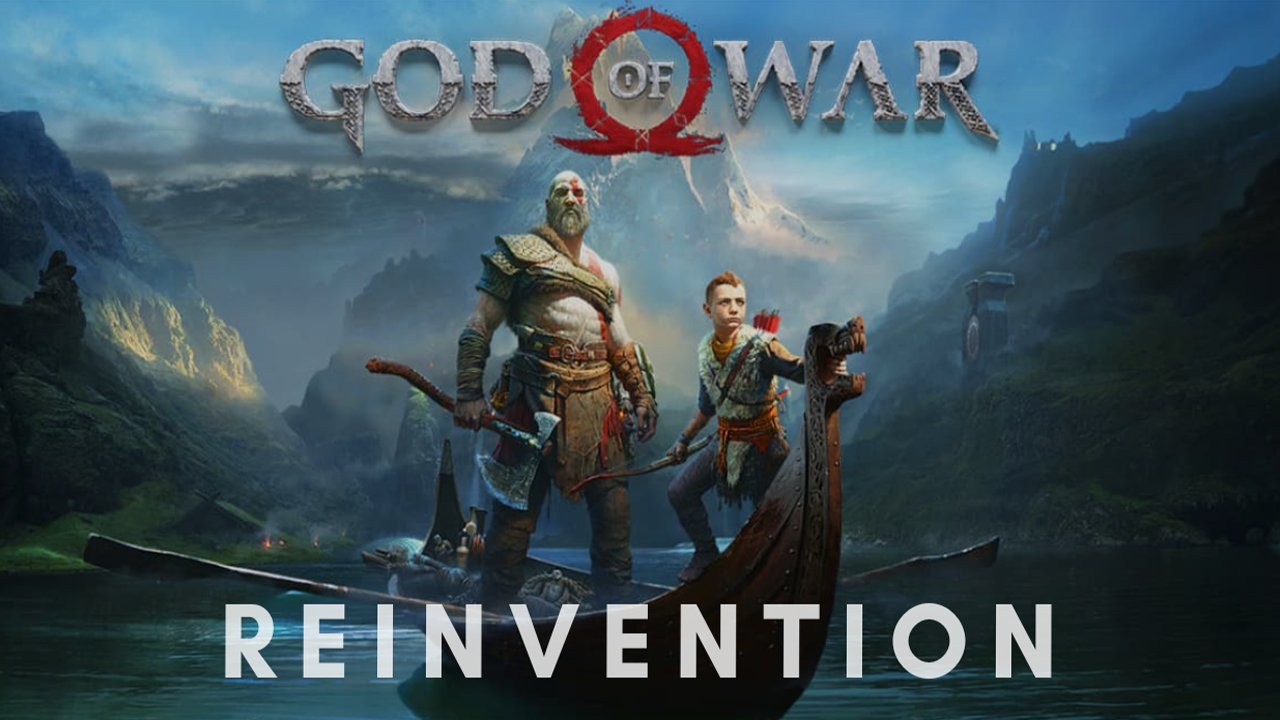
Table of Contents
Overview
God of War has always been an iconic franchise in the world of video games. The game has always been known for its adrenaline pumping combat, it's amazing reimagining of Greek mythology and our angry anti hero protagonist Kratos.
The original trilogy would introduce us to Kratos, a spartan who was betrayed by the God's and later becomes one seeking out vengeance amongst the various Greek Gods. This quest for vengeance would be a central theme to the original trilogy and and the perception of Kratos as a character.
That's why, when in 2016 fans of the series were presented with an older Kratos with a son they were excited, yet wondering how this monstrous God slaying machine could be a father and where new direction would take the series.
However, it is with great pleasure to say that God of War 2018 is beyond any shadow of a doubt one of the defining games of the PlayStation 4 generation. It reconstructed a franchise in a way, that has modernized and evolved the gameplay formula, whilst not abandoning the high octane action that made it so enthralling in the first place. The beautiful vistas of the Norse lands, the magnificence in writing and storytelling coupled with grand boss encounters has shown a new opportunity for both Santa Monica Studios and Kratos to change.
The Development
A brief history
Before discuss God of War 2018 I believe that it is important that we delve into a brief history of the series and the development behind this entry.
In 2005 Santa Monica Studio released their new IP, God of War, and gamers would finally get their chance to play as Kratos on his warpath for revenge. The combat loop for God of War was a hack-and-slash game with quick-time, button-mashy moments to finish off enemies. The game was praised for its rendition of Greek mythology, its engaging combat, weapon variety and overall brutal tone. The spectacle and action was a jaw dropping experience, providing player a rush and a sense of awe that would enshrine the God of War as a must have for any PlayStation owner.
I remember growing up and playing the original trilogy along with the psp game Chains of Olympus. The series was an incredible experience back in the day and still are a testament to the level of depth and quality that the series is known for.
The original God of War trilogy would build on its formula and grow in size, scale, and spectacle, with each title becoming grander than the last. In 2010 the God of War trilogy would conclude. The studio would go on to make a prequel to the main trilogy called God of War: Ascension, which was met with mediocre to mostly positive reviews, but the tides in the gaming landscape were changing, and this was the turning point for reflection for Santa Monica Studios.
The Reboot
The idea for a reboot stemmed from various factors, the first being the reviews of God of War Ascension. As many fans and critics suggested that the current formula for God of War was beginning to run dry, some fans and journalists stated that Kratos would need to be killed off or see a drastic change as some critics believed the character to be one dimensional and shallow. Whilst I disagree with these sentiments and still hold position that God of War has always had a compelling narrative. I can understand why Santa Monica took this feedback onboard.
The second factor was to do with Santa Monica Studios, who would go quiet for a few years after God of War Ascension, partly due to this feedback, but in large part due to layoffs that would hit the studio. The Studio was able to recoup from this setback and rebuild both its studio and the vision for the God of War franchise.
The team would see Cory Barlog, the creative director for God of War 2, return as the creative director for this new reboot project. Initially, the team had a few ideas, some that stuck around and some that would be subject to change. The concept for the father-son narrative came about early on but left some staff, particularly developers, with reservations about this change. These concerns came about primarily due to figuring out how to incorporate the character into the gameplay elements in a way that would feel natural.
There were many pitched ideas, one of these seeing Kratos travel to realm of Egyptian Mythology, however, the studio settled on basing the new God of War in the realm of Norse Mythology as this was seen to be the best fit for Kratos.
With the premise and the setting established, the development phase would kick off into full swing and casting for the roles would begin. The team began the hiring process for the roles of Kratos and Atreus and landed on Sunny Suljic early in development. The search for Kratos was a much more strenuous process, auditioning with various candidates, that is until Christopher Judge walked in and nailed the role as the old and wise Kratos we know today.
On the development side of things Barlog stated that "the team had dedicated enormous work to the Leviathan Axe, as Krato's new primary weapon. It seemed impossible for the team to incorporate the Blades of Chaos, as the team had spent the past four years working on the Leviathan Axe.
This new entry of God of War was a big departure from what the series was previously known for and the team, and Cory Barlog in particular, had doubts about how fans would respond to the changes. Yet the team would continue to press on with development and march towards their first big reveal at E3 2016.
Once the game was revealed at E3 in 2016 the reception to the God of War's reveal was astounding with fans gushing across the board in anticipation for the new direction and release.
The overwhelmingly positive reception would carry over to the the release of the game on April 20th 2018 when fans would finally be able to get there hands on the game. The game was met with critical acclaim and I can understand why, I'll let the feedback speak for itself.
(Play the feedback)
The Story
This new entry in the God of War series would see the return of our anger-fueled spartan Kratos, who has taken up a home and started a family in the Norse realms. However, there is a change in Kratos's demeanor, as he is trying to form a bond and connect with his son Atreus and find peace and move on from the man he once was. Whilst the previous entries are not necessary to enjoy this game, this evolution to Kratos's character is delivered so well, having known the Kratos from before. But with that being said the story starts off at a point that is still welcoming to newcomers of the series.
God of War 2018 is narratively a much more intimate and cinematic experience, focused around the relationship between Kratos and his son Atreus. God of War's narrative is brilliantly portrayed through a simplistic premise of a father-son journey where Kratos and Atreus set out to fulfill the dying request of Kratos's wife Faye. However, through simplicity, there lies a wealth of depth in the relationship between Kratos and Atreus and the broader journey and individual journey ahead that awaits them both.
This can be seen through Kratos's protective yet at times aggressive responses to Atreus as he is trying to prepare his son and protect Atreus from any dangers that may come. But at the same time Kratos struggles with the lingering past of the man he once was.
With these thoughts in mind Kratos decides to hide the true from Atreus of their true nature in hopes of sparing him a similar path and fate he has walked.
The flip side to this is Atreus, a young boy with a compassionate nature, trying to understand himself, his father, and his mother's intentions. Atreus is young and unsure of himself and who he is. This is expressed through his relationship with his father. As Kratos during Atreus's upbringing wasn't always around, leaving Atreus feeling somewhat disconnected from his father.
Both these characters gel so well together due to these differences in personalities the stoic demeanor of Kratos and Atreus's compassionate and emotional nature mesh so seamlessly, into what ultimately culminates in both characters teaching each other how to be better.
This is best described by Cory Barlog himself stating "That both characters through the journey are teaching each other a lesson. Kratos is teaching Atreus how to be a god, and Atreus is teaching Kratos how to be human".
A large portion of God of War's compelling storytelling comes from not only the writing, but delivery of these lines from both Kratos and Atreus. These moments of rest in between the gameplay that further connect us to the characters.
But these outstanding performances shine across the board and are the other essential piece to the storytelling of God of War, and that is the supporting characters. God of War 2018 tackles many themes. I see change or being better as a core them, but another core theme that runs throughout is disconnected relationships between family.
This theme of disconnected relationships is where God of War makes excellent use of supporting characters, that all play a role in the journey aiding Kratos and Atreus throughout there journey, but also provide reflection for development between Kratos and Atreus. The reason this works is that each supporting duo whether it is the Dwarven Brothers Brok and Sindri, or Baldur's troubling relationship with Freya. God of War is always foreshadowing and coupling concepts of Norse Mythology but also hammering home this theme of connection and mending of broken relationship, which comes around full circle playing into both narrative themes and the more intimate narrative of Kratos and his son.
The Gameplay
The gameplay in God of War 2018 is a huge departure from its hack-and-slash roots, providing a more cinematic over-the-shoulder experience, whilst still maintaining third-person aspect. However, the DNA of what made a God of War game still lived on, with moment-to-moment melee combat packed full of new combos and weapons for Kratos to take advantage of.
Combat
Leviathan Axe and Combat
The new addition to God of War was Kratos's new weapon, the Leviathan Axe. The beauty of the Leviathan Axe is that this weapon works both as a melee weapon and a projectile. But the real cherry on top that makes combat feel so immersive is how weighty and impactful each swing of Kratos's axe feels. The combat in God of War provides a much more in-depth variety of weapon abilities available to the player.
These abilities, in their most basic form, are a light attack and a heavy attack, and when holding down the respective button for these attacks can perform a charged attack. The Leviathan Axe is an incredible weapon in its feeling and usage. The satisfaction of throwing your axe at enemies and freezing them, chunky sounds of the axe spinning and knocking an enemy in the air. A competent level of expression is available for the player to approach these encounters. While this approach to combat isn't necessarily revolutionary, it manages to sustain interest and remain engaging throughout your playthrough of the game.
There's your weapon, the status effects, and abilities you can perform with your weapon and then there is your son Atreus using his bow at your command to take down enemies. The game still has remnants of a gameplay mechanic found in the original trilogy through its quick time events to finish off an enemy when they're low on health or pivotal boss encounter moments.
Enemy Variety
In retrospect, one aspect of the game that has seen a few cracks is the enemy variety available. God of War's combat truly shines and stands out during challenging encounters. These can be through boss encounters or the optional Valkyries. But outside of unique encounters, the need for more diversity in enemy types could really be felt at times. There are a variety of roughly six to seven enemy types, but throughout the main story, the Draugr and the Nightmares are the two enemies you'll consistently encounter. This can cause some to feel that the encounters become repetitive, where enemies don't feel they're evolving with the player and their skillset.
Blades of Chaos and Conclusion
Speaking of returning to the roots of the original trilogy, the return of the Blades of Chaos in God of War 2018 is an incredible story moment and a great mix-up and addition to the combat. The Blades of Chaos work as the fire to the Leviathan Axe's ice, both in a literal sense and in its use of combat approach. Where the Leviathan Axe is more forcible with its weighty blows, the blades of chaos are relentless impactful weapons staggering enemies blow after blow. As mentioned earlier, a lot of work went into creating the Leviathan Axe, which paid off as the Leviathan Axe has become an iconic weapon in video games.
Open-World
Another departure that God of War 2018 takes is a less linear structure to its level design. God of War 2018's level design sits in a sweet spot where it isn't an Open World game per se. But it is more a bunch of open zone-based areas for each of the explorable realms. These areas provide the player an open space to freely explore, littered with side quests, optional encounters, and side quests known as favors. These open spaces and their activities offer a sizeable amount of playtime to God of War and work hand-in-hand with the level systems of the game that we'll get into shortly.
But where these open-world elements shine is in allowing the player to re-explore places they previously ventured through in the story. But not only that, it provides a reason to re-return to these areas that fleshes out these environments. One of the more extensive exploration spaces that you will be able to explore in God of War 2018 is Midgard. You can sail off into various areas that will become linear and provide you with a sidequest, collectible or upgrade. The best way to summarize God of War's level design is as an open space with many interlocking linear paths to explore.
Another component of what makes this semi-open world so incredible to traverse is how beautiful the environments are. Each environment's intimate details and flourishes make each realm memorable and distinct. It has been four years since this God of War was released, and the graphical finesse and environmental design still live up to 2022 standards.
Gameplay Systems
One significant departure that God of War 2018 takes from its predecessors is using a gear system. These systems allow players to customize their weapons with two abilities called runic abilities. One of these abilities is a light attack, and the other is a heavy attack. These Runic abilities are cooldown based, and you can level up these Runics and acquire new Runics by exploring the world.
Some abilities are unlocked through skill trees for each weapon acquired. These skill trees usually provide a new combo or ability that enhances the player's gameplay experience. These runic abilities, coupled with the skill trees abilities, offer a continuous sense of growth and evolution to the player's combat experience and provide enough depth with the combat systems for the length of the gameplay.
Whilst God of War's combat and gameplay systems may not be revolutionary, they're competent and satisfying. They achieve the feeling that the team was going for with each particular weapons feel and the sense of progression made throughout.
Awards and Achievements
God of War 2018, upon release, would receive stunning reviews across the board and dozens of reviews that would give the game a perfect score. Both critics and fans fell in love with this father-son duo and their journey. The title would sell over 5 million in the game's first month since release. The game as it stands now has sold over 23 million copies, and with the release of Ragnarok and God of War 2018, I expect this figure to only grow with time.
In 2018 at The Game Awards, God of War would go on to see nominations for many awards such as best game direction, best action game and the monolith that is Game of the Year. It would go on to take home many awards that year including the Game of the Year award. Ultimately, Santa Monica Studio took a chance to reimagine one of gaming's most beloved series and created something special and saw the game release to immense success.
Conclusion
In closing, God of War is a game that encompasses change in all departments. It achieves this through its semi-open explorable world, a deeper combat system, and a compelling narrative. God of War is a game where characters try to fight who they are and the situations they face. It is a story focused on growth and change, not just for Kratos but even for Santa Monica taking the chance to make a change to their beloved IP. The results speak for themselves.
God of War is a game that is a reminder of the level of finesse and quality that can come from a triple-A studio when done right, whilst it may be rare, God of War shows that it isn't impossible. This father and son's journey will go down as a classic that will remembered by gamers for a long time to come. God of War's a story that change isn't easy, but it is never too late to start.
The continuation and part 2 to this story will be what I'll be looking into next and seeing how the highly anticipated sequel God of War: Ragnarok lives up to the high bar set by its predecessor, because simply put God of War is one of the PS4's masterpieces.
Notes and Resources
- https://www.youtube.com/watch?v=ra_R-K_IoUc
- https://www.youtube.com/watch?v=7AopY9UBNBQ
- https://www.youtube.com/watch?v=lreYsdHT54w
- Revealed in 2016