Seizing Your Destiny - Xenoblade Chronicles Retrospective
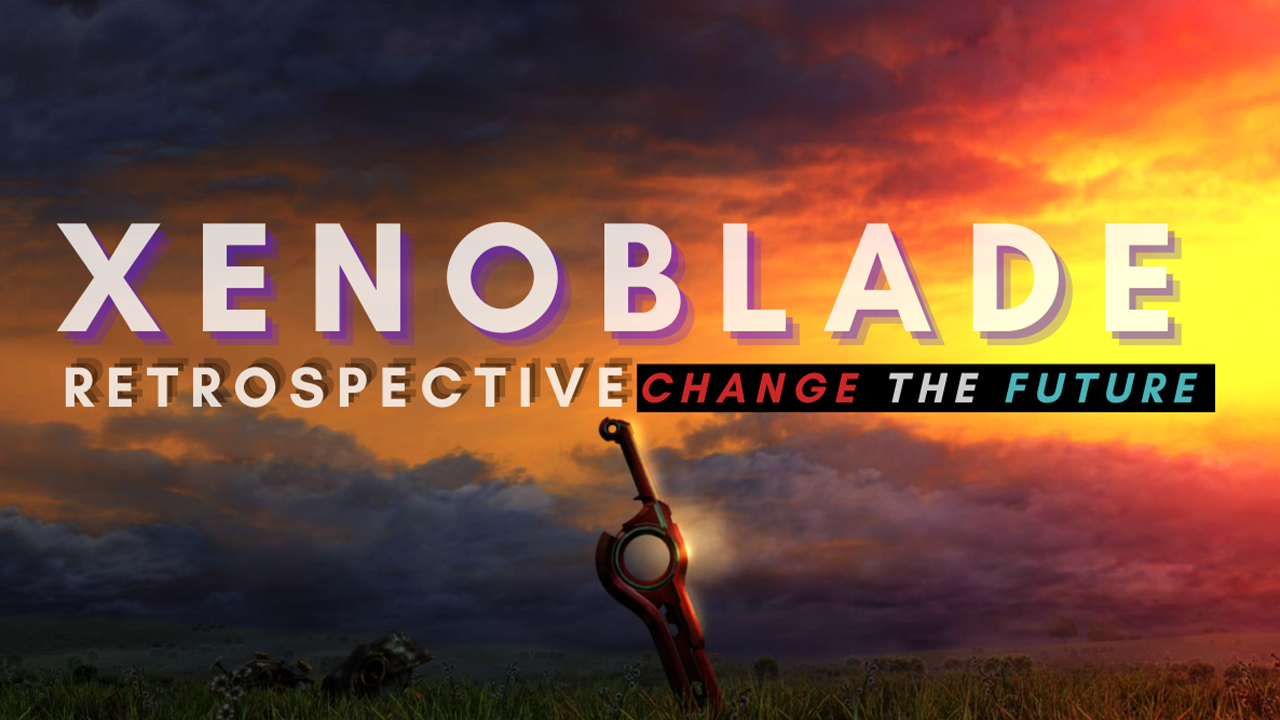
Table of Contents
Overview
In the world of video games, there is a wealth of adventures that can captivate us with their incredible stories, cast, or world. The world of JRPGs has always been heralded as a dense genre in crafting world-building, characters, and fantastical adventures. However, over the years, we have seen a change, a shift in terms of the approaches to storytelling. There has been a changing of the guard from what iconic flagships of the genre, such as Final Fantasy, Phantasy Star, and Suikoden, were to the presence they have today. We can see the evolution and shift with the genre having more games such as Persona 5 take the limelight and push this space forward, but the old whimsical expansive worlds seemingly feel like they were a thing of the past.
Xenoblade Chronicles is a series that tells a rich narrative reminiscent of the glory days of Squaresoft but manages to captivate and enthral you with its stunning size, scale, and depth that occupies its open world. Xenoblade Chronicles poses many questions and provides a profound and riveting narrative full of memorable characters and an incredible universe. Simply put, Xenoblade Chronicles is an outstanding game. This video will begin a multiple-part project delving into the beauty of this series and what makes it so incredible, from its clever gameplay systems to its rich stories. Xenoblade Chronicles is one of the best RPG experiences I've had over a few years and one that sticks with you once you get a feel for its gameplay and dive deep into its story. It's a game that wowed me, and having now played all three games, I'm here to tell you why this series is one that you should try and give a good chance.
The Development of Xenoblade Chronicles
Before we get into many of the different moving parts of Xenoblade Chronicles, I'd briefly like to discuss the development of Xenoblade, which would have a somewhat rocky development and release. The development of Xenoblade Chronicles began in 2006 and there is an important note to touch on here with Monolith Soft as a studio. Many people here at Monolith Soft are long-time veterans of the days at Square, having worked on many different titles, including Final Fantasy and the cult classic Xenogears, which, fun fact, was an original concept idea for Final Fantasy 7.
Monolith Soft was founded in 1999 to provide experiences they wanted to make, as Square's business approach to game development would change in the early 2000s with a focus on capitalising on existing universes and IP rather than creating new stories from the ground up. This business decision would lead Monolith Soft to form and see Namco publish the studio's future releases. This partnership would last throughout the early 2000s and see the Xenosaga trilogy and Baten Kaitos duology release. However, given the sales of Xenosaga's third entry and the recent merger between Bandi and Namco, the business shift within Monolith's most recent publisher would begin to reconsider funding many of Monolith Soft's original works.
These recent events would lead Monolith Soft to their current publisher, Nintendo. Nintendo would acquire over 90% of Monolith Softs shares and have Monolith begin working as a third-party studio supporting many first-party Nintendo games alongside their independent IPs. Monolith Soft, as a studio since its inception, has always held the principle of developing an experience they want to make and hiring new talent to take on these new ambitious titles.
Xenoblade was initially considered as a release for Gamecube. However, due to the recent release of the Wii, Xenoblade would find itself on Nintendo's new family console. The game would be developed by a team of around 70 people led by director Tetsuya Takahashi.
Takahashi said the game was designed as an open-world RPG that fully uses the Wii's capabilities and hardware. The game would see a different gameplay focus to many of its contemporaries at the time, with a strong focus on real-time combat, which would be a departure from what was conventionally a staple of many Japanese Role Playing Games.
The concept and shift in direction for Xenoblade Chronicles came from Tetsuya Takahashi, who one day, while waiting for a train, imagined this idea of two titans fighting and, with it, the starting blocks for Xenoblade 1. He wanted this open world to explore vast lands inhabited by giant creatures and epic battles. Takashi would use and look at anatomy when designing and conceiving the ideas for the Titans and try to consider the types of weather and biomes which would inhabit the different parts of the body hence why the Makana Forest is on the back and more shaded areas of the Bionis's locked position like the Valak Mountatin's being a snowy arctic plain to explore. Much thought and detail went into building the world of Xenoblade Chronicles. There were even areas that the team would work on, such as the Bionis's shoulder, which would not make it into the game's final release but would resurface in the 2020 Expansion Future Connected, which we will discuss later in this video.
Initially, this new game would be called Monado Beginning of the World but was changed to Xenoblade to honour Tetsuya Takahashi's previous works on the Xenogears and Xenosaga series.
The game would release in Japan in 2010, and the game would see a European release; however, it would remain unconfirmed whether or not there would be a release for North America, and at the time, it seemed Nintendo North America was eluding to the fact that Xenoblade may not see a release in the North America region. Nintendo's silence and fans' uncertainty kicked off a campaign called Operation Rainfall. The desired goal was to raise awareness for three potential Wii games that were not localised. They were The Last Story, Pandora's Tower and, of course, Xenoblade Chronicles. It would take some time, but on April 6th 2012, Xenoblade Chronicles would hit shelves in North America and see two releases throughout the decade to come with a 3DS port and a Definitive Edition for Switch, and become an iconic series for those who have a love for RPG's or Nintendo's games.
Story
Overview
The story of Xenoblade Chronicles establishes the ever-ongoing war between the two titans, the Bionis and the Mechonis. The narrative puts us in the shoes of Shulk, a curious character who enjoys building and tinkering with mechanical scrap. He is currently trying to unravel the mysteries behind the mysterious blade called the Monado while chilling with his childhood friends Ryen and Fiora in his downtime. The story for Xenoblade kicks off into full swing when the age-old enemy, the Mechon, attacks the group of friends' home, Colony 9. Tragedy will strike when a faced Mechon takes Fioras's life and thrusts Shulk and Reyn on a quest to stop and destroy the Mechon.
The crazy thing about Xenoblade's story is where you start vs where you end up is a drastic shift from what you could have considered the original idea of the game to be, and this story is delivered and mainly explained well. It subverts your expectations in many ways, where some of the reveals and predictions in one way can feel like you called it, but it isn't for the reasons you thought. The game takes many twists and turns and unveils the world slowly but takes the proper steps to lock all the components of its rich story together. These reveals never feel contrived or out of place but are more cleverly written as if they were hiding in plain sight for you to see. Despite the long runtimes JRPGs tend to gravitate towards, Xenoblade Chronicles feels like a game that replaying could provide a whole new perspective to the experience.
Xenoblade follows a strong cast of characters that are all tied to different communities found throughout your adventure and are explored on a personal level through many gameplay elements that play out through sequences called heart-to-hearts, and Xenoblade's fantastic system called the Affinity Chart, which we'll dive into more in-depth shortly.
As for now, we'll be diving into many of the themes throughout the Xenoblade Chronicles story, which are phenomenal and so cleverly explored as they integrate cohesively with the gameplay elements and the open world's design. Now we will be diving into the spoilers for Xenoblade Chronicles, so if you still need to play the game, please skip ahead to the timestamp on the screen.
Themes
Revenge and Grief
The story of Xenoblade Chronicles tackles many concepts centered around control, fate, and destiny and it is through this lens that many of its subsequent themes stem from, but one of the most potent of Xenoblades themes is how it handles grief. The party members and heroes of the story here in Xenoblade are all vibrant and loveable characters in their respects. But the glue that brings this group together is the shared grief and ideals for a better future without conflict and loss. Whether it is the shared loss of Fiora between Shulk, Reyn, or Dunban, Sharla's missing love Gadot, or Melia's perilous state of her people. All these heroes are bonded by grief in someway and it it is this connection that drives both them and the journey. The relationships between each of these characters elevate many of the heavy-hitting moments to be all the more impactful, with the context of each characters respective grief, growth and motivations. Many of these different angles of the main cast are explored through the main story but are also built upon in the heart-to-heart sequences, which we'll dive into shortly. One example of how this is done well is through the relationship between Sharla and Reyn. Throughout the journey, you can see the care that these characters share for one another and that Sharla can see Gadot through Reyn. They're never to in your face with any of these methods, but do it subtly, adding charm to the characters and the overall experience. This can be found throughout all of Xenoblade's experience
What's more interesting and revealed later in the story is the parallels between Shulks quest for revenge, and Egil the main antagonist early on into the story. The parallels in this game are through the shared grief of their people, the bloodshed, and betrayal. It is a something that further emphasises the likeness of the life that inhabit both the Bionis and the Mechnonis. The objectives of Shulk and Egil at a point in time are fairly similar and Egil serves as a duality to the representation of war on the our side of the battlefield, that grief and loss impact both participating sides in war. Xenoblade makes excellent use of this before revealing us to the real antagonist of the game.
Free Will vs Fate (Determinism)
One theme delved into more in the later part of Xenoblade Chronicles' story, which I felt stuck with me, was the unravelling of the Bionis, more importantly, the god of the Bionis, Zanza. The evolving story of Xenoblade is a rollercoaster ride that ultimately culminates in this battle between the life of Bionis and Zanza—the relationship between the people and their omnipotent creator. Xenoblade's story is centred around the concept of fate and destiny, the notion that nothing is predetermined, more than those with the will to change it will carve out the path they desire. Zanza serves as the perfect antithesis to this notion. As revealed late into the game, Zanza has planned the outcome, and the outcomes have all been set in his favour. Yet in the closing act, in anime fashion pits the concept of the human spirit, determination, and a world without gods.
There is something special about how Xenoblade cleverly plays between the themes of fate and free will. From the visions, the central theme of changing the future, the endless war, and the fate of the High Entia are all derived from the hubris and control of the world's creator. The finale of this story is our heroes fighting for humanity and freedom against control and the predetermined rules of the world's god Zanza. At its core, the level of thematic beauty that defies your creator and seizes your destiny is the significantly underpinned theming of Xenoblade Chronicles. It permeates through the game's cutscenes and gameplay and only enriches the game on a replay. At its core, Xenoblade Chronicles is about defying the predetermined future and paving our destiny. There is no other form of plot device that encapsulates and handles this as brilliantly as the Monado does. It is the central driver guiding Shulk and the gang throughout the journey but ultimately leading them down to the path already written.
One thing about the Xenoblade Chronicles series is that it is fearless in diving into its universe, characters, and ideas. It is an RPG that brings the atmosphere, thematic beats and more profound concepts that popularised many games, most notably Final Fantasy during the 90s. But more importantly, Xenoblade harkens back to its roots in the Xeno series exploring philosophical questions and ideas. But it is special to me for a game released in 2010 that saw its Definitive Remaster in 2020: Xenoblade remains and feels like a form of storytelling from another time, yet still provides a fresh and unique way to tell that form of story, and I adore that.
The Title Screen (Aside)
Can we just take a moment to discuss that feeling of landing back on the title screen after finishing a Xenoblade game, how impactful of a moment that is. The music coming in as strong as it did the first time but hitting in a completely different way. The title screen showing a brief insight into the world our heroes fought for. There is something so magical this feeling something that can encapsulate your journey down into one brief vision of imagery.
Technology vs Nature
Xenoblade Chronicles tackles many themes, but what stands out is the concept of Technology vs Nature, subtly and explicitly conveyed throughout the story. It can be most easily expressed through the designs of the two titans, the Bionis, the representation of nature and the Mechnois, the representation of technology. With these titans representing these themes, it stands more to reason that many of these different cities and ecosystems would illustrate these themes. Monolith Soft goes to great lengths to create environments that reflect these themes. The world of Xenoblade is so cleverly crafted, and this Technology vs Nature theme runs seamlessly in conjunction with the more obvious theme of war and conflict, which endlessly wages on between the two titans. The world of Xenoblade shows many different races that live and fight. Still, ultimately throughout the story, both sides wage war for peace and harmony and, on a broader scale, the unity of that which is natural and that which is technology.
Gameplay
Combat
Artes Explained
One significant deviation that Xenoblade Chronicles takes from many other RPGs is moving away from turn-based combat, but in an exciting way that makes positioning and different abilities affect combat's strategic aspect. These abilities are referred to as Artes, and each character has a particular art that plays to their overarching class that each character plays in a battle. This approach to combat was still relatively new at the time. One interesting aspect of combat in Xenoblade is how you can encourage your teammates to boost the overall morale of your party during combat or warn party members through the use of visions, which we'll be diving into real soon. But this enables you to provide an element of strategy into your attacks.
On top of that, this combat system in Xenoblade Chronicles would lay the groundwork for what we'd see in later entries, particularly with the way to lay out effects on enemies, such as break and topple, which will stagger and knock down enemies. Xenoblade Chronicles is a great first JRPG for many, particularly those not fans of turn-based combat. Xenoblade Chronicles always allows players to think independently and remain engaged in encounters. However, it is more interactive, with a heavy focus on positioning and status effect abilities to stagger and output the most substantial damage to your enemies.
Visions
If there is one aspect that Xenoblade games never fail to nail, it is the marriage between the narrative elements and the cohesion it shares with its gameplay. The first Chronicles game is one of the best games to exemplify this. The way that it does this is through the use of its visions. These visions are insights that Shulk sees, telling him about an event that will occur in the future, usually the death of someone he cares for. But this concept and mechanic isn't only explored through the story but also has its uses during the gameplay, as when fighting different foes whilst you ascend the Bionis, you will be provided with a vision that will inform the player during combat of an attack that will fatally wound one of their party members, and this just further speaks to the ways that Xenoblade bends and breaks the mould of the roots of the turn-based games that many RPG's were built around. These visions will enable you, as Shulk, to run up to a party member, inform them of an attack, and temporarily control them, allowing the level of strategy still found in your turn-based games. The visions are just one of the many mechanics that keep combat, ironically enough feeling unpredictable and make you and your party members plan for some of the more particularly challenging encounters in the later half of the game.
Chain Attacks
Now we're going to talk about what has become one of the core staples of the Xenoblade series, which is the Chain Attack system. Chain attacks are Xenoblade Chronicles All-out-Attacks if you've ever played Persona. However, here in Xenoblade, these attacks are interactive and allow you to control each party member and synergise your attacks, trying to chain and combo each attack together, seeing how long you can keep the attack going. These combos allow you and your team to coordinate the best way to apply the highest output level to an enemy. However, it does come with its level of risk, as the ability to execute a Chain Attack is tied to the party meter, which is the three bars in the top left corner. The party meter allows you to be revived or revive fallen teammates. There are many ways to fill this gauge effectively, but facing a formidable enemy will require a level of strategy, knowing when to be offensive and defensive in an encounter and thinking ahead.
The Monado's Abilities
Alongside the core set of abilities that each party member has acquired, there are also an additional set of abilities that come alongside using the Monado. These Monado abilities work as Shulk's ultimate ability, and different Monado abilities provide different purposes such as a shielding buff for party members, or a speed buff for one party member that speeds up the cooldowns for the selected member. The Monado works as the evolving mechanic of Xenoblade Chronicles and its tree of abilities are all useful in different situations throughout the game, with some abilities being more useful than others but overall the abilities of the Monado, coupled with the visions makes you the player feel like you're able to synergize and plan your next move, and adapt to whatever deadly blow the enemy may have instore for you.
Affinity System
Progression
The approach that Xenoblade takes with progression provides a lot of depth in a the systems that it has implemented to tailor your characters. There are two main mechanisms for evolving and building your character. The first of which is the ability to level up your arts. Each ability available to the party members can be upgraded to a particular threshhold using Ability points that are acquired through defeating foes. You can pool these points to level up different abilities of your choosing for each character. You'll reach particular thresholds when leveling up your parties artes. You're able to further unlock higher upgrades for your artes by purchasing books from particular vendors found in different cities.
The second method for levelling up your party is through the different skill trees. Like in many games each party member will have a skill tree. Here in Xenoblade the skill tree is broken into three branches and the more you engage with each branch the further the skills of that branch will unlock. Another cool feature of this skill tree system is the ability to share skills acquired by one party member, with their other party members. This is what's known as a skill link. Using a currency called Affinity coins which are acquired when defeating unique foes. The more useful a skill is the more Affinity coins it'll cost to give to another party member. But this system, works in perfect unison with many of the other systems of Xenoblade providing an added layer of flexibility and synergy's to form a strong party formation. It makes skill unlocks and allocations feel meaningful, and makes what you're doing whether it is bee lining the main story or doing side content feel worth while.
Evolving Towns and People
The Xenoblade Series has some of the best world-building and world design, which is not only due to the diverse ecosystems, towns, and inhabitants. Although they all do help, it is ultimately established through the Affinity System, which will show different important people throughout each major city throughout your adventure. For each of these places, you'll be ranked out of five stars establishing how close the main cast is with each major city or town. The way that you can grow closer to these communities is practical. You can interact with these communities by talking to them, taking on side quests and trading with them. It is a great mechanism used throughout the game, and it does flesh out many of the different civilizations that inhabit these Titans. But not only that, it is a clever system for incorporating both side content and world-building into one cohesive merge that works so well. People in these cities are available, operate at different hours, and have their routines. It is full of character and little details that push this feeling of the world being alive. It plays so perfectly into the foundational idea Monolith Soft was trying to build with this universe.
Heart to Hearts
As I mentioned earlier in this video, one thing Monolith Soft wanted to emphasize when developing Xenoblade Chronicles was its focus on a story-rich narrative and characters you care for. One way they achieve this is through these moments called heart-to-hearts. These moments are interactions that will play out between two or more characters who will share an exchange about many different things from interests, memories, or an introspective reflection. They put the player in the seat of one of the party members, needing to answer a question, offer advice, or comfort, levelling up the Affinity between those two party members.
Which ties into the next component of the Affinity System. It isn't own the towns and people within them that share an Affinity on this chart. Still, there is also an Affinity within the party that depicts how close each party member is to one another, and the closer two members are, the more of these heart to hearts you can take place in. But not only that, the more synergized each party member will be throughout the combat in the game too. Combat and Gifts are two great ways that Party Affinity can be raised in the game, and it works so cleverly within the rules of what Xenoblade has set up with its visions and forms of companionship it builds amongst its party members.
How this operates within combat is through warning party members of an attack, encouraging them when morale is low in a battler, or even helping them up if they've fallen in battle, it operates all within this rational framework, and again is a testament to how much thought as gone into weaving a cohesive story with its gameplay.
Gems and Gear System
In Xenoblade, like with many RPGs, you'll be on a quest to acquire new gear and equipment to increase your stats and make your party members look fantastic. There is tons of customisation for a game over ten years old, and the Definitive Edition has only streamlined and improved these systems with more options and a modern UI.
The armour you equip to different characters will apply a variety of boons but will also come with a varying range of empty sockets for gems, which are modifiers like with many types of loot-based games. These will enhance your gear and allow for different ways to strengthen and build your characters to your liking and tailor them to be as effective as possible.
You can craft many gems through minerals and other items throughout your travels. You can bring these items to the mobile furnace found in Colony 9, select two party members, and have them synergise together to produce the best version of a particular gem. There are two roles you choose for these party members, one being the Shooter, who provides a unique ability to the current gem craft, and the engineer, who is the one who handles the flame. You then select the minerals you'll be choosing from a particular tier and the quality of minerals that will reflect the quality of the produced gem.
This synergy will also work in conjunction with the party member's Affinity, which we discussed earlier here in crafting higher Affinity means that other party members will cheer on the Shooter and Engineer currently crafting and boost the performance. Better performance yields better results. Getting the percentage higher will produce particular benefits. Where getting any gem over 100% will provide you with the gem, seeing it reach 200% will level the gem up to the next bracket, and lastly, 300% will see the levelled up gem split into two gems.
Exploration
One aspect of the Xenoblade Chronicles that is unrivalled amongst JRPGs, in particular, is its approach to Open World design. It does make a world that feels large and sprawling but is able to bring it to life with its diverse assortments of wildlife that inhabit each area so perfectly, the day and night cycles that allow you to see different wildlife, musical pieces and tonal shifts that occur with these cycles through day and night. On top of that it is crazy how many hidden locations there are throughout these areas, how many different races and factions you get to meet. It all melds so well together. As I mentioned earlier, a lot of work went into designing the locations for Xenoblade and ensuring that each location was logical with considerations to the positioning of the Bionis. In terms of level design, Xenoblade was ahead of its time, providing many areas full of depth and verticality and realistic environments, more than gamey.
An example of this may be how you see different creatures who're level 80 in the starting zones. You aren't meant to fight them, and they're meant to be intimidating. Don't get me wrong. There is an idea of a general level and progression per area. Still, it makes these biomes and areas you visit feel more natural that there are higher-level enemies off in the distance. It's these types of variables that sell the universe of Xenoblade Chronicles.
Collectopedia
Throughout your travels you will stumble upon tons of different items, and wildlife that occupy the different areas of the Bionis. There is a feature that is available in the definitive edition of Xenoblade. These collectibles are different based on the zone but can take the form of vegetables, insects, parts and other things too. You'll be tasked in collecting a variety of items for a particular area, and be rewarded with different items such as gems, weapons, or other useful additions. It's nothing insane, but it is a nice little additional feature to the experience, and something that I'd imagine would be something that can give some fresh new content to fans of the original, that alongside the next major feature that we'll be talking about in Xenoblade Chronicles, and that is its epilogue expansion Future Connected, that comes with the Definitive Edition.
Future Connected Expansion
Next we'll be diving into Xenoblade Chronicles expansion called Future Connected, which serves as a sendoff and epilogue to the story of Xenoblade Chronicles. It takes place as a side adventure that follows both Shulk and Melia as they're exploring and their ship is struck down by an unknown enemy. The story will see our heroes alongside their Nopon friends explore the Bionis's shoulder. The story and expansion should run you about 6 to 12 hours depending on how you track and how much of the side content you engage with.
Exploration and Combat
The exploration and combat in Future Connected mostly remains intact with many of the reoccurring combat features of the main game present here. However, a there are a few changes to the combat format. The first is that there are no visions, for obvious reasons, but Chain attacks will instead be in the form of these attacks called Charge Attacks. How these charge attacks work is tied to one of Future connected's clever side activities and that is its prospectors. So throughout the Bionis's Shoulder there are 12 Nopon prospectors that need your help with a particular task, once completed they'll join your party and help fight alongside you. But where they are most useful is with the flag that they have attached to them. So when executing a charge attack you'll have three different types of attacks you can do, that are color cordinated with your prospectors. These attacks can heal your party, deal lots of damage, or stun the enemies around you. These three groups are divided into Blue, Red, and Yellow and the output of these charge attacks is greater, based on the more prospectors that you have acquired. It makes helping out everyone you find feel worth it and is a nice added addition to Future Connected.
Overall the Future Connected expansion, feels more like a nice little side story that concludes the story for Xenoblade 1 and sets up some subtle queues to link the future of the trilogy together.
Music and Visuals
If there is one thing that sells how incredible these environments are, it is how amazing both the environmental design and how perfect the soundtrack is for Xenoblade. Seriously some of these environments completely 180 when switching from day to night regarding their atmosphere and overall presence. This can be primarily attributed to the great music and visuals. It's important to mention that in Xenoblade, there are two versions of each location's theme, one for the day and one for the night. It is the perfect recipe for adventure, with the daytime pieces kicking you off ready to set out for a new day, and the night themes provide a more relaxing feeling of unwinding after a long day's work. It is brilliant, and all the different themes and key musical pieces that play out through cutscenes are also so fitting, providing and heightening the moments of many of these scenes throughout the game. The voice actors, too, are incredible performances here. I liked Adam Howden's performance as Shulk and Jay Taylor's performance as Reyn. Seriously it's always Reyn Time. Suppose there is one department that Xenoblade nails flawlessly. In that case, it is its approach to sound and visuals. It is one of the reasons that when you look back on your experience with the game, you immediately feel like you want to go back, like revisiting a place you haven't been to in a while, and that's because these environments feel like they're living and breathing.
Conclusion
To tie this video together, Xenoblade Chronicles has been one of the most memorable and influential JRPG experiences over the past years. It is only growing in popularity with each release. It's a game that has managed to stand out amongst many for its beautiful worlds that feel lived in and for its ability to tackle a ton of darker themes that the Xenogears game grew a following for. The beauty for me with Xenoblade is taking the ride that is the experience of this game, starting from the beginning and seeing the world, its story, and its characters evolve and unfold before you. Xenoblade is a game that always stays engaging and captivates you with its loveable cast of characters, thought-provoking themes, and innovative gameplay. It can sell many of these rich characteristics through its gorgeous environments, realised world, and an unforgettable soundtrack. It is a game that pulls you in and keeps you hooked until the very end and is ultimately made me a huge fan and is the beginning of this multi-part journey that we're about to embark on here, exploring this series on the channel.