Cronos: The New Dawn - Strong Foundations, Minor Flaws (Review)
Table of Contents
Overview
After the successful release of the Silent Hill 2 remake, all eyes were on Bloober Team to see what would come of their next original work. Sure, there is a lot that can go wrong in remaking a game as beloved as Silent Hill 2, and the fact that they were able to deliver a game that is widely loved by a fanbase with high standards and a lot of skepticism beforehand says a lot.
But it also speaks to the air of mystery around what an original Bloober game would look like post-remake, as the games they made prior, such as Observer or The Medium, received more polarizing or mixed reception from fans and critics alike.
It is my pleasure to say that Cronos: The New Dawn is an exciting and mostly refreshing new experience in 2025 for the survival horror genre. It doesn’t reinvent the wheel, but takes many defining staples of this genre and remixes them with some interesting ideas that, for the most part, I feel pay off. Cronos The New Dawn is one of those games I suspect many will overlook in 2025, but will grow in love and appreciation in the years that follow, and I ultimately recommend checking it out. Without delay, let me explain why.
Story
The story for Cronos: The New Dawn is a rather ambiguous narrative that, in many ways, reminds me of Signalis; it never quite tells you what is going on, leaving much to inference. Nothing that a second playthrough can’t solve, with multiple endings that do provide added context and information to the world of Cronos.
Cronos centers on a character called The Traveler, dressed in attire resembling that of an aquatic diver, which is fitting for the role they’ll be undertaking as they work for a shadowy organization known as The Collective to save particular humans from The Change. She takes part in an act called The Dive, where she can go back in time and extract the essence of an individual to preserve it through an act called Ascendence. The reason for extracting these people is to find a way to prevent the outbreaks that have taken root worldwide and are the cornerstone of the enemies you will face on your journey.
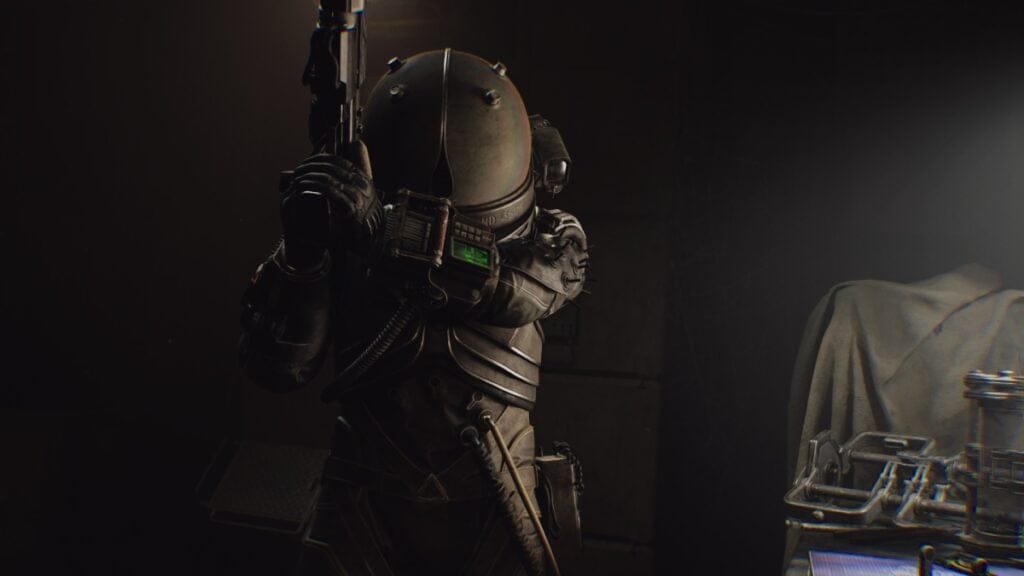
The story of Cronos sees Bloober taking notes from the type of storytelling they worked on through the Silent Hill 2 remake. What I mean is that Cronos tells its story through notes found in the different environments. Even the cutscenes and the narrative, for the most part, feel opaque, and having played this and Silent Hill f back-to-back, there is more commonality than difference in the way Cronos conveys its themes.
Overall, Cronos’ narrative is intriguing; it offers an engaging range of twists and turns and is one of those stories where you question the intentions of everyone involved, including your own character and the collective. But despite the intrigue, there is something that feels like it is missing, an x-factor that makes the story click together and feel all neatly tied together. There are some reveals, some narrative threads that don’t feel like they really go anywhere, but despite all of this, the ride and overall gameplay are enough to make Cronos feel worthwhile, and more than anything, make me intrigued to see what new original works come out of Bloober Team.
Gameplay
Combat
Now I would like to discuss Cronos: The New Dawn’s gameplay, starting with combat. Cronos’ combat is built around third-person survival-horror gameplay, drawing on staples like Resident Evil 4 and Dead Space. The movement of The Traveler feels weighty, and you feel like a tank lugging around this big diver suit; it's a midway point between Isaac Clarke from Dead Space and Leon Kennedy from Resident Evil. But it leans more toward the heavier side, Dead Space is known for, and this is a good thing.
The feeling of combat mostly does feel satisfying, with you having both ranged and melee attacks that do feel like they carry some weight. Weapons have primary and secondary fire, and the charge-up feels suspenseful, but the actual impact on the enemy feels weak. It leaves you feeling like half of the feeling you get from firing a weapon is missing. It’s unbelievable because the weapons they have in this game feel like they should be a slam dunk for good-feeling weapons. You have a pistol that feels like a single-action bolt gun, a shotgun, and a rifle. Overall, it isn’t bad or underwhelming, but I noticed it as I progressed through the game.
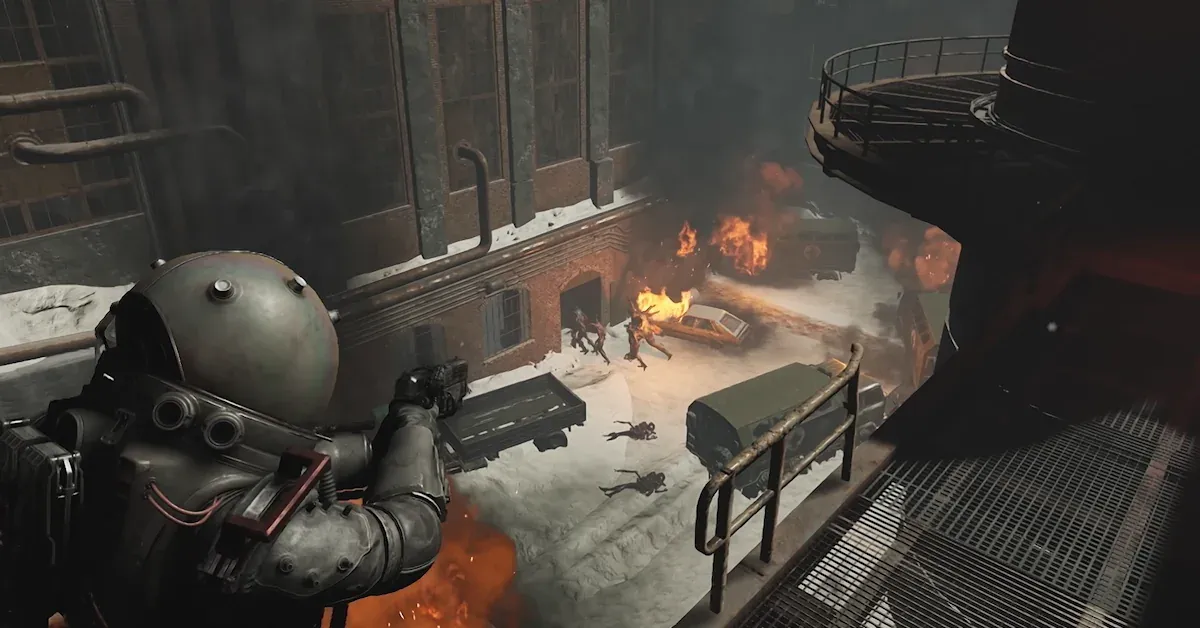
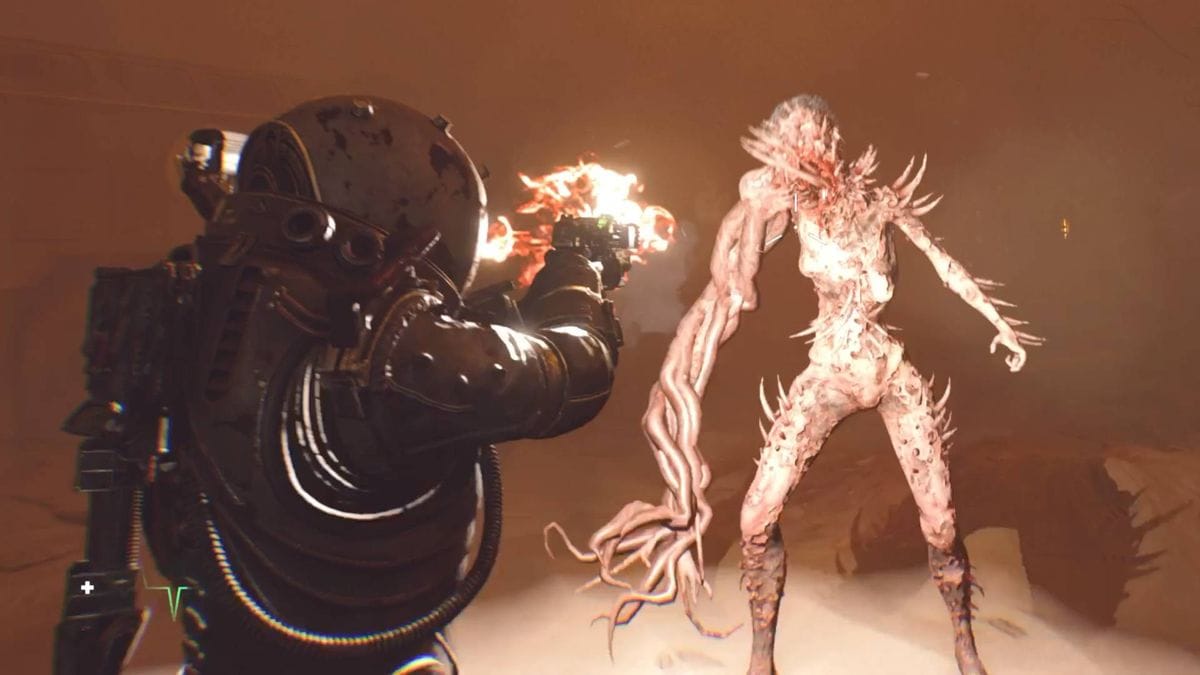
Apart from how the weapons feel, the combat mostly feels fun and satisfying as you shoot enemies. Still, rather than shooting off limbs, the goal here is to burn your enemies similarly to Resident Evil 1, and this leads me to talking about Cronos’ main mechanic with enemies, the transformations. The evolution system for enemies in Cronos allows different monsters that come into an area to merge with corpses on the floor, which makes them a more formidable encounter for you to deal with. Preventing them from merging makes an easier fight for you. Still, it comes at the cost of a flame canister that you can pick up and carry with a finite inventory slot space. I feel like the efficiency of this system is mixed for me. I like the concept of merging, and I like the idea of burning these corpses to prevent the merge, but what I don’t like is that one of these canisters takes up a whole inventory slot per canister. You can restock these canisters at the save room, but you can only take one from a save room at a time. There are many occasions where you will need more than one meaning, so you’re more than likely going to use one canister in a fight, preventing one wave of enemies from merging. Still, you will be unable to do anything in the second wave, unless you light it up quickly with your heaviest firepower. It isn’t bad, which is why I feel mixed about the implementation: the idea is awesome, but the interactions are awkward.
The enemy evolution system, where enemies merge, makes encounters feel tense, and the only way to prevent them from merging is to use a fuel canister that burns corpses. It is, in a way, reminiscent of Resident Evil 1 Remake’s burning system. Still, I feel its effectiveness is mixed in how it works, as the amount of canisters you can carry and take a slot of your precious inventory space, and with how many of these encounters that occur, it feels like you are really wondering when is best to use them. It does help, and you get another tool called a pyre, which can also set enemies on fire. Speaking of enemies, one thing that I would have liked to see more of is some more unique enemy variety, as many of the enemies that you face are very much the same types of enemies, just stronger or weaker variants, whilst it is cool in terms of the evolution system, sometimes you want something fundamentally different, to spice up the combat, and whilst there is some variety, it felt few and far between, with the main evolving enemies being the centerpiece for enemy encounters.
There is a good sense of challenge that Cronos’ Level and encounter design is built around with item placements that do enable you to ignite enemies also, and this juggling of resources, the urgency of preventing enemies from merging along with inventory management, all make more ass-clenching encounters that will bring out challenges from a third-person lens, but feel absent of that x-factor with its horror that something like Dead Space nails with the sense of horror and fear that gels together with that combat.
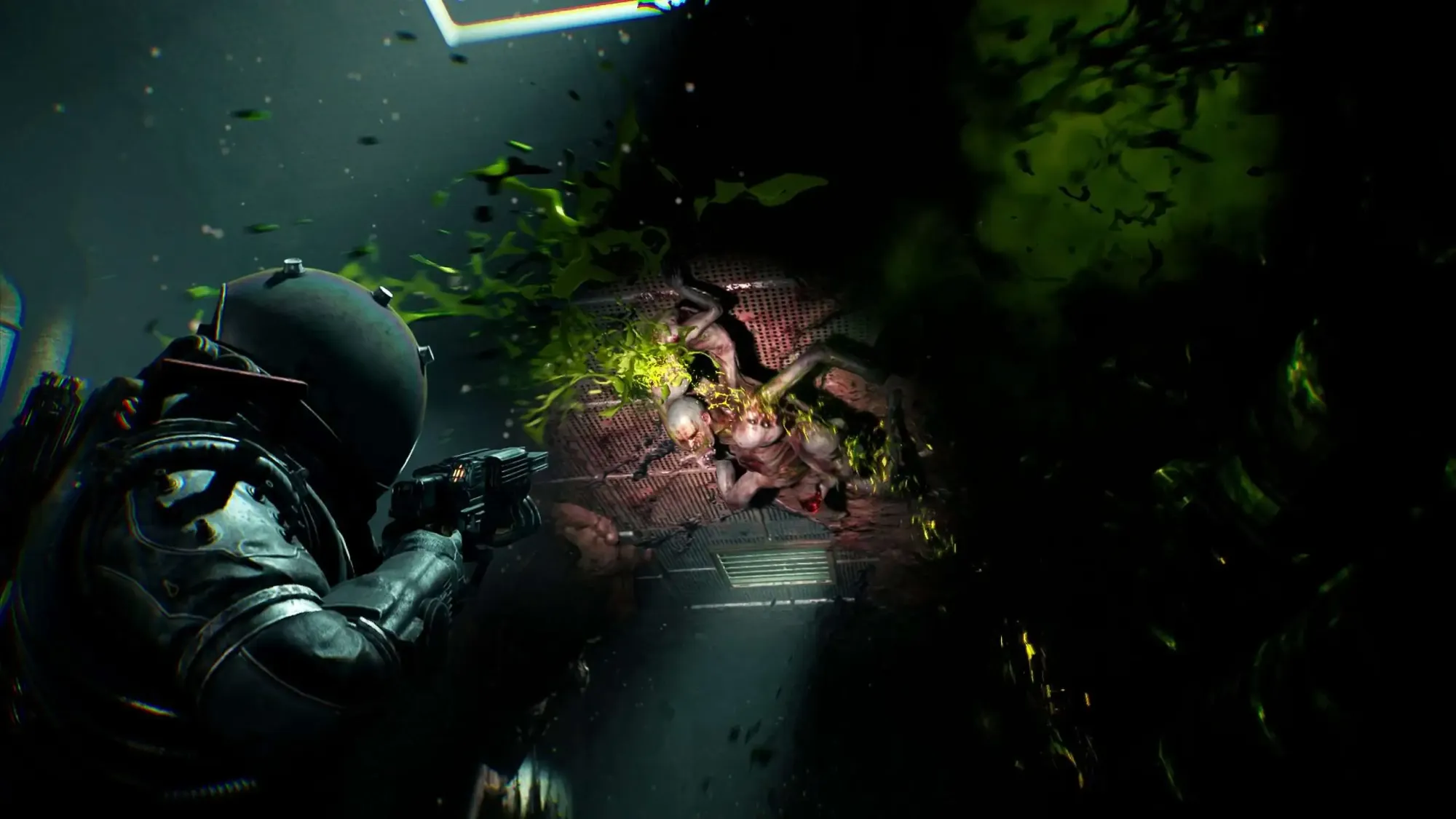
Many good ideas do in some parts come together and provide a tense action horror experience, that leans of many staples that you have seen before with some new ideas, but I feel like the evolution system, whilst it is a refreshing concept, does feel like it needs some consistent remedy that can aid or lighten combat, or have the traveler have some means of being able to flee the conflict if they don’t have suitable resources. It ultimately feels like a great concept with one or two crutches that hold it back from its full potential, but we’ll get into that shortly.
For many of the hiccups I found with its combat, Cronos had plenty of moments when it was firing on all cylinders and felt like a satisfying horror experience with the trappings of something truly special.
Puzzles
The puzzles for Cronos are standard for a survival horror game: they usually involve finding a key or powering on a generator. These types of moments felt like intentional breaks to diversify the game between combat and allow the player to get immersed in the environment. However, many of these puzzles really do equate to fetching an item. Another thing is that you get bolt cutters early into the game. You’ll need them to open doors in different areas across the game. These take up one precious inventory slot, and whilst I get it means you have to consider what you carry carefully, it does feel like you’re better rewarded for bringing this with you at all times, as levels are linear. You can walk back for five to ten minutes to get to a box and pull out these cutters.
One puzzle aspect I did enjoy was the anti-gravity segments; it can be a bit finicky at times, but it was interesting and different, and these moments felt like they fit the world of Cronos a lot better. These puzzles, where you both manipulate environments, rebuilding a broken bridge or having a platform change its state, are also quite fun little puzzles that, whilst they aren’t brain busters, do break up the levels from combat in a way that feels more engaging and interesting than looking for items to power on a generator or a key.
So when it comes to puzzles, Cronos really is a mixed bag, nothing that is exactly terrible, more just middle-of-the-road stuff with some fun puzzles that help make traversal more interesting.
Game Systems
Weapon and Suit Upgrades
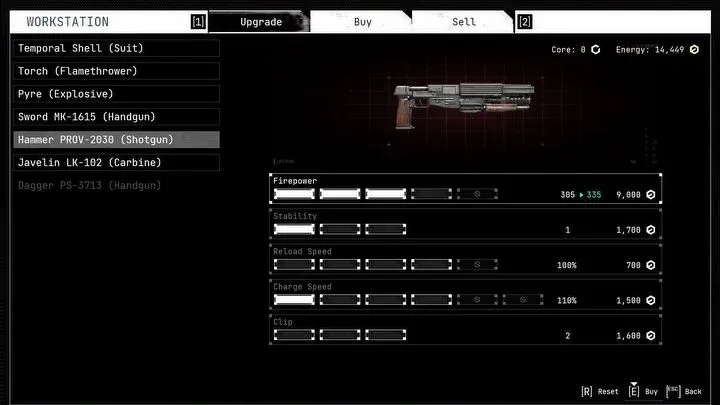
Now I want to talk about a few of the different Game Systems under the hood of Cronos The New Dawn, beginning with the different weapon and suit upgrades. There are seven different weapons that you can acquire throughout the campaign. When you reach a save room, you’ll be able to upgrade these weapons with all the essentials, such as a magazine increase, handling, and the damage of the primary fire. These upgrades can be unlocked through currency that you can find in different areas and on the bodies of dead enemies. Then there are upgrades you’ll get for your suit; they increase things like your health and inventory. These are many of the staples that you’ll find in 3rd person survival horror games.
Cronos' weapon and suit upgrades scale along with the game quite nicely, and they inspire you to take detours and explore all the rooms of a given area, and in typical survival-horror fashion, it incentivizes multiple playthroughs. It isn’t groundbreaking overall, but it definitely works and is a tried-and-true progression that feels like it clicks well with Cronos.
Inventory Management
Next, I want to talk about the cornerstone of how Cronos manages its resources, items, and ammo economy: the Inventory management system. When assessing Cronos’ inventory management at a surface level, it would look like any other typical system, and in many ways, it is. But I would say that Cronos tries to juggle the old-school inventory systems like your classic Resident Evil’s, where key items like keys or a lighter take up an inventory slot, and more modern systems that can expand through upgrades.
Overall, I think the way inventory management works in Cronos isn’t bad, nor do I think the system is. But the way in which it is integrated into Cronos. See, I would call Cronos a linear game, and oftentimes you’ll be lugging around multiple key items, along with items like keys or a lighter that take up an inventory slot, and more modern systems where it can expand through upgrades.
Overall, I think the way inventory management works in Cronos isn’t bad, nor do I think the system is. But the way it is integrated into Cronos feels like there is a disconnect between the gameplay loop and the gameplay system. There is a fundamental that I’ve mentioned earlier, the way that tools like Pyres and Flame Canisters are managed within the inventory being a big issue, and I feel like these issues would fit the loop of Cronos better if you were able to stack these consumables, rather than having each one take up an individual slot. On the flipside, you could have more ample room than these consumables taking up an individual slot would feel reasonable, but unfortunately, even with max upgrades, there is barely ever enough room for the canisters and Pyres. Couple this with your key items, bolt cutters, and you always feel like you’re at max capacity, and given how linear the game feels, if you want to return to a save box to re-arrange your inventory, then it’ll require 5 minutes of backtracking to drop off something. I think these loops and backtracking work for older games like Resident Evil because many of the places explored are circular and open, so that you can loop back to a save room. It feels like you’re extensively exploring one particular place. But with Cronos, it feels like you’re exploring a world and a set of levels. The save rooms, whilst some feel interconnected, most feel isolated, and this weighs on its inventory system, doubly so with the amount of room allocated.
Visual and Sound
Visuals
The visual presentation for Cronos is interesting, shifting between broken-down metros that feel militaristic and abandoned, and the decaying Eastern Suburban apartment complexes, which are rundown and derelict. Overall, I love the visual flair and snowed-in city that you will venture through. The different environments, the skyboxes, and the snowy season all evoke a sense of atmosphere that contributes to the dire, depressing world of Cronos.
The Art Direction as of Cronos is solid, as I’ve stated, the atmosphere sets the tone, but on top of this, it is also the environmental storytelling, the little details that depict the state of the world, the events that transpired in the different locations you explore, be it a factory or a hospital. It is a cornerstone of any good horror game, the show-not-tell approach to environmental design and storytelling, and it is one aspect of Cronos that I feel it absolutely nails.
Sound
Now I would like to talk about the sound design and presentation for Cronos, and I feel I’m a little mixed in this department. So I’ll start with the positives: the sounds of enemies, the eerie ambient sounds that blend to make each environment feel haunting, and open areas that would feel packed, feeling empty with nothing but the sounds of snow or wind, which make an area feel haunting and lonely. Whilst these elements are great and complement the art direction and visual storytelling, I feel that the weapons are lacking a punch in the way that they sound, which, in tandem with the overall weapon feeling, makes many weapon shots feel like they have no impact on the enemy, even when charging a shot. Whilst they aren’t all bad, it is just something that makes the weapons feel weak or underwhelming, more so than they should.
Conclusion
All in all, Cronos: The New Dawn is a showcase that Bloober Team’s success with Silent Hill 2’s Remake isn’t a fluke, and more so that they have the chops to make a game that is exciting within their own worlds. Despite the hiccups many have had with their prior entries, Cronos feels like a solid foundation for what could come next in this journey. Whilst there are some critiques I have listed in this review, I do feel like these gripes are things a sequel could remedy, and with that and further expansion of this formula, Bloober Team may have something truly special on their hands.
As it stands, I do recommend Cronos: The New Dawn; its world is unique, its bleak, depressing atmosphere, its opaque storytelling that leaves you with more questions than answers, and its incredible environmental storytelling make Cronos feel like a unique experience. It’s mutation and evolution mechanic for the enemies is a fantastic concept, that I feel with some fine tuning could truly make Cronos a household name, and in this department if they give this world another swing, I do think there is a wealth of things they could do with this mechanic and if there is a note or sentiment to close this review out on it would be this.
Cronos: The New Dawn is a good game that offers a variety of interesting concepts. It hasn’t quite nailed the X-Factor yet, but it's a good game worth experiencing and will be a strong touchpoint in years to come, showcasing the promise that Bloober Team, as a studio, has in making horror games.