Final Fantasy X: A Masterful Journey

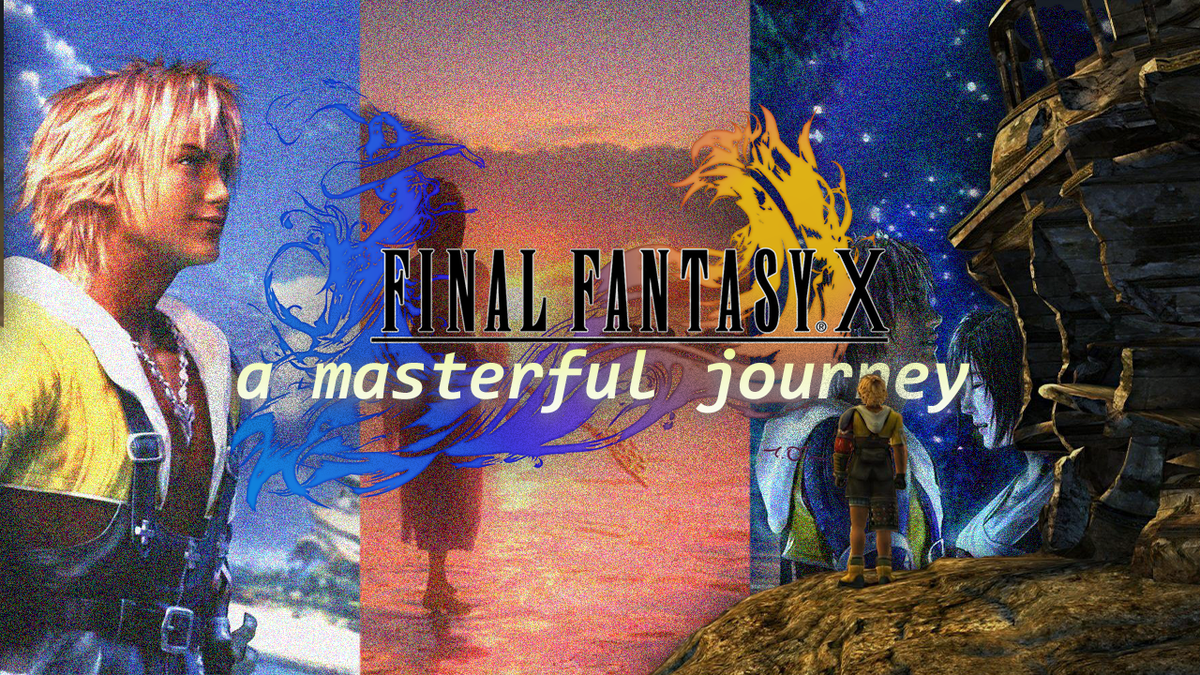
Table of Contents
Introduction
Final Fantasy X, a one-of-a-kind game that defined many things for both the PS2 generation and games to come, was the turning point for both Square Enix and Final Fantasy. It is the perfect encapsulation of everything that had come before, with pockets of old-school SNES entries and the more modern evolutions of the series that would spark with the dawn of the PS1 era.Final Fantasy X is a brilliant video game that only grows on me more with time. It is an incredible game that captures the magic of the genre through all of the pillars that make a Final Fantasy game so defining and brilliant. It's the way the world of Spira becomes so etched into your memory, with the sunny beaches of Besaid and the vibrant music that depicts a sunrise, the expansive and robust amount of tools and approach to progression through the Sphere Grid, the proficiencies that each party member has in combat, along with characters that are all memorable and defining.The more I explore and replay games in the Final Fantasy series, the more I discover that the types of experiences that stick with me the most are the ones that offer a heavy emphasis on the world and the party. Final Fantasy X is a game that focuses heavily on the world and its traditions, but uses the party as drivers to explore its facets. Overall, it's a magical experience that you can see reverberate through the genre in the years that would follow.I've said this about Final Fantasy VII and I think the same can be said about ten, that it is truly lightning in a bottle, its a game that reimagines and iterates on what came before mechanically, whilst not feeling like a major departure or rejection of what came before, and it is why many, and after replaying I echo this sentiment, believe Final Fantasy X is the best entry point to the series.
Development
The development of Final Fantasy X began in 1999 and would cost around 32 million US dollars to make, with a team of over 100 people, mostly veterans.The development of the script for FFX took roughly 3 to 4 months, with the same amount of time later allocated to voice acting. Producer Yoshinori Kitase worked as the chief director of Final Fantasy X, while the direction of events, maps, and battles was split between Kitase and Motomu Toriyama.Tetsuya Nomura and Kazushige Nojima collaborated with Daisuke Wantanabe on scenario writing, and Nojima expressed the importance of a relationship between the player and the main character. This would be expressed through discoveries of the world and plot events revealed to both Tidus and the player at the same time.Tidus' relationship with his father, Jecht, was based on stories "throughout mythology," particularly those related to Greek mythos. The primary relationship was originally going to focus solely on Tidus and Yuna, but would eventually shift to the father-son relationship, as it would have a greater impact on the world and the history of Spira.Spira's design and change of scenery stemmed from Kitase, who believed that if the series returned to a medieval Eastern fantasy setting, it would not advance the development team. Testsuya Nomura was the character designer and identified the South Pacific, Thailand, and Japan as major influences on the cultural and geographical design of Spiram, particularly concerning the geographic locations of Southern Besaid and Kilika Islands. He also said that the world of Spira deviates from past Final Fantasy worlds in the level of detail it incorporates.
Efforts were made across many facets of the games' influence, including diverse clothing styles from different cultures, and ensuring that each town and its residents feel distinctive. This process was led by Fumi Nakashima, who meticulously brought the different cultures and cities of Spira to life, intentionally having the Al-behd wear masks and goggles to give them that strange, eccentric vibe we know and love them for today through their design.Hironobu Sakaguchi, the Executive Producer and brainchild behind the series, expressed concerns about the transition from 2D to 3D backgrounds, the voice acting, and the shift to in-game cutscenes. The PS2 would be a major leap from the original PlayStation. There were still limitations on Final Fantasy X's development, forcing the team to prioritize either resolution or the number of colors on-screen. Initially, the team thought that including more color would better depict the lush, vibrant world of Spira, further bringing it to life. However, during the development cycle, it became clear that other games released around the same time prioritized resolution, and fans expected games to prioritize color resolution.This pivot to higher resolution came in the last six months of development, leading to major modifications to the experience. Final Fantasy X was the first in the series to not include a world map, as the world ran in full 3D and required a world map module, which was deemed too expensive.However, Final Fantasy X featured innovations with its use of motion capture and skeletal animation technology. This allowed for more realistic lip movements. Nojima stated that including voice acting enabled him to express emotion more powerfully than before, allowing him to keep the storyline simple while having the characters' personalities and expressions shine through the voice actors. It's reported that at one point, Final Fantasy X was supposed to have online elements, which were later dropped and reincorporated into Final Fantasy XI, Square's first stab at the popular MMORPG genre.But in July 2001, Final Fantasy X would release to widespread critical acclaim and enshrine itself as one of the all-time greats for the PS2 and the Final Fantasy series.
Story
Overview
The story of Final Fantasy X begins in the futuristic city of Zanarkand, following our young, athletic hero Tidus, a star player of the famous sport Blitzball. During his match, the city is attacked by a mysterious figure known as Sin, and Tidus is thrown into the world of Spira and, with it, thrust 1000 years into the future. Along this journey, Tidus meets Wakka, a blitzball player, and Lulu, a mage who is very reserved and has little to really say. Lastly, Tidus would meet Yuna, a summoner who is on a pilgrimage to defeat Sin, through acquiring aeons and journeying through the lands of Spira to acquire the aeons needed to banish Sin for a duration of time called the Calm. As fate would have it, Yuna's journey takes her to Zanarkand, accompanied by her guardians Wakka, Lulu, and Kamari. Tidus joins along as a guardian and sets out on this journey with Yuna.As I mentioned in this game, Final Fantasy X really does put an emphasis on the relationships Tidus shares with his father, but it also does intersect with his relationship with Yuna, as these characters are both a conduit for each other, providing strength and the encouragement needed to see their journey, their story through.
Themes
Please Listen to My Story
It took me a while to truly grasp why Tidus repeatedly declares, “This is my story.” At first glance, it seems like Final Fantasy X revolves more around Yuna—her pilgrimage, her sacrifice, her growth. But over time, I’ve come to see that Tidus’s statement comes from a deeply personal place. Despite being the protagonist we follow and a star Blitzball player, Tidus constantly feels like he's living in someone else's shadow—most notably, his father, Jecht.From a young age, Tidus was bombarded with stories about his father’s greatness. Yet, behind those tales was an absent parent struggling with alcoholism. Tidus grew to resent Jecht—not only for his absence but for how his presence loomed over every aspect of his life. One scene captures this perfectly: Tidus tries to speak with his mother, but she’s too fixated on Jecht to notice her son. Even in that quiet moment, Jecht takes the spotlight.This resentment follows Tidus even after he’s hurled a thousand years into the future. Jecht’s legacy—now amplified by his role as Sin—continues to define how others see Tidus. It’s inescapable. But Tidus isn’t just running from his father’s legacy; he’s striving to carve out a legacy of his own. “This is my story” becomes a declaration of self—his way of claiming agency, of breaking free from the expectations imposed on him.There’s a beautiful parallel here with Yuna. Both she and Tidus are children of famous fathers, left with the burden of living up to legacies not of their choosing. For Tidus, it’s about reclaiming his identity; for Yuna, it’s about fulfilling a duty. Their bond is rooted in this shared struggle, and that connection blossoms into love and mutual understanding. The symbolism in their names—Tidus representing the sun, and Yuna the moon—emphasizes this duality. They are two halves of a whole, from different worlds and times, walking the same path.What adds even more depth to this dynamic is how it echoes in Seymour, the game’s main antagonist. Like Tidus and Yuna, Seymour is also burdened by his father’s legacy. But unlike them, Seymour was shunned—both he and his mother were outcasts. This lack of love and support warped his perspective. Where Tidus and Yuna strive to find hope, Seymour seeks to end suffering through annihilation. His path diverges not only because of his circumstances but also because of the absence of care and connection.Ultimately, Final Fantasy X is a story about inheritance—of burdens, of expectations, of pain—and how each character chooses to respond. What separates them isn’t the weight they carry, but the people who help them bear it.
Religion and Tradition
Final Fantasy has never been a series afraid to explore religious themes, but in Final Fantasy X, it is a centerpiece and major backdrop for the more central themes and the state of Spira. It explores the pitfalls of blind faith and an inability to identify fault in tradition. It is, in many ways, a cautionary tale of how our mindless devotion to beliefs and teachings, blind faith, and ignorance.The teachings of Yevon are what perpetuate the cycle, telling the people that they carry the burdens and sins of the past and need to atone, and created the tradition of the Summoner's pilgrimage to defeat Sin, which is based on the teachings of a summoner who existed 1000 years ago, known as Yu Yevon.It's pretty clear immediately that the teachings of Yevon are an allegory in many ways for religion, and the Yevonites who follow Yevon inhabit many different characteristics of existing religions, such as Shintoism for practices and usage of temples, Buddhism for how it incorporates ritualistic disciplines, and Abrahamic religions for their usage of pilgrimages and doctrines. The teachings of Yevon are designed to give people a sense of meaning in the face of death, and Yoshinori Kitase wanted to showcase how the people of Spira respond to it.There are many different comparisons and iconography that you can derive from Final Fantasy X, such as the Farplane, which even has its own equivalent of a cemetery, a place where one can see the memory of those who have passed, and also an afterlife where the deceased reside, similar to the concepts of heaven.But the use of Yevon and its teachings is not just the backdrop to Spira's culture; it is also a theme that reveals how easily corruptible ideas of faith and tradition can be when those who run and guide the people do so. You see, the religious organization of Yevon is full of issues and drama. You see, when people have died, and their body can sometimes linger and refuse to move to the farplane, it is the duty of a summoner to "send" these people, helping them cross over to the farplane. However, it is revealed that the organization that runs the religion of Yevon is led by people who refuse to be sent, who exist to govern the majority of Spira. As the story of Final Fantasy X unfolds, the origin of Sin, which we will discuss in the next section, and how the faith of Yevon and the ministry that administers the people, seek to have control and not even follow their own beliefs and teachings, begins to showcase the corruptible nature of blind beliefs and an absolute subservience to tradition.
The Stasis of Sin
The next theme of Final Fantasy X revolves around the concept of stasis and how Sin, the main antagonist of FFX's story, holds the world of Spira in stasis. Spira lives in an endless cycle of stasis, believing that they're atoning for their past and leaving people unable to move forward. The world is in an endless cycle: Sin arrives, summoners set out on a pilgrimage to stop it, they defeat Sin, usher in a period known as the Calm, and the cycle repeats on and on.The backdrop of FFX's world and this sense of stasis are embedded in tradition and religion, one aspect that FFX isn't afraid to explore. As I mentioned in the previous section, the world of Spira is largely guided by the teachings of Yevon and the Theocratic Ministry and advisory, which guide and dictate the summoners' destination. But the teachings and faith of Yevon hide one major secret, one that ultimately collides with Tidus' world and the world of Spira.It is revealed that 1000 years ago, Zanarkand and Bevelle went to war, in which Zanarkand would lose. Yu Yevon created Sin as a mechanism to preserve Zanarkand, keeping it in a dream-like stasis where Yu Yevon could preserve both himself and his home.The whole pilgrimage, Yuna's journey, and the calling of the final aeon would provide Yu Yevon the power to continue to preserve the dream world of Zanarkand.I used the stasis intentionally. Zanarkand is a world locked away and preserved, slowly fading but caught in a loop that tries to keep the dream alive. So what does this mean for Tidus? The boy who is a fish out of water in a new world, well, it means that he is an entity of the dream world, one living on borrowed time.The secondary antagonist, Seymour, believes that if he becomes Sin, he can break the cycle by ending the loop through brute force, meaning he will destroy Spira and wipe out all life. This false sense of ending the cycle is, in fact, no real solution and no way forward.The status quo and inability to move on from the past are also, in a way, an internal commentary on the Final Fantasy series in and of itself. Final Fantasy 10 feels like the last of its kind and depicts the change that was internally culminating at Square at the time. I've mentioned this in a few of my Final Fantasy videos in the past, but the early 2000s really was a changing of the guard for what Final Fantasy was and what it would become, as it tried to redefine its identity and place within the landscape of video games. But it was also the closing chapter for Hironobu Sakaguchi, being the last single-player Final Fantasy that we would be Executive Producer for, before departing to form Mistwalker.
Breaking the Cycle - Sacrifice, Legacy and Memory
Final Fantasy X's genius comes from how the story flips the script on you. You start this journey as Tidus exploring this world and accompanying Yuna on her pilgrimage as she marches towards her eventual death to call the Final Aeon and bring about the Calm to Spira. But eventually flips the script on you revealing that Tidus is a product of a world that was, a world that is now living on life support through preservation of the Yu Yevon and destroying sin and defeating Yu Yevon will break the cycle of Sin and bring about the Eternal Calm, but will also spell the end of the Zanarkand that he is from and with it will mean Tidus will disappear and be sent to the farplane.There is a quote that Yuna makes a speech during the closing cinematic of the game about all the things that everyone has lost, whether it is people, homes, or friends, and talks about how with the defeat of Sin, Spira can finally move forward, creating new hopes and dreams and a future full of hope and prosperity.But it closes with her talking about rebuilding Spira, and she mentions the people they've lost and the dreams that have faded, so they'll never be forgotten. The perfect closing and finale to a story: that, although we may move forward and break out of the stasis of the past, we may never forget those who came before, the dreams and ideals that inspired and brought us to the place we're at today.
Gameplay
Combat
Conditional Turn-Based Combat
The first major overhaul that has been made to the combat is the move from Active Time or ATB combat to CTB or Conditional Turn-Based combat, which would display in the top right corner of the battle screen the amount of turns available and who would be up next, and would also visually show how both the player and enemy could extract and shift the tides of allotted turns in their favor.That doesn't mean there isn't a metric or gauge that calculates how long it will be before a party member can attack. Final Fantasy X uses something known as the tick system, a more underpinned system that determines the actions and recovery a party member can make after being involved in combat. It is correlated to the party members' agility.Final Fantasy X also allows you to swap out party members on the fly during combat, which offers a unique and versatile approach to combat, making every party member feel unique and useful in battle. Much like in most Final Fantasy games, your party is made up of different classes that are skilled and proficient in a particular discipline, FFX is special in a different way to this that I'll get into later, but inversely enemies will have a certain weakness like airborne enemies being weak to Wakka's ranged attacks or heavy enemies being weak to Auron's heavy attacks.
But it isn't just party members that can be swapped, but also weapons and armour too, which enables you to strategize and adapt to different encounters. The biggest accomplishment of Final Fantasy X's combat and turn-based encounters is how flexible and varied the solutions can be.
Overdrive
The famous limit break ultimate attacks see a return here in Final Fantasy X as well, in the form of overdrives, which have a prompt that charges them up to do more damage, similar to how the limit breaks of Final Fantasy VIII work. What's interesting here in Final Fantasy X is how there are different ways to fill the overdrive gauge that unlock throughout your playthrough, such as taking damage from enemies, dealing damage to enemies, and other modes as well. It's another layer of flexibility that contributes to the player's expression and approach to composition, which works incredibly well within the system.
Exploration
Final Fantasy X is a mostly linear game and the first Final Fantasy not to feature a world map, as we've discussed, but it is also subject to the criticism that would later be the focal point of Final Fantasy XIII: its linear levels. For me, FFX's world and story do have a sense of linear structure to them, but I don't feel like it quite matches the same "corridor complaints," and that is because well one, there are branching paths, and two these paths are explorable and you're able to backtrack and take on a plethora of side activities in the game. But for 80% of Final Fantasy X's duration, you are moving forward, place to place, tackling the main story.Once you do reach a certain point in the game, much like many of the previous entries, you'll unlock the airship, which will allow you to revisit areas you've previously travelled to in the past. There is also a location in the game that later opens up to the party, called the Calm Lands, which is, in many ways, a playground and starting point for many of the different side activities. Speaking of side content, Final Fantasy X has a wealth of variation that takes shape in different forms of content, which I'd like to break down in this part of the video starting with Blitzball, which I'll be honest I haven't played a ton of throughout my playthrough, but it is a whole game that is packed into the broader experience here. There is a lot to the game, too: it has its own mechanics, recruitable players you can add to your team, and tournaments you can enter, which offer up some pretty solid rewards.
When talking about Final Fantasy 10's world and story, I talked about how the world of Sphira feels realised and alive in it's culture, its cities, its rituals and I think one of the coolest additions that Final Fantasy 10's gameplay and exploration, and collectible side content does to illustrate this is have you learn Al-Bhed through books that will translate letters in Al-Bhed to English, making the NPC's from this region slowly more understandable.There are also optional Aeons that you can acquire through optional temples, which are tied to side dungeons in the game. There is also a beastiary and Monster Arena, where you will go out to all the different locations of Spira, capture different monsters, and fill out a compendium. You can also battle the collected monsters for rewards. There are Chocobo Racing mini-games and hidden locations you can discover on the world map via the airship, too. Final Fantasy X's exploration opens with tons of little details that make revisiting old areas feel worthwhile, and whilst you may not be able to visibly run around on a world map, it doesn't mean or make the game feel restricted at all to me.
Gameplay Systems
Progression
Sphere Grid
Final Fantasy, as a series, always shapes and shifts the ways in which it handles its progression, a big part of what goes hand in hand with its combat. A majority of mainline Final Fantasy games are turn-based, but it is their progression system that shapes the way in which you interact with the game's combat. Whether it is the flexibility of materia or the resource-driven magic of drawing, there are often many systems that underpin the expression and sense of flexibility offered by a Final Fantasy game.The Sphere Grid has to be the most streamlined and comprehensive method of progression, I think, to appear in a Final Fantasy game. Whilst it may lock the players into a set path early on, familiarizing them with and associating each party member with a particular role, it does open up and provide a sense of a multi-talented party. Unlike traditional RPGs, it does away with traditional levels, which provide the party progressive stat increases for each level they amass, instead providing the party with a currency of points and sphere, with points allowing the party member to move along the grid and the spheres the ability to unlock particular spheres that are adjacent to the party members current position or their current position.
Where the flexibility comes into player, is later on in the game when you start to overlap and have the choice to start mastering skills another party member has acquired making you multi-specialized, and their is no real right or wrong way to go about this, and their are even unique spheres you can unlock later on that provide you the ability hop to another place on the grid or unlock a magic spell that another party member has already unlocked, and it gets you thinking, planning and tailoring the party to your play style and how you want each of them to work. Yes, they do have a default role, and they'll operate pretty optimally within that role, but the more stat spheres that you unlock, also will lend themself to making that party member more effective in that field. If you want Yuna to use Black Magic, make sure you're increasing her magic, which you naturally will be.
Item Management
The Item management and the way that Final Fantasy X handles weapons and upgrades are also really unique, too. Different weapons, instead of having stats applied to them like 30 Strength or 20 Magic, are given perks that increase their proficiency. So you could give the weapon the ability to inflict silence on an enemy or allow you to counterattack enemies, whilst also being able to have the more typical Strength 10% modifiers. But what this system does is it makes all the different weapons you collect throughout your playthrough feel pretty useful. Yes, like with any Final Fantasy, there are Ultimate weapons that are generally the best, but for a majority of your playthrough, there are weapons and also accessories that allow you to tweak and customize your play style, and also enable you to prepare for tons of different situations, and it is quite freeing and straightforward to understand.
Visuals and Sound Presentation
Visuals
The visuals for FFX still to this day holds up well, with the in-game visuals still being a great feat for the time and sustaining the artistic charm, but man the FMV cutscenes are absolutely incredible and still to this day are absolutely stunning, I feel like watching that opening scene with the Blitzball game or arriving in Luca, its these moments that are a showcase of how the cutscenes and FMV's used to feel like a reward when you'd reach those moments in the game. It was a big move from 2D background to 3D, and you can see the changes in the environments and the level of detail in the character outfits, too, as we touched on earlier.There is something so beautiful and harmonious about the world of Spira, the visual presentation of the tropical backdrops, the inner sanctums of the temples of Yevon, the remnants of Machina and futuristic cityscape of Zanarkand all feel like they have a distinctive presence in the societies and culture that reside in these cities, the clothing that they wear and the ways in which they speak. The world's atmosphere is visually stellar, and although this game is over 20 years old, it reinforces the idea that a strong art style and a commitment to an overall theme create a timeless feeling.
Sound
It isn't just the overall visual presentation that sells and creates the incredible mood and atmosphere of Final Fantasy X; its music, composed by Nobuo Uematsu, Masashi Hamauzu, and Junya Nakano, also plays a role. This was the first Final Fantasy soundtrack not composed solely by Nobuo Uematsu, and Uematsu wanted to make Final Fantasy X's soundtrack feel more cinematic, so that the overall mood and atmosphere of Final Fantasy X would shine through. There are old fan-favorite tracks like the chocobo theme that have that old-school Final Fantasy feeling. But, much like its visual counterpart, there is an overall variety of music that fits the sense of place. The islands of Besaid feel like a warm sunrise, the temples of Yevon feel reverent, and the famous Zanarkand theme that begins this adventure feels somber. There is something that is special about how Final Fantasy's soundtracks come together, and Final Fantasy X is no exception.
Conclusion
The closing thoughts I have about Final Fantasy X are that it is one of the best in the series, that there's a reason so many people swear by it and love it so dearly, and that there is something so unique about it. The visuals are distinct and different for the genre, and the music is eclectic, switching between warm, carefree tunes that make you feel like you're living on a secluded island and reverent chants that hum like a prayer. There's a really different feeling to Final Fantasy X, and it can be felt in its gameplay, its progression with the Sphere Grid still feeling like one of the most comprehensive yet flexible ways to tailor and branch out your party's abilities.I truly do believe that, whilst Final Fantasy X may not be my favorite Final Fantasy, it is the best one to start with. It offers an insight into everything that the series does so well, and a narrative that showcases what the series can do when it flexes its muscles, but outside of all of that it truly is just a special game that makes you feel what emotion it is trying to convey at the time, a story that hooks its claws into you within the first ours, and characters you don't want to say goodbye to when the story comes to a close. If I can sum this video in a few words, Final Fantasy X is truly magical.
Thank you for Reading
Resources
https://shmuplations.com/ffx/
https://www.reddit.com/r/FinalFantasy/comments/75tuyk/who_is_the_main_antagonist_of_ffx_obvious_spoilers/?rdt=36565
https://youtube.com/shorts/GWT89AEqPN8?si=be2loOeEdis9n_PA
Development Resources
https://en.wikipedia.org/wiki/Final_Fantasy_X
https://finalfantasy.fandom.com/wiki/Final_Fantasy_X
https://shmuplations.com/ffx/
https://www.vgchartz.com/article/266935/history-of-final-fantasy-dreaming-ahead-final-fantasy-x/
https://gamefaqs.gamespot.com/boards/643146-final-fantasy-x-x-2-hd-remaster/68273929
Remake Claims
https://wccftech.com/final-fantasy-x-remake-2026/
https://www.frontlinejp.net/2021/08/01/the-possibility-of-ffx-3-final-fantasy-x-20th-anniversary-developer-interview-part-4-4/