Resident Evil 2 Remake: The Pinnacle of Modern Remakes

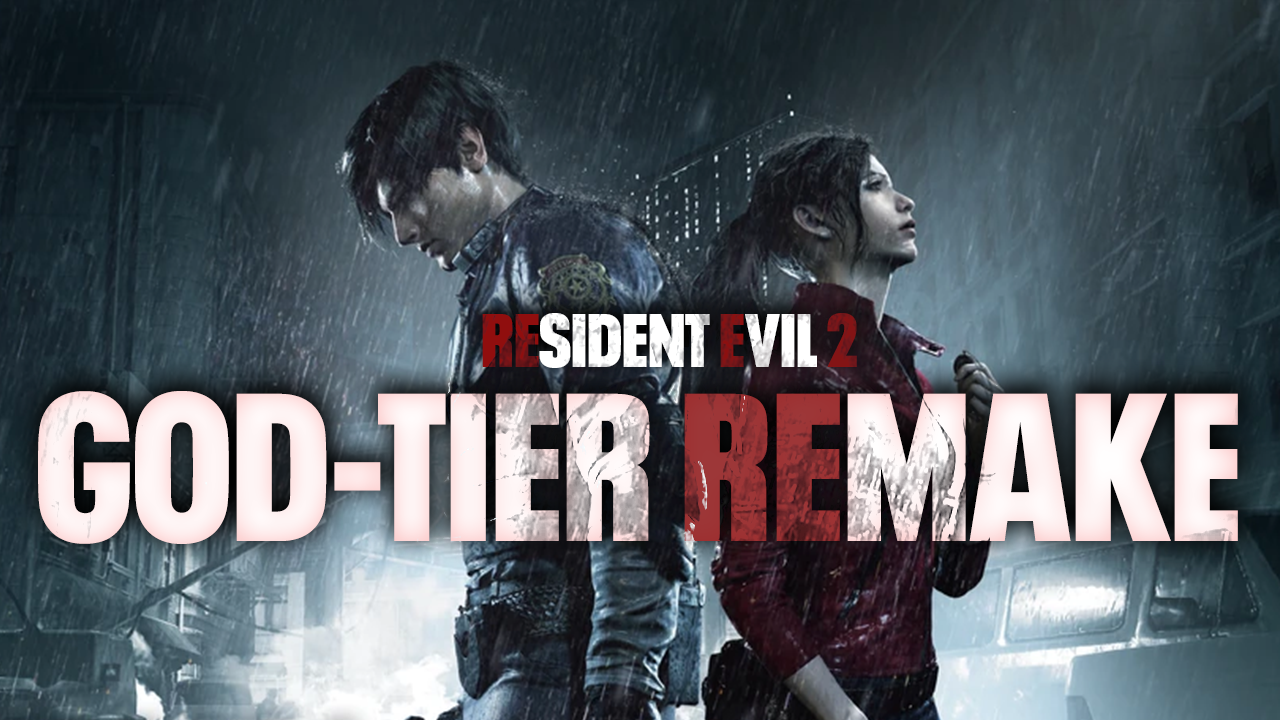
Table of Contents
Overview
Resident Evil 2 remake is an interesting video game that came at an interesting point in the series timeline and for Capcom as a company. Initially announced in 2015, it was a long-awaited promise since the release of the excellent remake of the original Resident Evil in 2002. After that initial remake, Capcom expressed interest in revisiting older titles, with a key qualifier being “if demand existed”. The choice to remake Resident Evil 2, along with the tonal shift and change of the next sequel Resident Evil 7, was the positive injection shot the series and Capcom both needed as the first half of the 2010s really saw Capcom facing many different issues, with the initial release of Street Fighter V, the polarising Resident Evil 6, and games like Ninja Theory’s dmc, and Dead Rising 4’s negative reception and failed attempts to westernise popular IP to a broader audience. It sparked a shift, a refocus for Capcom as a company. With it, we’d see many changes, including Resident Evil 7, Monster Hunter World, Devil May Cry 5, and one of the big ones that would solidify the change and the way forward: Resident Evil 2’s long-awaited remake. If Resident Evil 7 was the recovery, than RE2 Remake was blueprint forward, and a signal that not only was the dark age of Capcom over, but Capcom nearly 17 years later still had the magic to not only create one of the best remakes in recent years, but yet again set a trend and standard for what a quality remake can and should be. So this has been a long-winded introduction, but Resident Evil 2 Remake is more than just incredible; it is godly, rivalled only by its predecessor, and I’m here to get into why. Without delay, let’s get into my video for Resident Evil 2 Remake.
Development
Capcom considered a remake of the iconic Resident Evil 2, fresh on the heels of the critical acclaim the remake of the first game received. However, it was Shinji Mikami who did not want time and resources being diverted from Resident Evil 4, their next new entry. It’s been said that Resident Evil 2’s original director, Hideki Kamiya, repeatedly urged Capcom to remake the game for years. It wasn’t until the mixed reception of Resident Evil 6 that returning to the drawing board and recapturing the spirit was a key focus, as expressed by Yoshiaki Hirabayashi.
The development of Resident Evil 2 Remake began in 2015, the same year it was announced, and involved a team of around 800 people. Initially, the team was deciding whether to use the first-person perspective they had used for Resident Evil 7 or to go with the over-the-shoulder approach that debuted with Resident Evil 4. There were talks of returning to fixed camera angles that would align with the original Resident Evil 2, but this was ultimately decided against, as the developers wanted to see the zombies in greater detail than fixed camera angles would allow. This ultimately would result in the team deciding on the over-the-shoulder approach, with the intention of creating and conveying a sense of claustrophobia and avoiding a shooter feel in first-person.
Tsuyoshi Kanda, the producer for Resident Evil 2 remake, stated, “It’s about having this tiny frame, about the claustrophobia”. This implementation allowed puzzles to be designed around player-controlled perspective.
Another focal point of discussion was how the remake should be known amongst fans, and how much of the game would be recreated from the original versus what would be new. The decision was to keep the “key beats” of the original but fill the space between them with new material.
The Resident Evil 2 remake has more replay value than the 2017 release, Resident Evil 7, with a much heavier focus on randomised mechanics to help speedrunners. It was intentionally made less realistic than RE7, with the developers striving for a Hollywood-inspired look they called “stylised realism”. RE2 Remake uses the RE Engine, the same engine as Resident Evil 7, which aided in modernising the gameplay elements. In the remake, the faces and character models were based on scans of actual people.
Tsuyoshi Kanda in an interview with VG24/7 stated that the development team are all fans of the series, and when it came to discussing the character design it was if they had “a hundred different Resident Evil fans all saying, ‘I think that this is the right way, and this looks best, and this is the most important thing to focus on’”
In the lead-up to the game's release, a demo known as “the 1-shot demo” was released, allowing players to access the game with a hard limit of 30 minutes of playtime. The demo alone would generate 4.7 million downloads worldwide. Resident Evil 2 would release to universal critical acclaim and would enshrine itself much like the remake of its predecessor as a gold standard, a benchmark of what a quality and meaningful remake could and should be, and as of January 2026, the RE2 Remake has sold 16.8 million copies worldwide.
Story
Now I’d like to dive into the story of Resident Evil 2 Remake, which, in large part, follows the key beats of the original Resident Evil 2 and, personally, is my favourite in the series. It follows rookie cop Leon Kennedy and determined sister Claire Redfield, who both cross paths on their way into Racoon City, with Leon’s first day on the job and Claire looking for her missing brother Chris. A few story elements in RE2 Remake were changed from its 1998 counterpart to better pace the overall story. One example of these changes is the introduction of Chief Irons, who appears at a different part of the original than in the parking lot in the remake in Claire’s scenario.
Overall, Resident Evil 2’s story is one of my favourites in the series; the events of Racoon City and the introduction to both Leon and Claire have always had a soft spot for me, not to mention that this was the first Resident Evil game that I actually finished back when it released. Remake’s story mostly follows the same major story beats structurally between Claire and Leon. Still, unlike the original Resident Evil, where Jill and Chris’ campaigns are mostly the same, RE2 features unique characters: Ada for Leon and Sherry for Claire. These characters have their own moments in the story that differentiate each character's story. It does converge ultimately, and it is satisfying, even if the recount of events can feel a little messy. There are second runs, which we’ll discuss more later, that are supposed to be the answer to the B scenarios from the original. These second runs are not the B scenario but are meant to answer what the other character was doing during the others' playthrough, so Leon’s second run intended to represent parallel events running in tandem with Claire’s playthrough, though inconsistencies make this unclear. But I feel like this is where it gets messy, narratively, because it can feel like you double up on the same events and bosses, but I’ll elaborate more on that in the Second Run later. But overall, Resident Evil 2 Remake’s story is a solid experience, and, outside of those second runs, sounds like a faithful rendition of the iconic Racoon Incident story that combines elements from all four playthroughs of the original into one.
Gameplay
Combat
Resident Evil 2’s remake is an interesting topic of discussion, as the shift from third-person fixed camera angles to an over-the-shoulder approach to exploration and combat really does feel like not only a departure from the original, but one that could, tonally, remove the tension the original held. The concern would be that this perspective worked for Resident Evil 4 through 6, given the more action-centric focus of those games, compared to the tense horror of the original three. However, these fears have been well put to rest, because the combat in Resident Evil 2 remake feels tense, and it makes navigating around zombies, evading combat, or engaging with the scarce resources you have feel as tense as the original. There are many ways to achieve this; one component is the reticle when shooting enemies, which, when standing still, shrinks to denote focus and can result in up to 50% additional damage per focused shot, significantly improving your critical chance. It also runs a risk, as whilst focusing and teeing up the shot, it gives these enemies time to close the gap between you and them.
On top of this mechanic there is a dynamic difficulty that is integrated into the experience along with the three difficulties assisted, standard and hardcore that you select at the start. The way that this dynamic difficulty operates is that it is a system running behind the scenes assessing the player, if they're struggling the game will adjust to make the game easier, on the flipside if you're excelling the game will become tougher. The metrics that are used to gauge whether to increase or decrease this adaptive difficulty is based on things such as the amount of healing items you pick up and use, and dying or reloading a save causes the game to scale down.
The Redesign of Mr X
The original Resident Evil 2 was the first to really introduce the stalker character, which has now become a recurring staple of the Resident Evil series. For those unfamiliar with this mechanic, the stalker or pursuer is a formidable enemy that will pursue the player in a particular area and is generally unable to be killed; they can be stunned or temporarily hindered, but never truly defeated, making them an oppressive and unrelenting force.
The original Mr X’s appearance was one many noted, and one they forgot was in the original, with Resident Evil 3’s Nemesis being the first big notable stalker and the poster child for the mechanic in the series. There are many different iterations of this that I could list, but in my experience, outside of the original Nemesis, which I’ve yet to experience. Mr X stands as one of the most foreboding and intimidating renditions of this mechanic, with him following relentlessly around the Police Station. It makes for a really interesting dynamic that shifts the tone and way you approach the Police Station when returning the second time, as moving faster or alerting enemies will give away your location quicker to Mr X. It also does provide a sense of reward for the rooms you did clear during your first time clearing the station, even if new zombies come into the equation. Particular rooms remain havens, with safe rooms, and rooms like the clock tower are free from Mr X entering.
Boss Encounters and Enemy Variety
Now, whilst discussing Mr X, I would like to discuss the different boss encounters, along with the overall enemy design and variety in the Resident Evil 2 remake. Between Leon and Claire, you’ll mostly fight the same enemies in your playthrough, with the William Berkin fight in the Parking Lot section and the Tyrant fight towards the end. These fights mostly play out the same, with clear weak points: the eyes pop up on the body, and you shoot them until the fight ends. This becomes more obvious the more you play. The final boss fights for both Claire and Leon are absolutely excellent each time. The Mr X fight, where the rocket launcher comes in at the end, which is a great throwback to the first game, or Claire’s final, both with the G-Stage 4, where you pick up the mini-gun and unload. These fights are absolutely incredible and entertaining every time. If we count Leon running towards the camera like Crash Bandicoot from the killer alligator as a boss fight, then I feel that fight was more on the mid side, hard to see what you can bump into. But overall, the encounters hold up reasonably well, both in the first playthrough and the multiple playthroughs that follow.
Resident Evil 2 also hosts a plethora of new and interesting enemies, including the iconic Lickers, which are a real pain in the ass to fight but can be sidestepped if you quietly walk past them, incentivising a sense of stealth or avoidance of combat. There are, of course, your zombies, along with the dogs, which are always a fun pain in the ass to deal with. One enemy that I find super annoying is the Ivy zombies; if you don’t have a defensive item to get them off, that grab is an instant kill. These enemies always pissed me off, but they were always a great reminder of how graphic some of the death sequences can be.
Level Design
The Level Design of Resident Evil 2 remake, in many ways, really does feel like a spiritual successor to the Spencer Mansion of the original game, with the Police Station having a similar feel, like a puzzle-piece maze that clicks and interlocks. Resident Evil 2 remake’s level design peaks in the police station, and whilst the rest of the game is still great, there is something fantastic and incredible about the police station, and much like I stated in my video for Resident Evil 1’s Remake, the more you interact and move around in the police station, the more you start to figure out the best routes, memorize item locations, and get a feel for the different key areas within the police station. It really does feel on par with the mansion for me, thanks to how masterfully crafted the police station feels. On top of all of this, as I mentioned earlier, with Mr X hunting you down, it makes memorising ways to get him off your trail and reach your destination even more important.
The police station itself is intentionally designed to recreate the scares of the original. Given that there is a change in perspective, that being the removal of fixed camera angles, for an over the shoulder approach, Resident Evil 2 remake utilizes different methods to invoke the same sense of fear that the original held, and the way in which this is accomplished is through ways enemies concealed using different map layouts, placing or having enemies hang around corners that can blindside the player, along with light sources, and the overall more darker and dim halls of the Police Department here the obscure and hide oncoming threats.
The latter sections of this game, after the police station, are good, but struggle to really match the highs of the police station, and with these later halves having many more boss encounters, it can make the second half of the game weigh more on subsequent playthroughs. It isn’t due to the game feeling bad in any particular way, but more due to the absolute magic that comes from the exploration of the station in the first half of this game.
There is something that did hit me when playing, towards the game, when almost ready to head to the final location, it really dawned on me that the whole game, from the police station to the sewers, is interconnected, seamless, with no loading screens, and you’re able to backtrack between each of these locations. When you put this into perspective, it is an absolutely crazy feat as a game, and it feeds back into the labyrinth-like puzzle design I love about Resident Evil’s environments. Overall, there is something so straightforward about exploring RE2’s environments, yet with enough hidden details, strategy, and depth to navigate them with ease, and I think this tightrope is a stroke of genius.
Game Systems
Inventory Management
Resident Evil 2 remake features the staple inventory management system that works a lot like the classic Resident Evil games, initially allowing eight slots when starting your playthrough. But over the course of the game, you’ll be able to find bag expansions that allow you to carry more items. RE2 remake has an inventory system that blends new and old. What I mean is that it has the same limited inventory slots and side bags as the old games. However, bigger weapons like the flamethrower or items like the cog for the clock tower, take up two inventory slots due to their size, resembling more the management system of Resident Evil 4’s suitcase. This system falls into an interesting middle ground, with a pre-planning finite storage space included with the original title. Still, it's a level of flexibility, with slots more about managing which weapons you carry, and the trade-off of how many health items, how many key items, and how many defensive weapons or healing items you can carry. Another thing, whilst discussing defensive items: unlike the original Resident Evil remake, where they didn’t take up an inventory slot, they do here. It makes the game of resource and item management feel familiar and the same at its core, but different in the metrics and ways that we plan each trip.
2nd Run Mode
The remake takes a different approach to this with a new mode called the second run. This mode serves as a second playthrough, similar in nature to the B scenarios in the original Resident Evil 2. However, the second run of the remake does not contain the content of the original B scenarios. They instead offer a new starting point for the selected character, new puzzle solutions, and Mr X will appear in the game much earlier than the first playthrough. Lastly, the true ending and real final boss are also locked behind the second playthrough. But overall, the second run serves as a harder variant of the first campaign you’ll play through, with very little narrative difference between them, and some weird inconsistencies and story beats, considering that these stories are still supposed to be running in parallel to the original.
The broad consensus around second runs has shifted post-release, with many fans calling the remake version inferior, and I can understand why, in a sense. But it creates a reason to replay the original, especially for someone like me who hasn't yet played the original Resident Evil 2 or 3. As I was replaying this remake, I felt the itch to boot up the original and try it again, and knowing there is new content waiting for me makes me excited. But even on the front of the remake, these two scenarios of the original for both Leon and Claire consist of events that are considered canon, and others that aren’t. I think the remake and its singular run and narrative create a clearer, more consistent recount of events, whilst still structurally providing an engaging mode worth experiencing a second time.
The Mood and Atmosphere
In this section, I want to talk about the underlying feeling and atmosphere that Resident Evil 2’s remake infuses its environments with and oozes from its visual and sound design. The mood of the police station oscillates between the dark halls that flow from the Reception room to the well-lit, claustrophobic library, with mountain-sized bookshelves towering over the room and creaky floorboards that make this place feel like the old, derelict remnant of a library that has now been transformed into a police station.
The team was working to make the environments feel scarier and more unpredictable, harkening back to the feeling you got switching between two fixed-camera angles in the original, which could greet you with a surprise jump scare. How the remake addresses this is through the use or absence of lighting: zombies coming out of the dark to startle you, breaking a window to enter and catch you off guard, or a zombie playing dead until a convenient time to scare you, then getting up and roaming the area.
All of the locations in Resident Evil 2 remake feel distinct in their presentation and the feelings and moods they’re trying to convey. The NEST lab feels sterile, conveying the experiments hidden behind the scenes in this underground facility. But similarly, much like the Spencer Mansion, the Police Station offers a level of comfort, with its lit halls, and, as a safe room, creates a space that is comforting and peaceful. It’s also another factor that contributes to the terror of Mr X as he patrols the halls and the main room, rendering this once-safe place of comfort into a danger zone. On the second run, this location is immediately overrun by zombies. All this to say that there is a sense of place and connections to the places of RE2 and how embedded in memory they become associated with you, the interconnectedness and distinct locations that are accessible to both Claire and Leon, depending on their playthrough.
But it isn’t just the visuals; the use of sound design in Resident Evil 2 is fantastic. There is an underlying absence of a soundtrack. Initially, when this became apparent to me on a replay, I felt a little disappointed, especially compared to its predecessor. However, when factored into this more realistic context that the team was going for, coupled with the way sound itself is utilised in the RE2 remake, I realised that the sound is the backbone of the remake's atmosphere. RE 2 Remake’s sound makes a room you walk into immediately threatening. When you hear a groan of a zombie, you hear the smack on a window in the distance, echoes and ambience, along with rain pouring from the outside. It all makes you feel alone, isolated, and overall hopeless. But on your second visit to the police station, there is one sound that will be etched into everyone’s memory, and that of course is the clanking boots stomping the halls, that is Mr X. The use of sound is at its absolute peak when this freak of nature is on the hunt for you. It makes the atmosphere of this game shift entirely, where you’ll be constantly listening out for his footsteps, gauging which room he is in, or whether it's safe to leave the room I’m in, and these questions make a place a puzzle that was once figured out become jumbled and switched up again. Resident Evil 2 remake’s atmosphere is absolutely stunning and rivals the mansion's iconic landmarks, atmosphere, and sense of place.
Conclusion
So to tie this video together, Resident Evil 2 Remake is not the first remake in the series, but the first to completely take an original and rebuild and redefine what it could be. Whilst I still have a soft spot for the original Resident Evil remake and hold that as the peak, the Resident Evil 2 remake is a more ambitious game that, in 2026, may fit amongst many of the remakes we see released in a year. Still, in 2019, when this trend had yet to take off, Resident Evil 2 remake was something that really brought this incredible, iconic video game from 1998 to a new audience and reimagine it for existing fans. RE2 Remake validated the AAA remake boom rather than starting it alone. and much like its predecessor it sets a gold standard for what a remake should be, and set a precedent that Resident Evil 7 wasn’t a fluke, not only was Survival Horror back, and so is Capcom, and with this video releasing around the time of Resident Evil Requiem, it is clear that Capcom and Resident Evil still have a lot of gas in the tank, both in terms of creativity, and Resident Evil 2 remake is a flashback now to a lighting in a bottle remake, of a lighting in the bottle game. As more time passes, I love this series more and more, and Resident Evil 2 remake is an absolute treat of a video game to return to.
Thanks for Watching.