Baldur's Gate 3 - Review
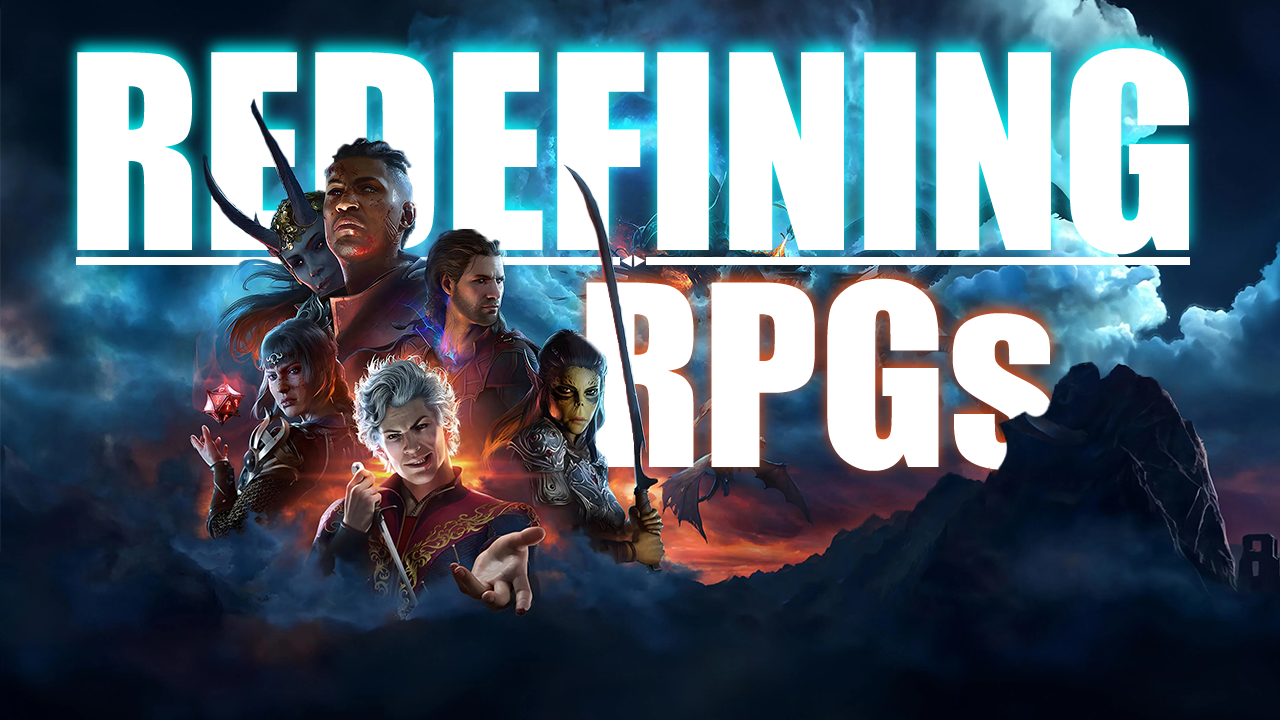
Table of Contents
Overview
If you were to ask me at the end of 2022 what I thought the Game of the Year for 2023 would be, I probably would have said, "Well, there's that new Final Fantasy coming out, or Bethesda's new game Starfield that will probably be up there" but I wouldn't for a second and most people probably wouldn't have said Baldur's Gate 3.
Fast forward to August 2023, and you can only find a few people who believe Baldur's Gate is 2023's Game of the Year. It not only masterfully adapts the concepts of Dungeons and Dragons into a video game format but provides a level of depth, scope and choice that rivals that of its counterpart. But also reshapes and redefines what an RPG can be when pushed to its absolute limits.
This game's sheer amount of choice and branching narratives are a marvel. Not only through the uses of character classes, proficiencies, and the usual stats and perks that aid advantage in RPGs but also the number of abilities and ways you can use the environment or interact with another character to alter an outcome. It is entirely insane to imagine the amount of choices on offer here in Baldur's Gate 3. But it is not only the options of choice, but also the more important part, the impact and outcomes, which are multiple, and it feels like Larian has accounted for almost all instances that a player could think of. It is the definitive experience to encapsulate what playing D&D would feel like in video game format.
Story
A Game like Baldur's Gate 3 is a rarity in this day and age for how grand it is in its size and scope, with each of its three significant acts feeling uniquely distinct as if they were their own separate game, and in many ways. Baldur's Gate's three-act structure feels like watching an epic trilogy similar to that of Lord of the Rings, where each Act is very distinct in its tone setting and character development. It really unfolds and develops in a way that fleshes out the world of the Sword Coast and introduces new characters while giving plenty of room for each character to breathe. Lord of the Rings is a fantastic comparison to Baldur's Gate here, not because they both occupy a fantasy setting. Still, both are extensive and have long runtimes for their medium and a wealth of substories and plots that run in conjunction with the main story. Baldur's Gate's narrative, regardless of the choices you make, feels like it has a history that has been constructed that weaves so well into its broader overarching story.
What Larian has accomplished here is a remarkable feat; every one of my companions mattered. I was continuously conscious of the actions I would take throughout my journey and the repercussions this would have. The side stories and quests do not feel gamified in how you stumble upon them, but more authentically stumbled upon that, based on how you react, can play out in several ways that make your experience feel unique and organic.
Many knock-on variables alter and shift what the story is here from the moment you first enter character customization. There are origin story characters, aka your companions or a custom character you can make from scratch. However, there is another character playthrough known as The Dark Urge. This is a unique and different experience as opposed to the previous two starting points I mentioned, with its unique story that unfolds, incentivizing you to experience this monolith of an experience multiple times. So, two different stories can unfold with unique outcomes from the character creation screen.
But what makes Baldur's Gate so interesting on the narrative front is how much choice is afforded to the player, the amount of choice, and how meaningful and impactful these choices are. Many of the people you choose to help or kill will have a ripple effect on things that transpire at different points in the story, and some of these allegiances can cause a major shift in how many key moments of Baldur's Gate's three-act structure transpire.
Characters & Quality Writing
If there is one aspect that Baldur's Gate never fails to deliver on, it is the writing, all of these characters feel so believable and, incredibly well-written and multifaceted. Every one of the companions you encounter feels finely detailed with their morals and principles, which coincide with their rich backstories that eloquently evolve throughout your playthrough. One thing that makes these characters feel so special is the influence that you the player, have on these companions through exploring and developing relationships with them. It can shape your experience for better or worse depending on how you interact with them; to me, there's a particular beauty in that. It makes your experience feel like yours and again circles back to this video's big, recurring talking point: choice.
I can't stress enough how compelling each of the main companions' stories is in Baldur's Gate. The fact that some are easily missed throughout your travels speaks to not only the replay value but also the confidence Larian had in writing the critical characters they introduce you to and the philosophy of letting the player choose how they interact with the world. It's common with these games that go from over 50 hours to complete for the story and characters' growth and backstories to lose steam. Here in Baldur's Gate, you and your companions are as equal main characters as one another, and their journeys, progression and outcomes are as enticing as your own. I think there is also something that can be said for how Baldur's Gate handles even its romantic relationships. It feels common for many different games with romance options that you chat to a character throughout the game, and it ultimately leads to various sorts of scenes, and it's done. But I feel like beyond the infamous Druid bear romance that blew this game up on the internet, there is a wealth of romance encounters that tactfully work well and adapt according to the choices that the player makes and how they interact with the particular character. The romance option feels like a potential extension and deeper look into the character more than something that exists in service of debauchery.
Suppose I could sum it all up into a brief package of Baldur's Gate's writing of its characters. In that case, its quests and the branching mutations of choice are robust and full of knock-on effects that feel as meaningful and impactful as each other whilst providing different outcomes and moments that shape the journey. The many minor quests and the storyboarding of these outcomes are all so well put together that it feels like Larian has accounted for everything. This impressive sense of scale and consistency of quality writing allows you to get engrossed in Baldur's Gate and invest the 100's hours trying to unravel all of its mysteries and branching storylines.
Gameplay
Turn-Based Combat
The combat in Baldur's Gate 3 operates within a turn-based system, where a character will be afforded a certain amount of actions and movement, and the player will have to strategize how to effectively pick off enemies and use their class abilities to their advantage. Baldur's Gate 3's combat takes every effort to correlate across the D&D experience. The action adopts features from D&D such as opportunity attacks, which are equivalent to turning your back on the enemy to move away, which leaves you open to being attacked, and rolling advantage/disadvantage attacks based on the class you're playing. Different spells or ranged attacks have a range the enemy has to be within to cast.
Whilst this form of combat may sound daunting or come across as a steep learning curve, and in many ways, it is, at the same time, it is also very comprehensive, providing a multitude of visual queues. Explanation's that keep core mechanics complete and encourage the player to think outside of the box and be more tactical as they progress. But the combat works so effortlessly and provides such a strong sense of maneuverability.
I feel Baldur's Gate's combat becomes extremely flexible in how the player can use the environment to their advantage. Whether it is shoving enemies off a cliff or standing on creates to have an advantage on enemies. There are methods to remain stealthy or the capacity to jump into the heart of the fight. There is a limitless number of ways to approach combat and a ton of different ways to leverage and cheese encounters once you get a feel for the combat.
Gameplay Systems
Systemic Systems
Now, discussing the gameplay systems that run under the hood in Baldur's Gate is where you really start to see many of the inner workings of what makes this game so extensive and limitless in what it allows the player to do.
In an interview that Todd Kenreck from D&D had with Baldur's Gate 3's director, Swen Vincke, he mentioned that there is a certain approach towards the inclusion features that Larian was taking with Baldur's Gate 3. This approach stems from a point of reflection from Larian's previous games. Swen mentioned that in the last games, they had included features in the game that they didn't go all in on, leaving some features to feel as though they fell short of their potential. So here in Baldur's Gate, the approach was that if the feature is in the game, it will work across the board in every situation in which it is applicable. An example of this is the Animal Speaking skill, if you cast a spell to speak to one animal, you can speak to ALL animals.
It's important to detail this because what I find so fascinating about Baldur's Gate 3 is how many different spells, items, and objects can have a systemic effect on the world. From what I've mentioned earlier, the story emphasises choice through dialogue options, but it isn't that alone that impacts the world. The player can use spells to teleport, investigate the dead, befriend animals, or turn invisible to sneak through an area. They're able to move almost any item that a person could carry and move it to make a path and access a site that otherwise wouldn't have been possible. You can throw a potion at the floor near a character, have it break and heal the teammate. It is this level of cause and effect that keeps you thinking both analytically and creatively at the same time, and in this regard, Baldur's Gates's combat and systemic systems that bring this world to life are nothing but a stroke of genius.
It makes completing quests or figuring out a puzzle not feel like you're doing "the right way" but one of multiple possible ways. It allows for a level of flexibility that rewards creative thinking and experimentation. It's interesting to me because as I wrote out this bullet point for this review script, it dawned on me, hey, you said the same thing for Tears of the Kingdom, yet Baldur's Gate and Tears are two very different experiences. At this moment, it clicked with me what makes Baldur's Gate 3 truly a masterfully crafted RPG, and video game. It's how it takes the concept of curiosity that extends into every choice you make or action you do. Where Zelda's curiosity and creativity shine through its sense of discovery, Baldur's Gates shine through its cause and effect, leaving you thinking, "how will this shape the outcomes of my journey?" or "How can I creatively get around this thing?". There is a large pool of tools and what feels like an infinite suite of possibilities, and that is what truly makes Baldur's Gate 3 feel like such a monolith of an RPG.
Many spells and proficiencies make you want to leverage your skills in the best way possible and challenge yourself to look at and uncover many mysteries in the world. For example, spells that enable you to talk to animals or the dead are abilities that you can use to open up a new set of options and even provide context to a situation or solve a puzzle. But it's not just these abilities. There are many of them, and the world of Baldur's Gate is asking the player to remain inquisitive and rewards those players who do whilst not necessarily punishing those who don't.
I would like to touch on the amount of skill progression in Baldur's Gate 3, as this game has levels and loot, which play a part in levelling and progressing your character. But what I like about the progression in Baldur's Gate is how directly the items and armor you acquire improve the gameplay mechanics. Sure, they provide stat increases, but more often than not, they also come with additional abilities like allowing you to cast a spell you wouldn't otherwise have access to, or alternatively provide a condition that could allow you extra movement in battle, or enable you to have a bonus action. The different forms of items and level progression all feed back into this overall sense of player interaction with the world and a much more tactical approach to combat.
Multiplayer
There is one component of Baldur's Gate 3 that I feel doesn't get enough love, and that is how seamless and effortless the multiplayer experience for this game is. Baldur's Gate 3 supports both online multiplayer and even couch co-op. Setting up one of these sessions is relatively easy, with online sessions hosted by one player and allowing other members to join. You'll be able to see these party members in your cinematics, and their story choices and romance options are all metered and measured throughout the game. It is a different experience to playing the game solo and definitely brings the experience of playing a D&D experience with friends through a video game to life.
I think that the overall there is something really special here that Larian have been able to create here that few studios are seldom able to execute. It isn't new ground for them with Baldur's Gate 3, but it is something that needs to be acknowledged and commended. For me, when I think of playing games with your friends, I think competitive experiences, looter experiences, or more bespoke co-op experiences like It Takes Two. But a game that is this mechanically complex, and full of depth and systems that have such a large capacity of interactivity and are prone to break even as a solo player. To get this to run, function, and be playable with up to four players, and have it run seamlessly, and not breakdown is an absolute technical feat.
Questing and Exploration
I've discussed in the story segments of this review how impactful the element of choice is narratively for Baldur's Gate. But how these different quests can play out and how they impact later quests feels like an ever-evolving narrative that unfolds, and there are so many quests. Some can feel like they are easily accessible by just going to the major hubs. But others are neatly tucked away and can be uncovered if you play around with the environment. This brings me to the exploration of Baldur's Gate. Each Act has a map you can explore, and the amount of dungeons and labyrinths accessible in this game is mind-blowing. To loop back with what I was talking about with systemic systems and an interactable environment, this aspect of Baldur's Gate is a large part of what makes its exploration feel so rich and dense.
In an interview with PC Gamer, Lead Writer for Baldur's Gate 3, Adam Smith, discussed when approaching the quest design and structure, that the main approaches and considerations that were taken into account were having the quests and exploration be their own thing that players can enjoy that eventually all do guide the player back on track to their story within their own pace. Adam Smith mentioned that he didn't want players to feel pushed towards the main level; it is that understanding similar to the D&D experience as a DM that allows the players to enjoy the currently unfolding moments and being role-played rather than pushing them through the campaign.
Larian has figured out how to make a map feel significant, not due to land mass, but more from the density of travelling from location to location. So many little things like buttons and levers hidden behind create, and portraits will send you down interesting paths and unlock exciting quests or some fun discoveries. It really such a large and varied map to explore, and it's not even the pursuit of completing and finding quests that make this game world fun to explore; it is just the sense of wonder and curiosity of what things you'll discover, whether it is two ogre's doing the sideways dance or stumbling upon a well that you can randomly descend into.
The Act 1 experience for most people will feel like you extensively chart out the map, and you'll feel after 20 hours "yeah, I think I've seen everything. I feel like all the quests here are done" only to chat to a friend, or do a playthrough with your mates who pull a lever somewhere and you'll be like "wait, I didn't see this?" and then start wondering, just how much of this world did I actually uncover? It's an incredible part of the experience, it's crazy to say but missing out on something or only realizing it exists on a subsequent playthrough is something that really is a testament to just how beautifully crafted this experience is and even replaying a quest the second time around doesn't feel like it'll ever play out the same.
Visuals, Sound and Performance
Performance
The Performance for Baldur's Gate is mostly pretty solid. I was running at a pretty consistent 60fps on my 2080ti. However, once I hit Act 3, I noticed some issues with the building taking a while to fully spawn in and render, and when conversing with people, seeing the textures of their armour or clothes that would take some time to spawn in. This can feel a little disruptive, and it didn't bother me at first, but over time, it did start to become distracting. I've read that this issue occurred with Patch 4 and still appears in the Patch 5 update. Another distracting visual bug in the final Act was having two or three different NPC whose jaws would stretch insanely wide like they were Luffy or something. But this was a rare occurrence.
Outside of these issues that I've mentioned, the game ran like a charm, and these issues really only took form towards the later hours of my playthrough.
Soundtrack and Voiced Performances
Moving on to the Soundtrack and performances in this game. Wow, the OST is a banger; some battle themes create a rush that makes me feel like I'm leading the charge in Lord of the Rings. The different musical composition of the Soundtrack is absolutely astounding. The reoccurring motif of the riff from the central theme of Down by the River, slipping itself into many tracks, to the more epic and triumphant pieces that play in combat, and the sound of these tracks hitting a high when you slay an enemy, really does make these encounters, particularly boss encounters feel like a spectacle to experience when everything is firing off. Speaking of boss encounters, a few particular meetings go off regarding phenomenon. The composer Borislav Slavov has absolutely killed it here and has easily produced one of the year's best soundtracks.
Next, I'd like to talk about the performances here from the various actors who performed some of the most influential and captivating performances of the year seriously. I discussed earlier how insane and brilliant the writing is for this game, but that goes hand in hand with how incredible the performances of many of these different companions are, not to mention many of the other side characters and antagonists.
All of the companions in this game are incredibly compelling, and every one of the performances of the main characters was incredible, with two of the highlights for me being Neil Newbon's performance as Astarion, which he won best performance for which is a well-earned award, and Jennifer English's role as Shadowheart. These two characters, in particular, had powerful narratives that can go several different ways and invoke a plethora of emotions and that are always absolutely nailed. I also liked Samantha Beart's (pronounced bay-art) performance as Karlach. She brought that energetic f-bombing-dropping legend to life, and I loved having that character in my party. The performances in this game never fail to bring these characters to life, and I'm eager to replay this game and see more of the other companions have more time with them.
But it isn't just your companions. It's the side characters, and especially the villain too, that have such a strong performance in this game. I didn't think I'd be saying this, but Spider-Man wasn't the only game to get a performance from J.J. Simmons this year. Seriously, this game's performances across the board were exceptional and absolutely well executed.
What Makes Baldur's Gate 3 Special
There is seldom a game that can go from an early access game of three years to being an overnight phenomenon like Baldur's Gate 3 did. So many factors make a game of this calibre so special. You can see from the game's first Act that this game was iterated on and fleshed out to an insane degree to meet much of the feedback the community echoed over the years. The community the Larian fostered before its launch helped make this game the gem it is today with its official release, and then the newer broader community of people like myself who only dived in August this year. Regardless of when you first hopped in the game, you can immediately tell that this game is something special.
Swen Vickle stated in an interview that the goal for Baldur's Gate 3 was to make a cinematic triple-A experience that can draw in a new audience that is usually put off by the steep learning curve that both turn-based CRPGs and D&D, ditching that baggage and making what an accessible experience is, that doesn't compromise the level of depth that these games offer. It's easy to see that they've easily succeeded here, providing an experience that can be enjoyed solo and with friends and an experience that feels like it truly does push RPGs forward and delivers an experience full of depth and complexity.
I've been thinking about this a lot recently, I love RPG's and to me Baldur's Gate 3 was this special rare experience where it reminded me of what I loved about these types of games. There's been a lot of discourse this year surrounding many RPG's
Conclusion
To bring this video to a close, Baldur's Gate 3 is a monumental feat for gaming. It tells many tales, one of a game that cleverly brings the world of Dungeons and Dragons to life through a game and exposes the iconic tabletop to a much broader audience in a comprehensive manner. But it also brings the genre of the CRPG to a much larger audience, reinvigorating a genre that has, over the recent years, become something that felt rather daunting and complex to jump into. But outside of all the influences and impacts that Baldur's Gate has had on video games, it is simply a marvel of a video game, something that you can truly get lost in, and one that will continue to surprise you whether you experience the game as one of its origin characters, custom characters, or The Dark Urge. It is crazy that even after the launch, massive success, and even winning the Game of the Year, Larian is still adding free updates to this game that respond to fan feedback and add additional content to the experience. It truly is a game that comes once in a generation, and it is one that I can play for years to come and feel as inspired and enthralled as that first playthrough. It truly is an innovator and a game that will set the bar for what an RPG can be for the years to come. Whether you're playing this alone or with friends, this game is simply a masterpiece of an experience and one that I strongly recommend on occasion because once you start Baldur's Gate 3, you won't be able to stop.
Thank you for watching, and keep an eye out for more upcoming videos, particularly one where I'll be talking about my top 10 favourites of this year! Take care and enjoy.
z