Ghostwire Tokyo - Review
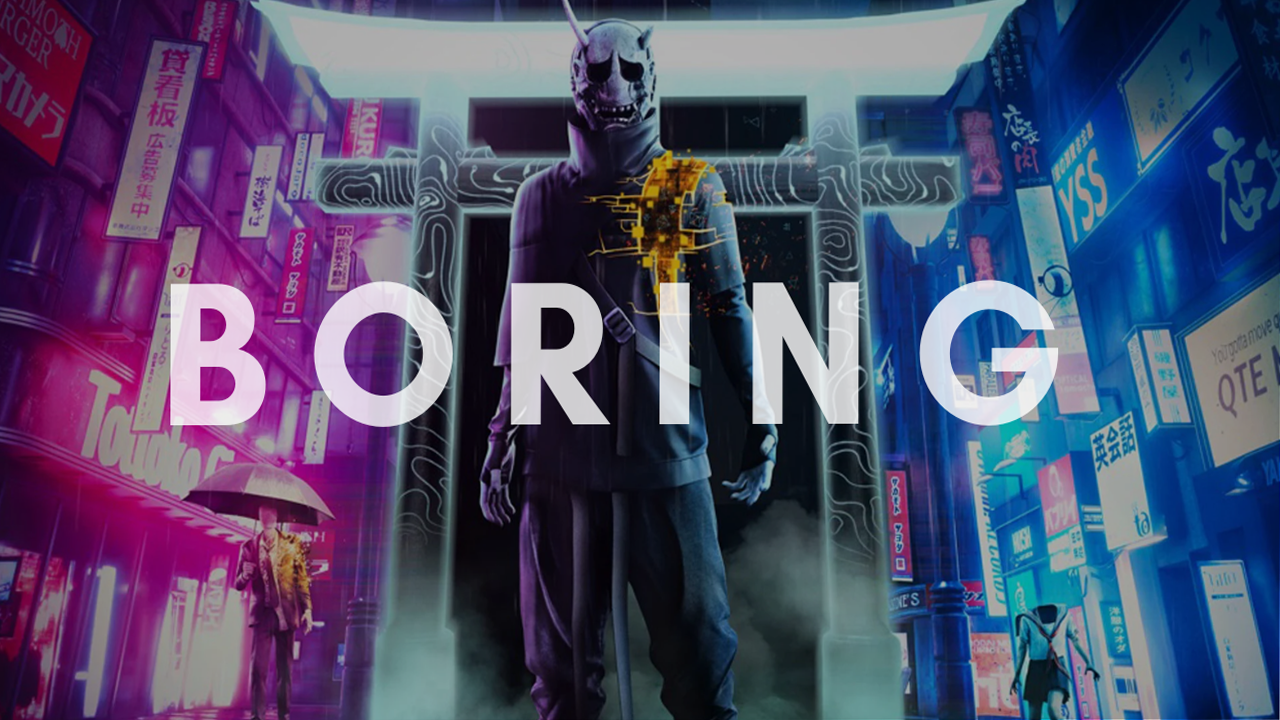
Table of Contents
Overview
In 2022, we've seen the gaming landscape shift with many major studio acquisitions, studios jumping from in-house engines to Unreal Engine 5, and services allowing games to become more accessible than ever.
A big reason I raise this point is related to Bethesda, who in 2021 was acquired by Microsoft and before this was seeing many of their games receive middling reviews, such as Wolfenstein Youngbloods, or more notably, Fallout 76. The publisher was in an interesting phase, but more importantly, Tango Gameworks was also in an interesting phase. Having finished up with The Evil Within 2 in 2017, the studio wanted to take a chance on something new. It wouldn't be until E3 2019 that we'd have an update on the next big title from the studio. This new IP was Ghostwire Tokyo, and the reveal trailer generated a lot of hype, not only due to its unique visuals and take on Japanese horror. But more for the energy that the creative director at the time, Ikumi Nakamura, bought to the stage stealing the show from the Bethesda conference.
However, creative leads would change due to political disputes at the company that would affect Ikumi over the development of Ghostwire Tokyo. The role of director was then handed over to Kenji Kimura.
After 13 hours with Ghostwire Tokyo, I can better understand where the troubles for Ghostwire Tokyo originate. The game is an utter disappointment in almost all regards from a gameplay perspective. The game feels like the product of two opposing ideas trying to conflict that doesn't work, and the final product is a bland mess of a game. It's a shame as Ghostwire Tokyo provides stunning visuals, incredible art design, and fantastic imaginings of Japanese folklore as enemies. But under all this visual finesse is a dull, stiff gameplay system, coupled with the most tedious open-world design, that would even feel outdated in the last gaming generation. Let's get into the review.
Narrative
The story for Ghostwire Tokyo is mainly forgettable, with a few moments that are a visual spectacle, if anything. The game provides different segments in the story that feel like they capture the aspects of a horror game. But most of the time in Ghostwire Tokyo's story you'll feel as if you're a Shounen protagonist in an anime. The narrative in these pivotal moments, like the starting scene at the hospital, really captures the horror aesthetic that I was hoping for in this game. However, as the game progresses, it becomes goofier and more of an action than a horror game. The best way I can describe this is that Ghostwire Tokyo has moments of horror where I feel like I'm watching The Ring, but then the next minute it'll divulge into what feels like the latest Dwayne Johnson action film. It was jarring and threw me out of the experience. It again feels as if two contradicting visions for this game leave the narrative feeling like it's chasing its tail for the most part, and then it's over before it begins.
The characters in Ghostwire Tokyo are forgettable. The only characters you'll grow to care slightly about is Aiko and KK's relationship, which at times can have some funny and memorable character moments together. However, all the stand-in characters are bland one-dimensional characters that you'll forget once the story concludes. The worst offender of this, however, is the antagonist. My god did I not like this character? What a waste of potential. They had the setting, the atmosphere and legit a whole arsenal of Japanese folklore to pull from, and this was the big bad boogieman. Everything about him is so underwhelming from his personality, motives and overall development in the story. It again is so boring, so bland and so dull.
Gameplay
The gameplay in Ghostwire Tokyo is fundamentally flawed and is a mess in all departments. Firstly, why does this game have an inventory management system? Why does the game have a skill tree that is practically just a bunch of cooldowns? I have a big question: Why is this game even an open world?
The Progression systems in Ghostwire Tokyo are shallow and artificial. They only exist to give the player a false sense of progression. The skills acquired never evolve the gameplay and never provide any sort of player expression other than what outfit you're wearing, which you'll only ever see in cutscenes.
The open-world design of Ghostwire Tokyo contains all the pillars of a typical open-world game in 2022. I'd be willing to look past that if the mission design was at least fun and somewhat engaging. The first pillar of this gameplay loop is the Gates that the player must seal to make other areas of the open world available. This is one of Ghostwire Tokyo's biggest crutches to me. It is the intention, and it becomes so tedious and annoying. Especially seeing as if the player wants to experience the main story for this game, they'll have to detour and seal these towers before continuing the story. This wouldn't be such an issue if this were only once or twice, but this happens at least four times in the game. Not to mention that every shrine you clear makes you sit through a minute of every map marker popping up on your screen.
The side quests usually revolve around killing enemies in an area, which can sometimes provide the player with a boss encounter. Some other forms of quests and mission design are trailing missions, a relic of the late 2000's that should stay in the past. The open world is also littered with a bunch of spirits that need to be freed that the player collects using an item called a Katashiro. You can turn these Katashiro's into phone booths to provide experience. These spirit collectibles are spread across the map and are so mindless and boring, but I'm sure they will add life to the game for players wanting to 100% complete the game.
Now we're going to dive into the moment-to-moment player experience. Firstly, controlling Aiko is terrible. The player's movement is so stiff and slow to react to enemies that are usually moving reasonably fast. I've upped the sensitivity throughout my playthrough, but my god, does the player feel handled like garbage. The player has three abilities in their arsenal and a parry move. The ability toolkit the game provides the player leaves the implication that your player would need to be more agile, so I don't believe that this player stiffness is something that the developers intentionally did.
Now we get to the combat of Ghostwire Tokyo. It's compromised. There are three abilities provided to the player throughout the whole game. The abilities are Wind, Fire and Water, but none of these abilities seem to offer any depth. There are no status effects or counters. I'm not doing any water bending and evolving my craft. The game has three abilities that remain the same throughout the playthrough:
- Wind ability provides average damage.
- Fire ability provides heavy damage.
- Water ability provides light damage.
Some talismans can stun and burn enemies, but these are more temporary items than abilities and barely break up the monotony of the gameplay. There is one other weapon that the player is provided and that is a bow. The enemy diversity is decent, with various enemy types with ranged, healer and heavy enemies. The different enemy movesets are usually pretty simple with one or two telegraphed moves. But these interactions, feel weak due to the lack of combat diversity that the player can use to beat these foes, ultimately making combat in Ghostwire a chore.
This is one of the interesting aspects of Ghostwire Tokyo. There are moments in the game where Aiko is separated from KK, meaning that all super abilities are disabled, leaving the player with only their bow and the limited amount of ammo available. These sequences are where Ghostwire's gameplay loop is at its best. Although still not ground-breaking, it is a lot more suspenseful and provides a more engaging experience than its super-powered open-world counterpart.
This aspect of Ghostwire, coupled with some of its more linear levels and the art direction, truly does show some moments of greatness. Beneath all the bloat and garbage is an idea and aspect of the game that feels more like what I'd imagine the original vision for this game was meant to be. The psychedelic visuals, art direction, mind-bending corridor levels, and this game element provide a stronger foundation for the game to bounce off.
Conclusion
Overall you may feel like I've been highly critical and harsh on this game, and you wouldn't be wrong to think that. But although I have been harsh on this game, I hope that Tango Gameworks consider moving forward with the IP and trying to make a sequel. They dabble with an interesting idea and some elements in this game that can work. It feels like this game was one with an original vision to be one thing, and during a time when Bethesda was in a rough place, opting to have this original vision was scrapped in favor of a game that meets more of the typical industry conventions of the time. But now, given the current state of Bethesda with Microsoft at the helm, maybe the future for Ghostwire Tokyo could be promising, and I do, despite all the flaws and shortcomings of this game, hope that we can see Ghostwire Tokyo deliver the initial interest it garnered.