Hogwarts Legacy - Review

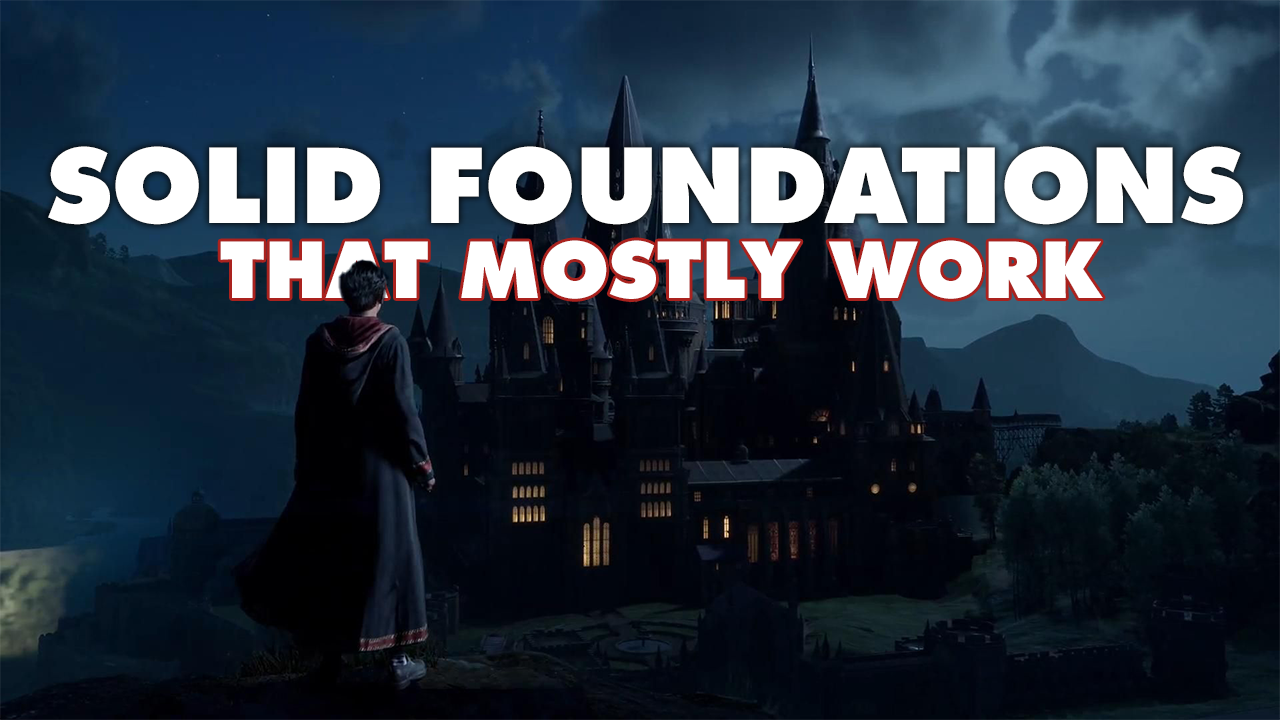
Table of Contents
Overview
The time has arrived. I have been chipping my way through Hogwarts Legacy for the past month and have finally, after around the 45-hour mark, completed my playthrough of the game. Straight off the bat, I can tell you that Hogwarts Legacy is a must-play for anyone in love with the Harry Potter universe. The game takes place roughly 100 years before the events of the films and roughly 100 years before the events of the movies. It captures everything about the wizarding world so beautifully, providing the player freedom and access to all of the wonders the wizarding world has on display in the films, and it brings this experience to life in full force in this game. In short, Hogwarts Legacy is the Harry Potter game you've always dreamed of as a kid brought to life.
The broader question, once you look at the whole package here, is how well Hogwarts Legacy achieve many of the different gameplay elements it reaches for, from its open world, its astonishing labyrinth that is Hogwarts, the many different spells and puzzles scattered throughout the world. I aim to tackle all of these questions in this video, so let's dig into my review of Hogwarts Legacy.
Story
First off, I'd like to discuss Hogwarts Legacy's story, which will see you taking on a custom character that you can create and customise, which I'll discuss in more depth later on in the review. Hogwarts Legacy's narrative is a competent stand-alone narrative, how your enjoyment and satisfaction with the story will to some degree, ride on your familiarity with the Harry Potter universe. As I mentioned, this game takes place 100 years before Harry Potter, and it does not require you to have any prior knowledge of Harry Potter. But it does as you would expect to pull from a lot of its source material and reference a lot of the little quirks found throughout the books or films.
Once you've loaded into the game with your character, you'll be on your way to start your first year at Hogwarts as a fifth-year student meaning that throughout the story, you'll be learning and catching up to speed on many of the different core spells that are the essentials of being a wizard. However, your journey is abruptly interrupted as a dragon attacks you, and you begin to notice a few strange occurrences that start to unfold and take place. Many key events and stories here take place, and without spoiling the events, I'll say this. Hogwarts Legacy takes a good swing at trying to tell a story here. At certain points, with its approach to both artistic and level design, it can perfectly encapsulate this fantastical feeling. On the flip side, the narrative moments and story beats can feel flat, with a story that feels like it takes a while to kick off and runs out of steam midway.
There are a variety of characters that you're introduced to throughout the story, with only a handful of them being fleshed out or given a good amount of screen time. But more importantly, your character is never given any meaningful choices that shape and make your playthrough feel unique. There are options, but they're mostly illusions of choice that feel like most of your actions have little to no impact on the overall flow of the main story. You are a blank slate in Hogwarts Legacy, and as brimming with stories as the wizarding world is to tell, it feels like none of them makes you or your character feel significant or like they made an impact on the legend of these tales.
If there is one area where Hogwarts Legacy drops the ball, it is with its villain. I felt nothing for Ranrok. His motives and objectives need to be explored more; when they are explained to the length they are, it is too little too late. He feels like a typical one-dimensional video game villain. It's rough to say this when discussing a series that gave us Voldermort, one of the most iconic and recognising villains of recent memory. I understand that is a high bar for Avalanche to match. I'm not saying they needed to recreate the same villain here. I can appreciate what they were going for, but sadly it didn't land here for me. With their future games in this series, they strike gold with their antagonists, but Ranrok didn't do it for me.
But overall, Hogwarts Legacy's world and mini little adventures are fine, and its main story is fine, but only just fine. It didn't invoke anything in me and was absent of the antics and adventures of a group of friends, a memorable protagonist, or a sinister villain for which the Harry Potter series is iconically established throughout the years.
Gameplay
Combat
The combat for Hogwarts Legacy provides diverse spells you can tackle throughout your game and a reasonable level of experimentation throughout your playthrough. There is your typical type of damage abilities that you would expect that you can thread and weave between your basic attacks. But some abilities can disarm enemies, push or pull an enemy towards you, and even the ability later on in your playthrough to transform your enemies into explode-able barrels through transmogrification spells. You can cast spells through the spell wheel at the bottom right. There can be four spells bound to a wheel, and you'll have three wheels available at the get-go to alternate and map spells, too, with the 4th wheel being unlocked later in the game.
It provides a comprehensive system that allows you to think on the fly and play around with many iconic spells from the Harry Potter universe. One spell essential to your arsenal is the Protecto spell, a separate spell that doesn't fall under the spell wheel. The protecto spell enables you to protect yourself from enemies creating a bubble that protects you from enemies and allows you, if successfully parried, to redirect at enemies.
However, others can do this, as you'll encounter many enemies on your ventures who surround themselves with colour-coded shields that will match a particular type of ability. For example, for a purple-shielded enemy, you'd use a force-type spell like Accio, a red shield, a Damage spell like Expelliamus, etc. Hogwarts Legacy's combat needs to be more complicated to understand. Still, it sits in this good place in the middle, providing a competent and experimental kit of abilities that can hold you over until completing its main story. However, once you have put around 30+ hours into this game and if you're aiming for 100%, I question the core combat system's staying power and flare. There is a dance and rhythm to encounters in Hogwarts Legacy, but after a few hours clocked, it can start losing a bit of its charm.
The combat loop, whilst fun in the early hours, starts to become repetitive, and there needs to be more in the ways of enemy variety and different approaches outside of your colour-coded spells to handle different enemies. Although there are creatures, dark wizards, goblins and more that occupy Hogwarts, they all operate the same, meaning your approach to combat is always somewhat similar. Only a handful of enemies do diversify combat, and the ones that do, remove the shield-breaking mechanic and have it devolve into spamming abilities and dodging attacks.
Overall, the combat in Hogwarts shines with each sequential unlock, enhancing the overall experience. Hogwarts Legacy's battles provide a competent level of flow and freedom in its approach that can feel empowering to play around with. It isn't until you're on clean-up duty once the game is complete that you will start to handle some of the tedious aspects of Hogwarts Legacy, which is more a crutch that stems from the schema of its open-world activities more than its combat, but still has a ripple effect nonetheless.
Questing
Class Assignments
As a fifth-year student starting your first year at Hogwarts, you must take on different assignments from many professors there. This works both from a narrative standpoint and as a way that Hogwarts Legacy can introduce new abilities to the player's list of spells to play around with. It also works to diversify many of the different forms of side content throughout Hogwarts Legacy.
The structure of these class assignments usually revolves around interacting with many of the game's different mechanics. It can sometimes feel gamey, ticking off checklist objectives such as killing five spiders or using a particular ability several times. However, it is cool to attend class, learn the spell, and live out the Hogwarts fantasy once these objectives are completed. I would like to see how Avalanche can refine and evolve these assignments in future entries, having the quests have you go on adventures with different professors or take on other activities within the classroom to unlock spells. But their current method for these types of quests is serviceable and manageable to complete.
Relationship Quests
The more narrative-led quests that unfold throughout Hogwarts Legacy surround some of your classmates with whom you will become friends from the different houses. These quests flesh out many other stories of core characters attending Hogwarts and even reward you with new abilities. One storyline that I enjoyed was Sabastian Sallow, who is on a quest to cure his sister of an uncurable illness and the twists and turns that unfold in this storyline are some of the more fascinating parts of Hogwarts Legacy's narrative that enrich the overall atmosphere and storytelling throughout this experience. Out of all of the forms of questing in Hogwarts Legacy, the Relationship quests are the most rewarding in their approach to storytelling and in the way it threads into the more overarching narrative and world-building.
Standard Side Quests
The third and final form of side quest content is the larger pool of odd jobs you can find in many of the neighbouring cities of the wizarding land. These are the more typical side quests you've become familiar with in many open-world games. They usually take form in the ways you're familiar with: quests that will see you exploring caves, killing different types of enemies and things of that nature. These quests are competent and work well if you're a fan of these large-scale open-world games. For Hogwarts Legacy, these quests become repetitive and fall into the same pitfalls that many of your other large-scale triple open-world games do. Once you've done about 4 or 5 of these quests, you've seen it all.
Flying Brooms and Beasts
At one point throughout your playthrough, you'll acquire the ability to fly around the world using your broomstick. You'll be able to pick up various broomsticks that all provide their own unique set of traits. Flying around on your broomstick feels fun and intuitive to grasp. One aspect regarding flying and the broomstick mechanics in The Hogwarts Legacy that fans may notice is absent, and that is Quidditch. It's explained through the story why this activity isn't available, and many may believe that this is due to Avalanche needing more time to complete this mechanic and mini-game. I think this isn't the case as we've recently seen the announcement for a separate Quidditch-related game. It feels somewhat disappointing to see such an iconic staple of the Harry Potter series not be accessible here in Hogwarts Legacy. This is not a deal breaker, but it is something that I hope is incorporated into this series's future entries because Avalanche feels like flying your broomstick foundationally down.
The following form of mounts that will be available in Hogwarts Legacy ae, the infamous Hypergraph from the Harry Potter series, is available here for you to fly around on. It gets even crazier once you acquire one of these Hypergraphs. You'll be able to capture and obtain many others that are different colours. We'll discuss more on beast collecting shortly. But there are two flight modes in Hogwarts Legacy, and both feel faithful to the source material, and the feeling and handling of these mounts are pretty tight.
School Life vs Exploration
Open World
Where Hogwarts Legacy falls as an Open World
Okay, we've discussed many of the core major parts here with Hogwarts Legacy. But at its core Hogwarts Legacy is an open-world game. Suppose you've watched the video I released a couple of months ago, where I talk about Curiosity Driven Open Worlds. In that case, you'll see me talk about what makes an open world that enables and leans on player curiosity so special. I also discussed the current trend and climate for recent open-world games that have taken shape over the past ten years, where many open worlds would follow the blueprint that was established by Ubisoft titles.
I bring up this point because it is essential here when discussing Hogwarts Legacy. When I think about open-world games these days, I like to see them on a spectrum where between a checkmark sandbox to a curiosity-led sandbox, where on one side, you see your Assassin's Creeds, your Far Cry's, and on the other side, you have your Breath of the Wild's, Elden Rings and Outer Wilds. But since making that video, I have thought that this scale isn't so black and white, and somewhere in the middle of this spectrum lies a game like Ghost of Tsushima, a game that possesses many of these modern open-world mechanics but isn't bogged down by the weight of its side content. Hogwarts Legacy falls in an adjacent position to that category.
Where Hogwarts Legacy provides various activities scattered across a large map, it doesn't overextend with anything like level throttling, experience boosters, or high points to scout a map. It has the campsites, repetitive side quests I touched on earlier and hidden chests. But I feel like Hogwarts Legacy deviates from this formula with some different activities and how you interact with them. Some cool activities are the puzzles from the Merlin trials and even those found throughout these dungeons. Some quests here can lead you to dungeons, too, and it is at this moment the Open World of Hogwarts Legacy shines. Its open-world approach can be battling between two different templates. On its surface, it provides the typical open-world structure you're familiar with. However, it also establishes a more diverse array of activities that flesh out the skeleton of Hogwarts Legacy's open world. Some of these standout activities are the Merlin trails which provide some fun puzzles that are always simple enough to solve and generally call upon you to understand and utilise one of your many different skills. Another activity that works well here in Hogwarts Legacy is the dungeons scattered across the map. These dungeons usually have stronger enemies and one or two puzzles littered throughout and are fun. One cool mini-game in Hogwarts Legacy is the ability to rescue different beasts from poachers, store them, and play with them. This method can also be used to obtain new Hypergriffhs, a great idea that Avalanche has incorporated into the world here.
To me, the map in Hogwarts Legacy is a little too big for the number of activities to partake in. It has a level of charm for its first 20 hours, but as someone who completed roughly 50-60% of the game's content, the appeal begins to wear off. It has a lot of great ideas that any Harry Potter fan can appreciate. However, much of this game you can stick with post the main campaign does fall to how much you're in love with this universe more than how fun the game is to play. It isn't a soulless open world as it is clear that there are tons of different activities both in-air and on the ground that make detouring feel like a worthwhile task in the beginning, but the sheer quantity of activities and their repetition can weigh on the overall experience. The solution to this would be a smaller map, and removing some of this bloat could significantly improve the post-campaign exploration of the game.
Game Systems
Looter Elements
Like many of its contemporise, Hogwarts Legacy has a looter system where you can acquire armour to upgrade your health, defence, and offence. When I say this, these upgrades come in number stat increases more than changes to the players' abilities. However, you can eventually add modifications to your gear that can provide a particular benefit, such as more damage to goblin enemies or increasing the damage of a specific spell. The system works on a technical level, but in my opinion this, this loot system runs paper thin beyond the diverse range of outfit pieces.
I discussed recently in my review for Jedi Survivor how I love the customisable outfits, beards and other unlockables for being purely cosmetic. They were fun little side discoveries in that game that made exploring and discovering fun, purely to stylise your character. Here in Hogwarts, it feels like the inverse, you could remove all the stats and keep the different outfits, and nothing would change. The loot, levels, and stats all feel arbitrary. It feels like the loot systems in Hogwarts are more a means and driver to incentivise exploration rather than a fleshed-out competent system that cohesively flows within the game.
The options for customisation here are standard, nothing to brag about, but serviceable, providing about 15 to 20 hairstyles, facial features and skin tone customization options, and two voices, one for male and the other for female. As I mentioned earlier when discussing the loot systems, this game's character customization and different outfits and attire are crazy. They've added a great depth of gear and items into this game that is easy to add due to the transmog system built into it. This aspect of the system allows for a great deal of player expression and will enable you to tailor your character to your liking.
I thank Avalanche for adding the ability to collect different outfits and transmog the getups you have collected, as on the front of customization with your character and look. They've nailed this aspect well. But once you begin to assess the gear itself and what it contributes to the game, you begin to find a hollow system that feels more shoehorned into service, customization and exploration. Don't get me wrong. It should work in conjunction with those elements. But when it feels like its existence purely rides on that, it's time to reassess ways to make it a more fleshed-out and engaging component.
The Room of Requirement
Anyone familiar with Harry Potter will know about The Room of Requirement. For those unfamiliar, The Room of Requirement is a room that tailors itself to meet the needs of the person who occupies it. Here in Hogwarts Legacy, it serves as a hub for customizing its appearance and layout. It allows you to craft different potions, and here you'll provide those upgrades to the armor I mentioned earlier. Here, you will also store the creatures you rescue in the open world. These creatures you can feed and groom will yield your resources to upgrade your gear, and in this respect, these elements of the gameplay loop work quite well.
One thing that impressed me was how customizable The Room of Requirement is. It allows you to place down many different types of benches and tools to use, as well as a variety of furniture with various colour choices and many other decorative items. This is an excellent aspect of the game that opens up around the midway point, and it is a fantastic idea for a hub. I'd like to see how they build on this concept in future entries.
Visuals and Sound
The overall visual and sound presentation for Hogwarts Legacy is impressive as it encapsulates much of the fantasy and wonder of the Harry Potter universe. Throughout your year at Hogwarts, you'll see the seasons change and the landscapes around you, and the feeling of walking around Hogwarts is everything you could ask for when you watch the movies. The sound design for the different spells you cast, and the sound of crushing heavy attacks of creatures you face, is one aspect of the experience that sticks with you. The various performances from the main and supporting characters feel fitting, and little touches like the different talking paintings and students that occupy Hogwarts are minor things that pay off massively in creating the overall atmosphere and feeling.
Conclusion
Overall, Hogwarts Legacy is a fun game full of activities and a competent combat system. Suppose you're looking for a fun open-world experience that tactfully incorporates many triple-A open-world standards into a video game. In that case, Hogwarts Legacy has all of this and a reasonable amount of staying power with the content it provides. The combat is fun and customisable, making for a great variety of methods to deal with enemies, even if those enemies aren't unique and varied in their approach to the player. Hogwarts Legacy provides a strong blueprint for what Avalanche Studios can do and iterate on in future entries. Hogwarts Legacy is a solid offering for anyone looking to dive into the wizarding world.