Silent Hill f: A Different Direction for the Series that is Brilliant (Review)
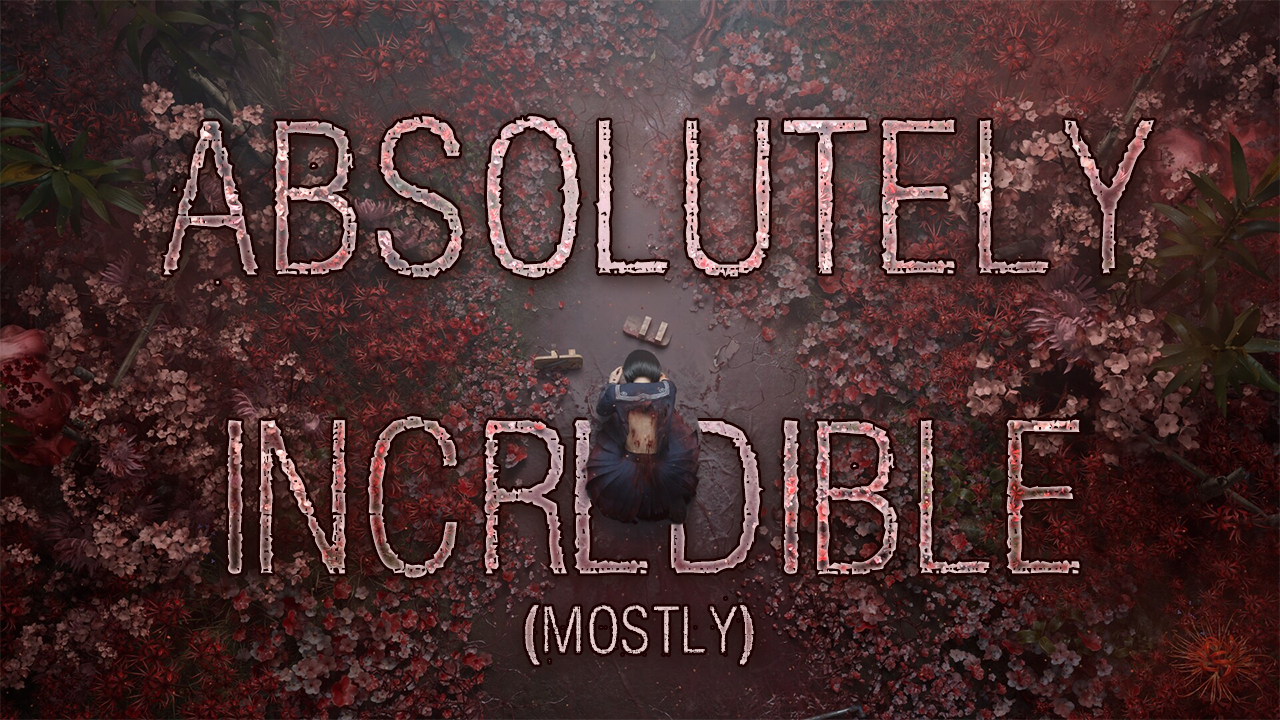
Table of Contents
Overview
There is seldom a game that evokes such a visceral feeling in me. One where the writing, storytelling, and imagery are all so opaque yet clear, with meaning and feeling. Characters and a world that feel haunted and tormented. Silent Hill f is a game that, as an experience, is absolutely a stunning work when it is allowed to flex its narrative muscles, and there is no shortage of that thanks to the guidance of Ryukishi07, of When They Cry fame, who wrote the script for this story. Where Silent Hill f falters is in the realm of combat, especially on its harder difficulties, with systems that in isolation aren’t necessarily bad, but culminate in a later half experience that can really wear down what is otherwise an exceptional experience. There is so much under the hood in this game, and despite the divisive response within the Silent Hill fandom, I do suspect that Silent Hill f will be a favorite amongst many in the years to come and is one of my personal highlights for 2025. So let’s dive into why Silent Hill f is an incredible video game.
Story
Narrative Overview
Now, let’s start with the story, and for this section of the video, I’ll give a spoiler-free cliff notes of the story and my thoughts. I’ll go into the themes and discuss spoilers in the next section, and I’ll leave a timestamp when I start that section of the video.
The story for Silent Hill f follows Hinako, who, after an argument with her parents, sets out to catch up with her friends. Her friend Shu gives her capsule pills to help with her tension headaches. Things go south when both Hinako and her friends are chased by a shadowy figure in white that we’ll refer to as the bride. The ground around Hinako becomes engulfed in Higanbana, the Red Spider Lilly flowers.
From here, Hinako starts exploring the morphed streets of her hometown, and the descent into the journey of her psyche begins. Overall, I enjoyed Silent Hill’s story the most, and I think the themes it wrestles with are very sensitive topics, handled with the right amount of gravitas that many games miss. It is a story that is served and essential to experience multiple times.
Themes
Womanhood & Loss of Self
The first major theme I would like to discuss is a central, underlying idea of Childhood, along with tenets such as purity, innocence, and the journey of self-discovery that lies ahead. This is juxtaposed with adulthood and the responsibilities that come with it. But more so, the societal and cultural pressures that were pervasive and the norm for a woman in the 1960s.
The opening scene shows Hinako talking to her sister Junko, who is off to get married. If you read the character log on Junko, it says she has been absent since her marriage. In the opening scene, you see Hinako in dispute with her father, suggesting he is abusive. All of this is to get to the core of an inner conflict inside of Hinako as a character, a question on her womanhood, the person that society wants or demands she be, like a docile, demure, or submissive type, be it like her mother, despite being viewed as a more boyish person by her peers based on her figure and hobbies. It is an inner identity crisis, and this conflict between the two different senses of self, being Hinako herself, and the societal version society wants her to be, is at odds. This is where the clear distinction between The City Hinako and The Dark Shrine Hinako begins.
Many themes and symbols depict a loss of self that I feel clearly articulate the inner tug-of-war in Hinako’s perception of self. Death in Silent Hill f isn’t something of a literal sense, but more so a sense of change to the psyche of Hinako, a loss of who she is as she slowly morphs into the Hinako she feels society wants her to become, aka the Dark Shrine version. Silent Hill f uses many different motifs to articulate death. Still, the first and most common in Japanese media is the Higanbana, the Red Spider Lily, a symbol of death, loss, and goodbyes, all concepts that fit the inner sense of disassociation Hinako is experiencing. What makes this doubly interesting is how these flowers are inserted; these flowers engulf the town, slowly erasing its memory, and even kill one of Hinako’s friends. An ominous figure leads this whirlwind of flowers in white robes that we’ll refer to as The Bride. But the bride's use of the Red Flowers erases both Hinako’s sense of self and her independence. I have more to say on this, but we’ll hold that thought for now.
I now want to touch on another symbol that is used for death in Japanese culture, and that is Foxes. In Japanese culture, the fox is also associated with death and the afterlife. This becomes interesting when you consider that The Dark Shrine Hinako is guided through this underworld by a man in a Fox mask, who leads her into a ritualistic marriage that binds her to him.
There is also Hinako’s name and the association with the doll that continues to send messages to her throughout her game. The doll can be interpreted as a Hina Doll. The Hina Doll symbolizes health, happiness, and good fortune, especially for younger women. I believe that the use of the Hina Doll and its messages to Hinako represent her inner child and younger self, trying to protect her from what this arranged marriage with the Fox symbolizes: death to her independence and womanhood. I think this loss of self is most visually evident to the viewer during the ritual scenes, when Hinako’s Dark Shrine self is not only losing physical parts of herself but also symbolic ones.
What Hinako’s Dark Shrine self eventually turns into is what we’ve been referring to as the bride, and what the bride has been doing throughout this playthrough is spreading death throughout Hinako’s hometown. This, to me, is symbolic of a destruction of herself, her identity as a less feminine person, as someone who wanted to remain young. The bride represents the societal pressures and expectations placed on Hinako, and, through this Higanbana flower slowly destroying the town, it, too, is choking out Hinako’s identity and individual sense of self.
I think its associations in Silent Hill f are all tied to death, both in a literal and figurative sense, that being the death of Hinako’s childhood, the death of freedom to be who she wants to be. The death comes from the changes that are thrust upon her that she is forced to make. It is also tied to goodbyes, in the sense of saying goodbye to her childhood, her youth, and her side fighting for survival against the deal she was pressured into and sold off to.
Childhood vs Adulthood
This brings me to the second theme that underpins and ties into the overarching theme of Womanhood: the constant power struggle between Childhood and Adulthood. More importantly, the internal battle Hinako faces between childhood freedom and independence, and the adult realities of responsibilities she is forced to manage. This power struggle isn’t just metaphorical, but also a physical battle between two versions of Hinako, the waking world’s child-like self who wants to preserve her independence, her childhood friendships. Then the Dark Shrine Hinako, one who is burdened by responsibility and obligations placed upon her by tradition, her parents, and circumstances, situations that Hinako feels more subject to, rather than embracing.
It is a belief that both versions of Hinako hold, that they both can’t coexist, which is the catalyst for constant push and pull for control, where one Hinako is trying to kill the other, and is ultimately why the bride wants to kill the waking world Hinako.
Hinako’s conflict begins when she is placed into an arranged marriage with a man, Kotoyuki, from a wealthy family who offers benefits to Hinako’s family and, by the traditions and cultural status of the time, would be considered a benefit to her. The reason why Hinako is chosen is that she saved Kotoyuki from a fox when she was younger. This man’s family has proposed an arranged marriage between Hinako and him, and this proposal stirs the inner turmoil and conflict that builds into the manifestation of two worlds.
These two worlds are created based on a conflict that is forced upon Hinako, a battle between her young and innocent self that feels like it is being suffocated by the burdens and responsibilities of adulthood and the roles that a woman of the time would have to take on. Another way that these two versions of Hinako can be represented is as birds. The waking world: Hinako, the white bird, young and free, preserving her innocence. Whilst the dark shrine Hinako is aware of the benefits that come with this arranged marriage. It is enticing and beneficial for protection, security, and status. It would provide a life with many benefits. These two birds are opposed, black and white against each other, reinforcing the notion that neither can coexist.
The final ending you’ll most likely receive, Ending D, is what most would consider the definitive ending and the one with the most closure. This sees a heart-to-heart conversation between both versions of Hinako, an understanding of these two different parts of herself, and it represents a sense of self-understanding and oneness with herself.
Beauty & The Grotesque
One of the game's central themes is its running motif, and the development team explicitly made “finding beauty in terror” a core tenet of its design philosophy. Producer Motoi Okamoto explained that in Japanese horror, “when something becomes too immensely beautiful and perfect, it instead becomes deeply unsettling”, and Silent Hill f embraces this idea and philosophy with open arms. It’s the second major theme at play in Silent Hill f and that is continuous contrast between beauty and the grotesque. There are many examples of this throughout the various playthroughs.
The most obvious example that comes to mind is the juxtaposition of the two worlds Hinako finds herself in. There is a beauty in the way that the worlds are lit up, the vibrant colors of the Otherworld. The bright red Higanbana flowers, also known as the Red Spider Lilies, are just one example of symbolism. You can see these flowers, so bright and pretty, literally blooming out of people's skin, engulfing them in whole, a horrific and grotesque death, that is shrouded in bright, vibrant, and beautiful flowers.
There is a contrast between the two worlds Hinako occupies: the town looks dingy, rundown, and hopeless, while The Dark Shrine looks vibrant, with bright colors and lighting that create an illusion of comfort. Al Yang, Silent Hill f director, explained, “We created our visual designs to have a distinct uneasiness to them, but also have a horrific charm that would make it so you just couldn’t stop staring.” These scenes and this horror are depicted in many different moments, especially the ones where
The beauty in Silent Hill f’s horror is deceptive. Think of the flowers, they’re beautiful yet toxic. The environments can look serene, but can be suffocating and depressing, given their mood and presence. The monsters can be elegant, but destructive and chaotic in their nature. In many ways, the grotesque nature that Silent Hill plays into is a mirror of the human condition, human fragility weighed against resilience.
Silent Hill f treats horror both as alluring and repulsive; there is a warped, twisted elegance that feeds into and accentuates the themes of beauty that grow from the deeper, darker undertones of trauma, shame, and isolation. The grotesque becomes a window and a mirror into Hinako’s repression, and a stark reminder that pain left unspoken doesn’t disappear; it grows and manifests, blossoming into something dark, twisted, and horrific. It may be beautiful to look at, but it is grotesque at the root.
The Capsule Pill
Now I would like to discuss one recurring motif at the forefront of Silent Hill f and most certainly one of the earliest items you’ll see in the game: the capsule pill. This object is accessible and easy to consume, and gameplay-wise, it is littered everywhere, and this is intentional. The capsules, in the context of Silent Hill, act like a fragile band-aid, patching the metaphorical wounds Hinako feels. Even within the context of gameplay, these capsules are littered all over the place, easy to pick up, easy to consume, and incentivized as a means to top up your health. The capsules take root like a fungus, plunging Hinako deeper into denial. Their presence reinforces the underlying feeling of control and descent into denial and refusal to both accept oneself and one's circumstances, which is perpetuated throughout Silent Hill f. Thematically, the Capsule Pill symbolizes control. Shu gives these capsules to her to help her with her headaches, but it is also representative of his attempts to control her. He hopes she will “come to her senses” and see the truth, as he loves her and doesn’t want her to go through with the arranged marriage.
But isn’t just in this moment and it isn’t just Shu, both the Fox and Shu in Ending B are talking about the wants of Hinako and what Hinako deserves, to a point of drowning where neither of these lovers are listening to the wants and desires of Hinako and this ending one that some consider a good ending is actually one of the worst, as Hinako takes on the role of the bride and comforts both of these men, and goes through with the marriage, and it does look like a happy ending, until the camera pans away to the young childhood Hinako merged into the floor screaming her fears, and worries of being like her mother, until being squashed out.
The Capsule Pill, whilst it is supposed to be a remedy for headaches, in reality, is a representation of Hinako’s disassociation and refusal to both confront and accept the reality of the situation that she is facing. The two worlds that are being neglected are the self-loathing she feels at being told what she should be, what society demands of her, and the way the people around her perceive her. This disassociation and suffocation of Hinako’s self can also be viewed through how Hinako views her parents, resenting her father for how he is abusive towards her and her mother, but also resenting her mother for subjugating herself to the abuse of her father.
There is a scene between Rinko and Shu where Rinko says to Shu at school that Hinako is gone, she died. This isn’t a literal death but more the Hinako that would be available for a relationship, the one who is their childhood friend. The first ending you’ll get once you finish Silent Hill f is Hinako fighting and essentially killing the version of herself that is The Bride. Despite all her efforts, The Bride continuously reappears. Hell, even in this ending, if you do die, you’ll get back up with all your items replaced with unlimited capsules that keep you going. This ending also implies that Hinako snapped and went on a rampage at her wedding; it is an outcome of her suppressed rage, and whilst the default ending, it is considered the bad ending.
Societal Pressures and Tradition
The next theme that Silent Hill f explores is the societal pressures imposed on people, particularly women, and Silent Hill f’s Producer said in an interview with The Gamer, “The 1960’s were a time when this type of repression was prevalent, but it was also one of the hallmark eras in Japanese history for women’s rights movements”. Where Silent Hill 2 is centered around one's guilt for their actions, Silent Hill f’s psychological battle is one of preservation. The preservation of who she is, the fact that she has more manly qualities, and is judged by her friends for her figure, mannerisms, and way she interacts with her friend Shu.
Speaking of her friends, there is an underlying metaphor that underpins the objective of each Dark Shrine Segment: Hinako needs to kill each of her friends, and ultimately her parents. It is in my view that these deaths are actual, literal deaths. Still, metaphorical representations of disassociations and the ritualistic nature of these deaths are supposed to be a representation of cutting ties and the harsh realities of traditional marriages. But these realities aren’t just explored through the external, but also introspectively through what is one of the most horrific scenes, depicting Hinako in a ritualistic manner, ripping and tearing herself apart, ripping her arm off, and replacing it with another, the Foxes, aka your husband. A face that is ripped off and replaced with his mask, a literal branding on her back of his insignia. To top this all off, she is aware that this is a bad thing that goes against who she is, yet she does it to herself anyway.
Throughout this section of the video, I’ve talked about the tug of war between the two Hinako’s, and it is well contrasted in this aspect, where the Hinako in the waking world hates things like gender roles. Her friends judge her for having non-romantic and non-traditional relationships with her male friend Shu. These characters share statements such as “shouldn’t you just date him,” and others that say Hinako “shouldn’t act like a boy.” These are all jabs and underhanded attacks from Rinko due to the jealousy she harbors over Hinako and Shu’s relationship.
It is also a psychological battle against the traditions of pre-arranged marriages, and to preserve a sense of identity and independence in her life choices. There are two worlds and perspectives that Silent Hill f is continuously swapping between. There is Hinako in the town, the independent Hinako, who has her own identity and characteristics. Then there is The Dark Shrine Hinako, who is slowly being consumed and indoctrinated into this ritualistic marriage with the Fox. This flower that is spread throughout the town, and the continuous trials that Dark Shrine Hinako is subject to, such as killing each of her friends, and even her parents, are all metaphorical of things that are forfeited in a traditional marriage, the things that one detaches from to take on their responsibilities.
Gameplay
Combat
Now I want to talk about the most divisive and arguably worst component of Silent Hill f, and that is its combat. So on my first playthrough of Silent Hill f, I played this game on hard, assuming story mode would be a brisk walk with very few encounters. No, hard mode is, as its name suggests, hard. The reason that I discuss the difficulty is important because I think it is a key in exploring the limitations of Silent Hill f’s combat system. But before all that, I’d like to outline the combat loop of Silent Hill f. So throughout the story, you’ll be exploring and picking up new weapons with durability tied to them. Hinako has two attacks, a light and a heavy, which will drain her stamina, making her sluggish or immobile when fully depleted. Lastly, there is a sanity meter that depletes when enemies perform certain attacks and can be consumed to let Haniko perform focus attacks.
Overall, each mechanic I listed is fine and can work, and for the early hours of this game, it does function. But the further in that you get to this game, it feels like you’re juggling multiple systems and variables in encounters that you’re forced to face, and use resources on, and the types of repetitive enemies that, depending on your difficulty, tank the hits that you take. It becomes cluttered, and I get that a part of the Silent Hill experience is that you are just a normal person; the clunky combat is part of its charm, and I don’t even dislike its clunky nature. It is the way that tries to place and force the action upon you; in parts, it becomes more a frustration than a satisfying action or suspenseful horror. Now I see all of this from the perspective of finishing this game on hard mode during my first playthrough. It wasn’t till my second playthrough, when I dropped the difficulty to story, to see the other endings, that it started to dawn on me. There were fewer enemies, and the ones you’d face died a lot quicker. I felt like, in this mode, the combat was manageable and fine. But it is on the harder difficulty that this combat is really pushed to its limits, showing the many limitations and setbacks that make it a slog to engage with.
In many ways, it reminded me of the issues I had with The Callisto Protocol. Thankfully, this game had a lock-on. But there are horror games today that really focus on melee combat, and try to swarm you with mandatory encounters with multiple enemies that don’t feel like they work. I do feel Silent Hill f manages it better than Callisto Protocol. Still, there is this awkwardness in its design where it doesn’t feel built for more than 1 to 2 enemies that you are facing at a time, and the game goes out of its way to defy this rule, especially for the second half of its runtime in Silent Hill f. So I would urge you, if you are playing this, play it on story mode the first time around; the combat on harder difficulties will only hinder what is otherwise a fantastic experience.
Puzzles
Now I would like to talk about the other side of the gameplay component: the puzzles of Silent Hill f, which, first and foremost, vary depending on the difficulty you selected. Every time I selected hard mode, the difficulty had the best balance of challenge and overall fun problem-solving and riddles.
Overall, the puzzles are an interesting mix that mostly felt satisfying to solve. While you would be reading and collecting notes, piecing together mysteries that also run in parallel with narrative elements that further provide backdrop and context to the unfolding story, there are some puzzles in Silent Hill f however, that left me scratching my head. Ones that would feel more like an oddity in the choice of words or ways that they’d convey a clue to the player. Once you have them figured out, it does make them easier on subsequent playthroughs, but it isn’t fun or intuitive to solve. But thankfully, these are few and far between.
Towards the second half of the game as well, many of these puzzles would become a matter of finding items to unlock rooms, doors, and things of this nature. That puzzle alone isn’t a bad thing, but you’ll experience this about 2-3 times. When the second half of the game is more loaded with combat encounters, as I mentioned in the previous section, on top of deciphering these puzzles, it does provide a good level of tension, but at the same time, an equal part of frustration about exactly how you can solve them.
Game Systems
Progression
There are a few different progression systems that are woven into Silent Hill f. There are upgrades that Hinako can get for many of the systems that interplay in the combat. These are your health, stamina, sanity, and the amount of Onamori that you’re able to carry. You’ll use a currency called faith to purchase upgrades, and you get faith from making offerings of items that you pick up in the world in exchange for faith points.
On that note, there are Onamori, which are little charms that provide a unique perk to Hinako. You can equip a certain amount and mix and match to fare better in combat. But all of these systems really are straightforward in their design, and aren’t really meant to be that deep.
These systems do make the combat feel like there is some level of control and methods to make life a bit easier for the player, but the Onamori’s and upgrades aren’t going to shift the experience greatly. This isn’t a negative; I do feel the combat is designed in a particular way meant to be frustrating, and despite the flaws I have with the combat, I do feel the progression falls within the same box as the combat outlined, and it is serviceable, all things considered. Still, it isn’t anything deep, and that is fine, because in a Silent Hill game, I don’t really need a deep level of upgrades or perks for progression.
Multiple Playthroughs
Silent Hill f is heavily focused on the themes we discussed earlier. Still, it is an essential system that locks into both the narrative and different additions to the gameplay. I know that for many Silent Hill games, there is an incentive and a bigger picture painted through multiple replays. But here in Silent Hill f, the different endings and events that change on sequential playthroughs are essential and mandatory compared to prior entries. A good example to compare this to is Nier Automata, which has 3 to 4 endings and playthroughs that expand on each other and ultimately lead to the game's true ending. Silent Hill f’s gameplay and overarching narrative, along with new puzzles, mysteries, and mechanics that offer new endings, are enhanced by this additional content, both in gameplay and through story cutscenes that further explain the story.
Visuals, Sound, and Performance
Visuals
Starting with the Visuals for Silent Hill, they are solid and provide a distinct environment from what the series is known for, whilst preserving the eerie atmosphere defined by its gross, dingy back alleys and signature fog. But the location change offers an opportunity to tap into the roots of Japanese horror in new ways, offering a sense of horror that draws on Japanese Folklore and twists and molds this juxtaposition between beauty and the grotesque. It almost feels reminiscent of the cosmic horrors of Juji Ito. This approach to visual presentation is largely different from what the series is known for, and to some, it may seem like a Silent Hill game is missing, given its absence from the titular location and the sense of space it lacks. But I feel that Silent Hill f’s sense of space and atmosphere still oozes with psychological horrors that are felt from its American-inspired counterpart, and the manifestations that Hinako faces are all so disgusting and vivid in my mind whenever I think back. But I feel like it is this approach to enemy design, the intentional nature, the narrative implications and subtext of their designs, that I feel are characteristics of Silent Hill f, that I feel are still largely on brand with the broader franchise.
But even past the creepy, depressing horror that Silent Hill f usually invokes, Silent Hill f has some really messed-up horror, and the thematic reasons behind it are confronting, even for Silent Hill, and will catch some off guard. The theme of beauty and the grotesque that I discussed earlier largely works because the two conflicting worlds of Silent Hill fare are contrasted, with the waking world feeling ominous, dingy, and depressing, much like the worlds of Silent Hill we know and love. Then there is The Dark Shrine, which is better lit and more vibrant in its design, along with a sense of mystique.
Sound
The sound presentation for Silent Hill f is another component that correlates well with the game's visual presentation. Not only the choice of music, but also the absence of music, leaving you with the ambiance, the flickering lights, the creaking sounds, or murmurs in the distance, all make the world so tense and the streets haunting to explore. The voice acting performances in Japanese are really great too, and the musical choices are good, but nothing out of the ordinary, outside of one or two tracks that really stuck with me. But the thing I really love about the sound design is how it uses enemy sounds and movement to let you detect and hear enemies, even when they’re not in your line of vision. It’s one element that I really think enhances the experience and helps to provide a sense of urgency and distance between you and the enemies chasing you down. Even when navigating the halls, hearing the steps of these wooden mannequins walking in the distance.
Performance
The performance of Silent Hill f has been mixed for me, with me encountering multiple issues throughout my time playing. I’ve been playing this on my PC with a 4080 Super, and I’ve experienced frame drops, severe screen tearing, and a few crashes to desktop. These issues, stemming from the combat frustrations I mentioned earlier, really weighed on that first playthrough, and it is hard not to feel thrown out of the experience by them, which often appeared at the most intense moments. I enabled vsync, limited my fps to 60, and even then, there were still issues with both screen tearing and frame drops. Overall, people have been praising this game's performance, but sadly, that hasn’t been my experience. But your mileage may vary.
Conclusion
Silent Hill f is overall an incredible experience and one that really stuck with me. It’s a game I loved for its narrative depth, atmosphere, mood, and overall tone. Silent Hill f for me is largely held back by the limitations of its combat and the way it tries to juggle many different systems, from weapon durability, sanity bars, and melee-focused combat with enemies that have health that can feel spongy and annoying to face. Many of these criticisms I’ve mentioned are rearing their head most on harder difficulties. But outside of that, there is an interesting game that tackles some hard topics and handles them with the tact and gravitas that make the actions and consequences feel meaningful. The multiple playthroughs and peeling back the onion of this story are absolutely incredible and satisfying. If you play sequential playthroughs on lower difficulties, many of the combat issues are less prominent, given New Game+ benefits, and enemies are easier to play through.
The immediate reaction to this game has left people mixed, due to the long history of the Silent Hill franchise and the feeling and unique setting associated with it. But beneath the immediate aesthetic differences, there is a unique narrative with heavy themes and a wealth of depth and subtext, and I suspect that as time passes, more people will recognize Silent Hill f’s strengths and overall excellence. So I’ll close on this, Silent Hill f isn’t a masterpiece, there are a few rough elements, but the good far outweighs the negatives. In totality, Silent Hill f is an absolutely incredible experience, and one I’d consider a must-play for fans of the series or genre.
Resources
- https://www.reddit.com/r/silenthill/comments/1nmz5gt/final_silent_hill_f_thoughts_and_theories_on
- https://www.facebook.com/groups/2517571938361996/posts/24549416794750861
- https://www.inverse.com/gaming/silent-hill-f-review
- https://www.gamespot.com/articles/silent-hill-fs-reception-proves-why-its-feminist-messages-are-so-important/1100-6535638
- https://www.goonhammer.com/goonhammer-reviews-silent-hill-f-the-hills-are-alive
- https://www.thegamer.com/silent-hill-f-review
- The red flower called a higanbana (Red Spider Lilly) which symbolizes death, loss, tragedy, and goodbyes. (https://en.wikipedia.org/wiki/Lycoris_radiata)