The Callisto Protocol

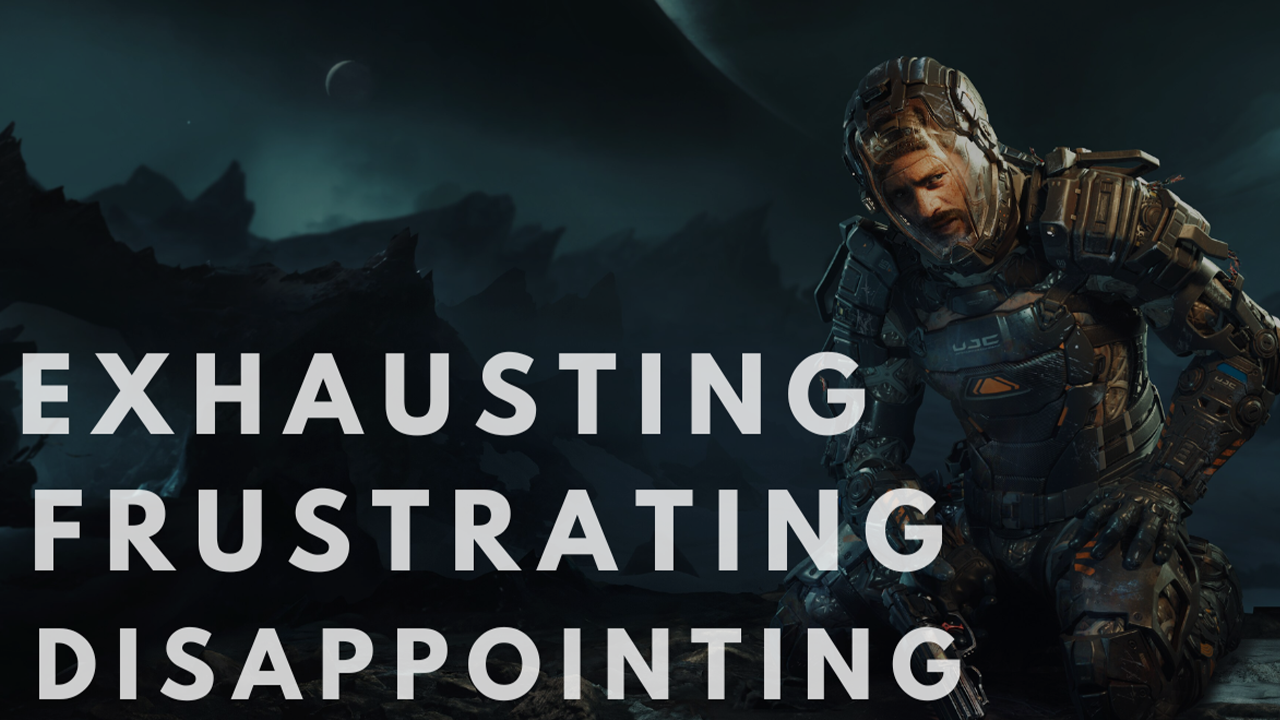
Table of Contents
Overview
In recent years the Survival Horror genre has been lying dormant from the roots that the series was originally built upon only recently seeing a return to the roots of old school Resident Evil, Silent Hill, Parasite Eve and in more recently Dead Space. The more interesting one for the purpose of this review being Visceral studios Dead Space, which took the roots of the survival horror genre and placed it within a ScFi horror setting. Dead Space was an exceptional title for it's unsettling environments, innovative UI, it's limb dismantling combat, and it's engaging puzzles.
That's why in 2017 when the news broke that the studio was closing down fans were saddened to see the Dead Space franchise fade into obscurity as this was at the peak of their "no one wants single player games" saga.
Many of Visceral Studios ex-employees including ex-Dead Space Director Glen Scofield who would go on to form Striking Distance and begin working on the spiritual successor to the beloved franchise.
But before we dig any further into this review any further there is one thing I'd like to preface. I loved Dead Space, and tend to enjoy many of the survival horror titles. I really went into The Callisto Protocol being optimistic thinking and hoping that this game would be a misunderstood gem, but sadly I really struggled to find enjoyment in The Callisto Protocol.
I want to ask you the viewer. What makes a good ScFI horror game?
Is it the atmosphere, the story, the environmental storytelling, the inventory management, the scary moments, the interlocking levels and exploration, the puzzles?
Is it all the above?
Ok, so before we dive into my review for Callisto Protocol it is important to note that we all find enjoyment in different games and if this is a game you are enjoying or a game you did enjoy then I'm happy for you.
However, to me, unfortunately The Callisto Protocol falls sure in almost all of these categories, feeling like more of a middling action game with cheap jump scares than survival horror . The scariest part of The Callisto Protocol comes from actually having to interact with many aspects of what The Callisto Protocol offers, some issues being technical but many more being foundationally broken.
Gameplay
Okay so I'm going to start off by getting into the gameplay for Callisto Protocol which is where I feel the most issues that I have with this take form. Callisto Protocol takes a bold departure in terms of combat from Dead Space with a much more heavier focus on melee combat through the use of your Baton. This is an interesting change and I can see where Striking Distance were going with this approach however, in execution this new approach begins to crack and fall apart quite quickly.
It's important to mention in this section, since my time with the game that Striking Distance have fixed many of the myriad of issues that the game at launch from the stuttering issues on PC, to the time it takes to swap weapons and the default reload speed, which are all great welcomed additions to the experience of the game, however there are many issues that I feel are still foundationally broken with the game which we'll dive into now.
Broken Combat
Melee Combat
Callisto Protocol starts off strong feeling familiar to players with any experience to Dead Space, from its HUD to its lighting and atmosphere. You'll be tasked to acquire your first weapon being the previously mentioned Baton which will throw you right into what could quite possibly be one of the worst melee combat systems I've encountered in a while.
Callisto Protocol's melee combat is serviceable in one on one encounters but completely falls apart once multiple enemies are thrown into the mix. This is due to the snappy cinematic feeling that comes with the melee combat, removing vision of your surroundings, but still leaving you vulnerable to enemies that can attack you and given how easy it is to die, you'll feel at times cheated as you sit through countless death sequences over something that felt bullshit.
These types of moments become more and more apparent as you progress throughout Callisto Protocol's story, as the game will introduce you to a variety of different enemies that feel counter intuitive to how the core gameplay loop feels. For example, the early segments of the game and a general rule with survival horror games is to conserve your resources and use what is necessary.
This is where things start to get a little messy as you'll be fighting enemies in close quarters combat whilst having other enemies shooting projectiles at you, what is troubling is that your ability to evade enemies attacks is only narrowed to one enemy in a combat sequences and if another enemy starts attacking you, your camera may snap to this enemy leaving you unable to reposition or manoeuvre the encounter making the absence of something like a lock on function felt in these moments, as I do think this would allow for more player agency.
The combat sees very little in terms of variation over your 8-9hr playthrough with the game, you'll be able to upgrade the various weapons you have available in the game, unfortunately besides one additional move to knock back enemies. Meaning that combat boils down do being a game of dodging and attacking, which brings me to dodging in The Callisto Protocol.
Dodge Mechanic
The dodge mechanic is the second component to the melee combat that plays alongside the melee action and the way it works is that you need to move your joystick in a direction and then if the enemy attacks again move in the opposite direction. Where this gets annoying is again when you're facing multiple encounters. This again due to the absence of a lock-on means that you're unable to dodge the attacks of enemies flanking you or projectiles being shot at you.
The dodge mechanic in Callisto Protocol in many ways feels like an idea that on paper would be a great concept to base the core combat loop of a game around, however coupled with the structure and gameplay loop of Callisto Protocol is where I feel the clash comes into place. This dodge mechanic feels very action oriented in an oppressive SciFi horror world, and mechanically it feels like a gimmick more than a proper gameplay mechanic that elevates the gameplay.
The What if
Now I do think there is a world where elements of Callisto Protocols core melee combat can work and I see it being in a way where the player can make more use of the environments and being able to lure enemies into one on one encounters, and disincentives fighting multiple enemies. This could be coupled with some light stealth mechanics that would provide a more tense horror experience that I do feel would serve both the feeling and combat experience of the game.
But unfortunately, what I feel like we're left with is a game that becomes tolerable at best once you're able to use guns and statis abilities and insufferable when needing to rely on melee combat.
Stasis Abilities and Puzzles
Callisto Protocol has brought across the stasis abilities that were found in Dead Space. Where in Dead Space it was used as a tool for puzzle solving, in Callisto Protocol stasis serves more as a offensive weapon where the player can push and pull the enemies into environmental hazards, which is fun and the most enjoyable form of combat that can be found throughout Callisto Protocol.
But this brings me to the puzzles and stasis abilities, the switch for stasis moving to be more of a combat mechanic makes sense here, as puzzles really are absent from the game besides mindless puzzles that say take the fuse from one box and put it in another.
Levels that lock and Items that become inaccessible
The change from open explorable areas to linear
I don't want to one for one compare this game to Dead Space, however I do feel that in a lot of ways this game was trying to take a lot of the foundations of that franchise and work as a spiritual successor to Dead Space. But major departure in The Callisto Protocol is through the more linear structure of the levels. The Callisto Protocol does have a few optional rooms, but I noticed in some areas if you progress enough in an area and return to an area to pick up items you previously didn't have room for the items no longer become interactable, which feels like you're wasting resources.
A to B Levels - Linear style
The major change that can be seen in Callisto Protocol is in the approach to level design. Callisto Protocol seems to adopt a more linear structure with its levels moving the player room to room, instead of the more traditional approach of having areas or hubs you revisit that slowly open up as you discover more items or figure out more puzzles. Whilst both approaches have their merits, I feel this approach doesn't work in the games favor as you'll further progress into the game you'll fight the same enemies over and over and have very little other gameplay elements to break up the combat. This also puts a dampen on the environments found throughout Black Iron as you're pushing room to room never being able to be properly acquainted with any of the phenomenal environments that are on offer in Callisto.
I do understand why this approach was taken and that was to provide a more cinematic approach to the game and whilst this approach could have been viable, it ultimately buckles under what is The Callisto Protocol's narrative, or dare I say lack there of a narrative.
Story
Strong start, that falls off until its finial act
The story for Callisto Protocol starts off intriguing, the introduction sequence being somewhat familiar and yet different in a nostalgic kind of way, the cinematic cutscenes that look absolutely stunning, you feel like you're about to be in for a great time. However, after the first hour where the introductory story moments take place and the game begins to kick in, the narrative begins to take a backseat for the first four hours of the game.
One of Callisto Protocol's greatest strengths lies within its stunning visuals, the environments and vistas really encapsulate the sense of dread and it really manages to create the oppressive environment where you feel like the odds are always against you.
As I stated before the narrative takes a backseat for most of the game and feels as though it is giving you a simple surface narrative to justify the gameplay and the objective of shifting you room to room. The characters in the beginning have potential to be interesting but are fairly forgettable. The major reveals and plot points felt like a letdown to me, as it felt that as the games narrative was just about to pick up steam that the story takes a turn with the most predictable story beats and before you know it the game is over.
Conclusion
Okay, so this review has been pretty scathing and I understand that many have found enjoyment in this game which is great, however the stiff melee system, a bland dodge mechanic, and the absence of a lock on leave the combat feel more nightmarish than the horrors of Black Iron ever did. It hits hard for me that I can't recommend the game and that it has let me down this much, I really wanted this game to be a win as an avid fan of particularly Dead Space 1.
However, I want to end on an optimistic note, I do think that this series is salvageable and that with some fine tuning and changes that a Callisto Protocol 2 could be a game celebrated by the community. There is a world here, and an atmosphere coupled alongside some narrative beats that could eventuate into something fruitful. But as it stands Callisto Protocol is serves as more of a mediocre appetiser to the Dead Space legacy than the successor the series deserves and I am hopeful that one day this series can carry on that legacy.