Kingdom Come Deliverance Retrospective

Introduction
Role-playing games, by their very definition, let a player assume a role: a character thrust into a set of circumstances and a world that calls for exploration and invites change, for better or for worse. Whether the player is the Dragonborn or Commander Shepard, there is always a through-line between the player and their character that shows their influence on the world, and their rise to power.
Kingdom Come: Deliverance's core ethos is built around depicting a world that is accurate to its era, guided by a mantra of "no magic, no dragons, no chosen-one story." KCD lives by that creed. It starts the player at the very bottom, a pleb who cannot even wield a weapon, and lets them grow into its world not through arbitrary systems but through doing. Everything feels manual in its design and intentional in its outcomes. Want to become proficient with a sword? Equip a sword and use it. What KCD offers is an experience that is unique and distinct in its design, relentless, harsh and brutal in its early hours with everything working against the player, then rewarding and gratifying in its later hours in a way that few other RPGs manage.
After finally took the plunge on this one last year, after it had sat on the backlog for years, which means the version played was not the recent enhanced release. Even so, KCD stands as one of the most interesting and charming RPGs of recent years. Here is the thing, the hook, the charm factor: the player never truly becomes overpowered in KCD. Instead they become acquainted and confident with the many systems that make it tick, and that offers a sense of mastery that feels unrivalled. It is rough around the edges, with bugs and technical hiccups surfacing from time to time, but what waits underneath is an RPG that is distinct in its world, quest design, combat and overall sense of immersion. It is an absolutely incredible must-play experience.
Development
The project began as a pitch from Daniel Vávra, a Czech designer and writer best known for his work on the Mafia series at 2K Czech.
Vávra left 2K in 2009 to pursue an ambitious personal vision: a first-person, medieval role-playing game with a proposition that was unusual at the time. His pitch was built on a core ethos that would underpin the entire endeavour, that of "no dragons, no magic, and no chosen one fantasy." The game would devote itself to historical accuracy, and set itself in 15th century Bohemia.
Warhorse Studios was founded on 21 July 2011, and first announced it was working on an unannounced role-playing game on 9 February 2012, having licensed CryEngine 3. On top of CryEngine, Warhorse built their own AI engine to provide routes, routines, hobbies and work schedules for the NPCs who populate the towns and cities the player explores, all with the aim of making the world feel real and lived in. After 17 months, Warhorse had a working prototype and began pitching to international investors. Publishers were sceptical at the prospect of a realistic RPG with no fantasy elements, and the studio faced several close calls with closure.
The turning point came through Kickstarter. The campaign launched on 22 January 2014 with a goal of £300,000, and by the end of February it had raised over £1 million. This was where Kingdom Come: Deliverance truly began. More than 35,000 fans partially funded the game and followed its development along the way, establishing a community-first relationship that the studio has said shaped its identity in the years that followed. Development ran across a four-year cycle, with alpha and beta builds shared with backers for feedback. The game released on 13 February 2018.
Kingdom Come: Deliverance arrived in a rough state, with numerous bugs and performance issues that made for a poor first impression. Despite the technical problems, the game still landed for a great many people. Warhorse worked to patch and improve it in the years that followed, and overall the game was considered a success, even driving an increase in tourism to the Czech Republic as players sought out the historical landmarks found in the game. More recently an enhanced version has released, and the sequel found even larger mainstream success, making Warhorse Studios a household name.
Story
The story takes place in 15th century Bohemia and places the player in the shoes of Henry of Skalitz, a blacksmith's son who yearns for a world of adventure but is protected and deterred by his father, a well-travelled warrior turned blacksmith who has retired to the quiet life in Skalitz.
Henry's destiny changes when Skalitz is attacked by a Cuman invasion, and he escapes by the skin of his teeth, winding up in the town of Rattay where the real journey begins. Henry's arc sees both player and character climbing up from a weak peasant, the blacksmith's son, into a skilled swordsman who tracks down the people who killed his parents, seeks revenge, and reclaims his father's sword.
Kingdom Come: Deliverance excels in its storytelling and in how it intrigues the player into learning more about its world. That is in large part down to the hook of the main story, which keeps you wanting to know where Henry's journey will take him next, but also to the side adventures scattered around the world. Some are epic and globetrotting in nature, others more mundane and down to earth, painting a vivid picture of day-to-day life in the towns, the churches, and the different kingdoms and local tournaments.
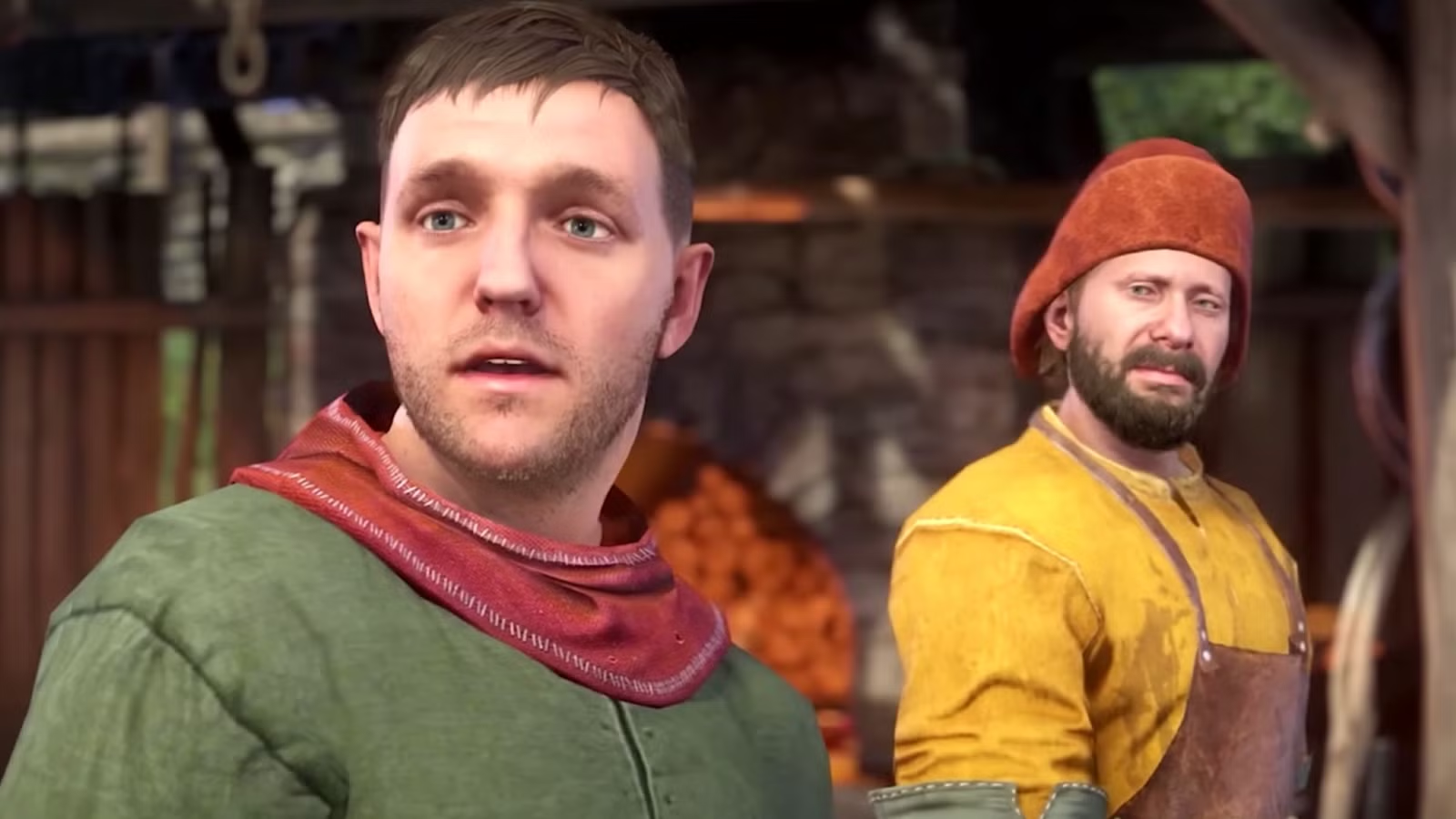
Without diving too deeply into spoilers, the writing and heart of Kingdom Come: Deliverance really is something special. Henry is a charming and endearing character, and being in his shoes, picking his responses and hearing the delivery on some of those choices, is frequently comedic. There is so much soul to him. Even the side characters like Hans or Father Godwin are memorable, and the side stories and adventures shared with the different characters of this world make this depiction of Bohemia feel vivid and well realized. I suspects that when the Kingdom Come series is looked back on, many will talk about Henry the same way we talk about Geralt or Commander Shepard.
On top of this, the level of choice and variety in both the side quests and the main story makes every decision feel like a canon event within your own world. That comes down to how well it is written, and how many of these events play out and tie into one another. If there is one strength that stands as Kingdom Come's superpower, it is its writing, and more specifically its style of writing, which is deeply human, earnest, and above all full of soul.
Gameplay
Combat
The combat evolves the typical form of first-person melee found in other RPGs, where swinging a sword can feel automated, offering heavy and light attacks while the game and the animations handle the rest. In Kingdom Come: Deliverance the player gets two attacks, a jab and a slash, but things become more complex through the star shape that appears around the crosshair. That star is comprised of five separate parts of the body that Henry can hit, with the top representing the head, the two beneath it the arms, and the bottom two the legs.
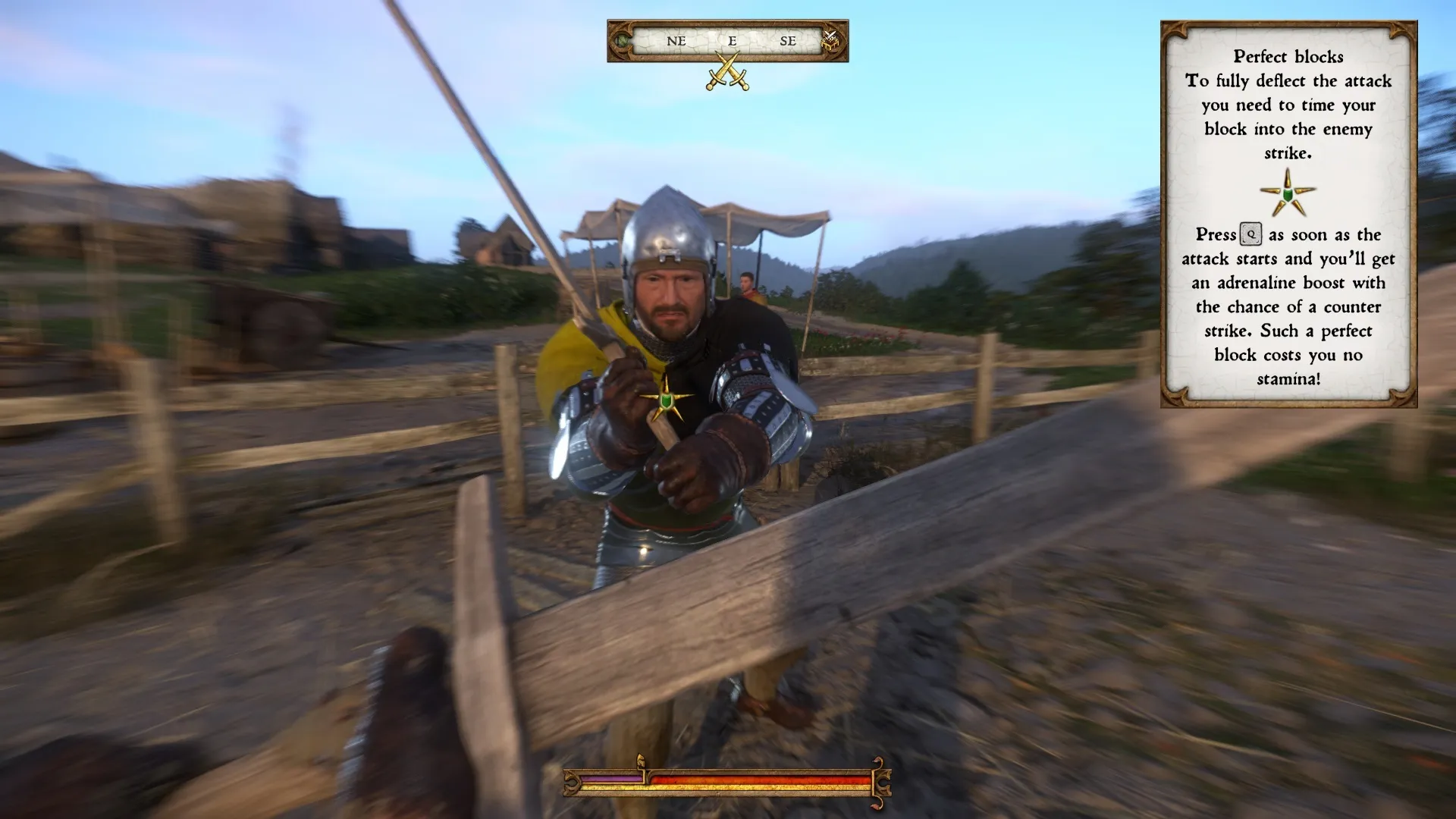
What this means in practice is that at any given moment the player can execute five different slashes plus a jab positioned in the centre. It allows you to hone in on an enemy and disable their arms, making it harder for them to attack. Beyond that, you can attack at a consistent pace, weaving between jabs and slashes from different angles to fake out an opponent and get a hit in, and to execute different combos and patterns. It makes melee combat far more tactical, requiring you to observe your opponent and look for an opening. Button mashing will occasionally get lucky and see some success, but there is a lot more resistance to that approach. Real strength and progression come from learning to read your foe, the weapon they use, and the different types of swings and patterns available to counter them. It can feel like a lot of friction and it will turn off plenty of players, but this component of KCD is genuinely unique, and few other games feel like it in how combat and the systems built around it are designed.
There is one point of contention that comes up regularly when discussing KCD's combat, and that is how it handles multiple encounters. Early on there is absolutely a point of friction, largely because the player is both ill-equipped and not ready for that fight. Over the course of a playthrough you acquire better armor and swords, but more importantly better skills and combos, which help with these encounters even if they can still feel somewhat awkward in the late game. In a lot of ways KCD's combat does feel built around singular encounters, though I found real enjoyment in the challenge of facing multiple enemies, and particularly in the ways you can isolate a fight down to one or two opponents rather than wading into five at once.
Interactive and Immersive Systems
Another cornerstone of Kingdom Come: Deliverance is how reactive and interactive the world is, down to a granular level where Henry's appearance and smell impact how NPCs interact with him. Walk through a town covered in blood and people will respond accordingly, some avoiding you outright. Wander around at night without a torch and the guards will grow suspicious, and can even arrest you if you refuse to pull one out. These subtle details make the world of KCD feel real and authentic, adding a layer of simulation to the equation.
What makes this satisfying is that the more a particular skill is used, the more it levels up, and that extends to social skills too, right down to getting drunk and learning to hold your liquor. These variables, whether being a social drunk or coming across as more noble or more perceptive, then feed back into the choices available to you.
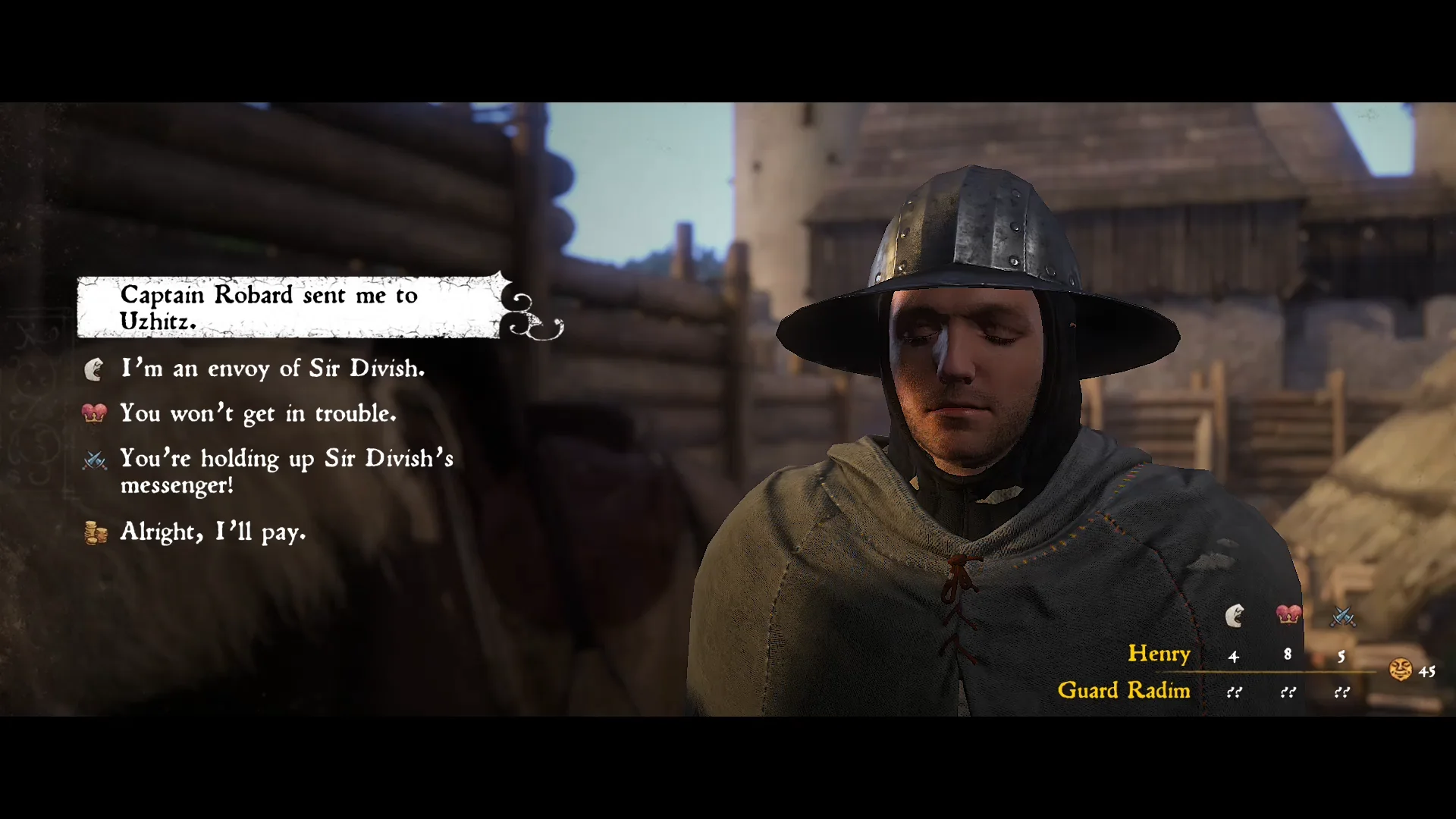
There is an endless level of cause and effect at play here. It might turn some people off, but for anyone looking for an RPG with real depth in its systems and in how player actions interlock with those systems, KCD keeps rolling consistently. You may fail individual skill checks or objectives, but the game continues and branches forth, rolling further and further, and that makes each playthrough feel distinct. It recalls the flexibility of something like Baldur's Gate, though the texture is different. It feels like living out a day-to-day life, taking on odd jobs alongside main story objectives, with the game offering solutions and quirky approaches at every turn, often rolling the dice against your own stats and skillsets.
Some of these interactive systems can also cause friction and annoyance. Lockpicking, for instance, was an absolute chore to get to grips with, and never really got good at it. Then there is Savior Schnapps, a craftable consumable that allows the player to quick save on the fly rather than saving only at a rest spot. Personally I don't mind this setup, since it prevents you from being able to save the instant a threat appears, and with that in mind it changes how you move through the world, especially at night or in the face of conflict.
It sounds absurd on paper because it should not be fun, but I've legitimately spent multiple in-game days collecting flowers to level up herbalism and unlock new plants to feed into alchemy.
Exploration
Side Quests & Activities
There is no better place to start on exploration than the side content available in the world. Kingdom Come: Deliverance splits it into two categories: side quests, which are unique storylines with their own set of choices, some of which can be failed or end differently, and activities, which are repeatable and closer to the more typical fare of the genre.
The activities work as bite-sized misadventures. They are light on story but fun, and they often push you into different pockets of the world, whether that means brawling for money with some guys outside Rattay or taking up your duties to clear out bandits, which can be genuinely challenging early on.
The side quests are what you love to see in an RPG. They are their own narratives tackling the happenings of the world, some branching off the main story, others waiting to be stumbled upon. There are even tipsters in the various towns and cities, innkeepers or traders, who can be asked whether word is going around about anyone needing help, which sets you off in the right direction.
One standout quest will have you following a group of grieving women into the woods to commune with the dead, mixing something genuinely creepy with a streak of comedy. KCD is full of quests like this, which refuse to boil down to find thing or kill person. Many of them offer multiple routes to the desired outcome and carry interesting stories with them, and getting lost in those rabbit holes is one of the game's real pleasures.
Choice
Plenty of games have been praised over the years for their approach to choice in an RPG, with releases like Baldur's Gate 3 leading the conversation. On the flipside, many have lamented the illusionary sense of choice and watered-down decisions found in beloved RPGs such as the base release of Cyberpunk 2077, or in a Bethesda game. Bethesda is what you will hear referenced most often when discussing Kingdom Come: Deliverance, since there is a lot of overlap in how both approach RPG systems and the freedom of player expression they facilitate. The common complaint about recent Bethesda titles is that choices carry some degree of narrative implication, but the player's build, skillset or traits exert no real leverage, or are so accessible that your character ends up a jack of all trades, hollowing out the strengths and weaknesses of the character sheet.
All of that is prelude to the point that choice in Kingdom Come: Deliverance is robust, and depicts a world that feels truly reactive, where things happen outside of speech checks and conversations. Even within those skill checks there are different approaches to lean on. In conversation you can lie, persuade, or use a sense of nobility to gain an edge. But pulling off a lie is not simply tied to a charisma stat. It is tied to your clothing, and to how recently you have washed. It might sound like it hedges too heavily on simulation, and for some players it will, but it makes the world and the assessments townsfolk make of you feel grounded and realistic.
Choice also extends well beyond dialogue. Take the side quest mentioned earlier, where a group of women were suspected of performing a ritual in the woods. There is a way to confront them directly, but you can also follow the NPCs at night, observe what they are doing, and confront them that way, which leads to its own set of events and choices best left unspoiled. Even before that, being caught while following them delays the quest.
It is a bold claim, but in a lot of ways KCD feels like a grounded simulation of a real living world while still juggling an element of video game design that stops it becoming a slave to realism. This is a game where being under the influence of alcohol impacts your interactions, not just as a stat but in the way Henry converses, slurring his words, and at the same time it can open up new avenues and opportunities for him.
The Call to Explore
With that pretext established around choice and role-play, it is worth elaborating on how Kingdom Come: Deliverance's open world calls the player to explore the many towns, forests and hidden nooks of 15th century Bohemia. Start with the towns. As already covered, Henry's appearance and upkeep affect the world around him, but there are also many activities to take part in that lead down different paths, some narrative-driven and others emergent. There are fist fights for cash. There are tournaments that occur once a week in-game, pitting you against skilled fighters wielding the full plethora of weapons the game has to teach. There are jobs that require stealing items, tapping into the stealth and thievery skillsets, and forests full of wildlife you can hunt with a bow to improve your archery.
Kingdom Come: Deliverance is a thrilling world to explore, and acquiring a horse, being let loose and slowly mapping out the region feels fantastic. Part of the charm is how threatening the world feels, especially in the early hours when Henry is still weak and the player is figuring out combat at the same time. The risk of being ambushed or stumbling upon a bandit camp is real, and those bandits pose a genuine threat while also yielding valuable rewards, rewards that stay relevant well into the later parts of the game. Exploration also feeds directly into progression, since so many of the activities out in the world level up skillsets with tangible in-game benefits, all contributing to a holistic growth in Henry that can actually be felt. Hunting in the woods is one. So is collecting flowers to improve herbalism, then mixing those flowers through alchemy to produce potions with real effects, one of which is the ability to save the game.
Gameplay Systems
Progression through Interaction
The interplay between KCD's gameplay and its sense of immersion is coupled with its progression systems in a way that feels unique. The game places a strong focus on interaction, particularly with the different skills and trades you participate in, and those trades are manual in how you engage with them, with each one feeling meaningful in its progression. These systems can look arduous, and getting your head around them takes time, but proficiency arrives through practice.
Across every form of growth there is a sense of action pushing you forward. What you choose to do is what you are rewarded for, and that relationship permeates all of Kingdom Come: Deliverance's systems. That progression loop many love in a Bethesda game, levelling up a skillset by using the skillset, is the bread and butter of KCD's progression too.
The big question is what Kingdom Come: Deliverance wants the player to feel. For me, the answer was that every little accomplishment, every little task, was earned. Want to refine your weapons? Do it manually. Want to fast travel? That consumes hours of the in-game day, with no guarantee you will not be ambushed along the way. Quests and side activities can have windows that close, and failing to act in time means missing them entirely. Everything about this experience is built around immersion and realism, and once it clicks with your rhythm, there really is nothing else quite like it.
What separates KCD and carries the most weight in making that growth feel impactful is where the player starts and how they are allowed to grow. Every action feels manual and interactable, and through those simulated interactions it feels like work put in, work that moulds and shapes Henry based on your actions. You start as a ham-handed pleb, inept with a sword, unable to read and all round ineffective, and the world reciprocates that in the early to mid hours. Through growth and knowledge you become the deft swordsman, the silver-tongued charmer and the well-versed jack of all trades, capable of setting out and leaving a mark on the world.
Equipment plays into progression too, governing how well-protected you are and how much damage you deal, but not through arbitrary numbers or statistics so much as through practicality. Chain mail and metal armor let you sustain more damage and protect against vital attacks, but they also make more sound, making stealth and getting the drop on an enemy harder to pull off. By the end of the game you still will not have an all-encompassing set of armor that makes you feel like a god. You still have to think, swap and adapt to each situation. It is the mixture of acquired knowledge, better-suited gear for the occasion and the culmination of learned skills that fuse together to make you feel more well travelled than you were at the start.
Visuals and Sound and Presentation
Sound
The score for KCD is an absolute banger, era-appropriate and genuinely effective at setting the tone for the many situations you find yourself in, whether that is getting drunk off your face at the local tavern or setting out into the fog of war. The more day-to-day tracks are especially catchy and fit the kinds of escapades you will get up to. It is primarily a mixture of medieval-inspired orchestral pieces and folk, with flutes and lutes that sell the period and deepen the immersion.
One of the major things carrying Kingdom Come: Deliverance is how solid the acting and performances are. Tom McKay's performance as Henry sells an endearing character you cannot help but cheer for, and it makes following his journey that much better. Luke Dale as Hans is equally charming, and the two performances create an interesting dynamic between the characters.
On the sound design front, the feather in the cap for KCD's immersion is how it uses sound within the game. The clanking of blades, the wind blowing, the sound of wildlife in the distance at night, all invoke a feeling and a mood. The clinking of blades creates a rhythm and a synergy with the combat, and it lends to the realistic, grounded immersion Warhorse is trying to instill. There is also a direct interplay between sound design and stealth. The clothes you wear can create more noise and alert enemies, while enemies within a reasonable proximity can be heard from a distance, either chattering or moving around, which makes sound awareness a viable tool.
Visuals
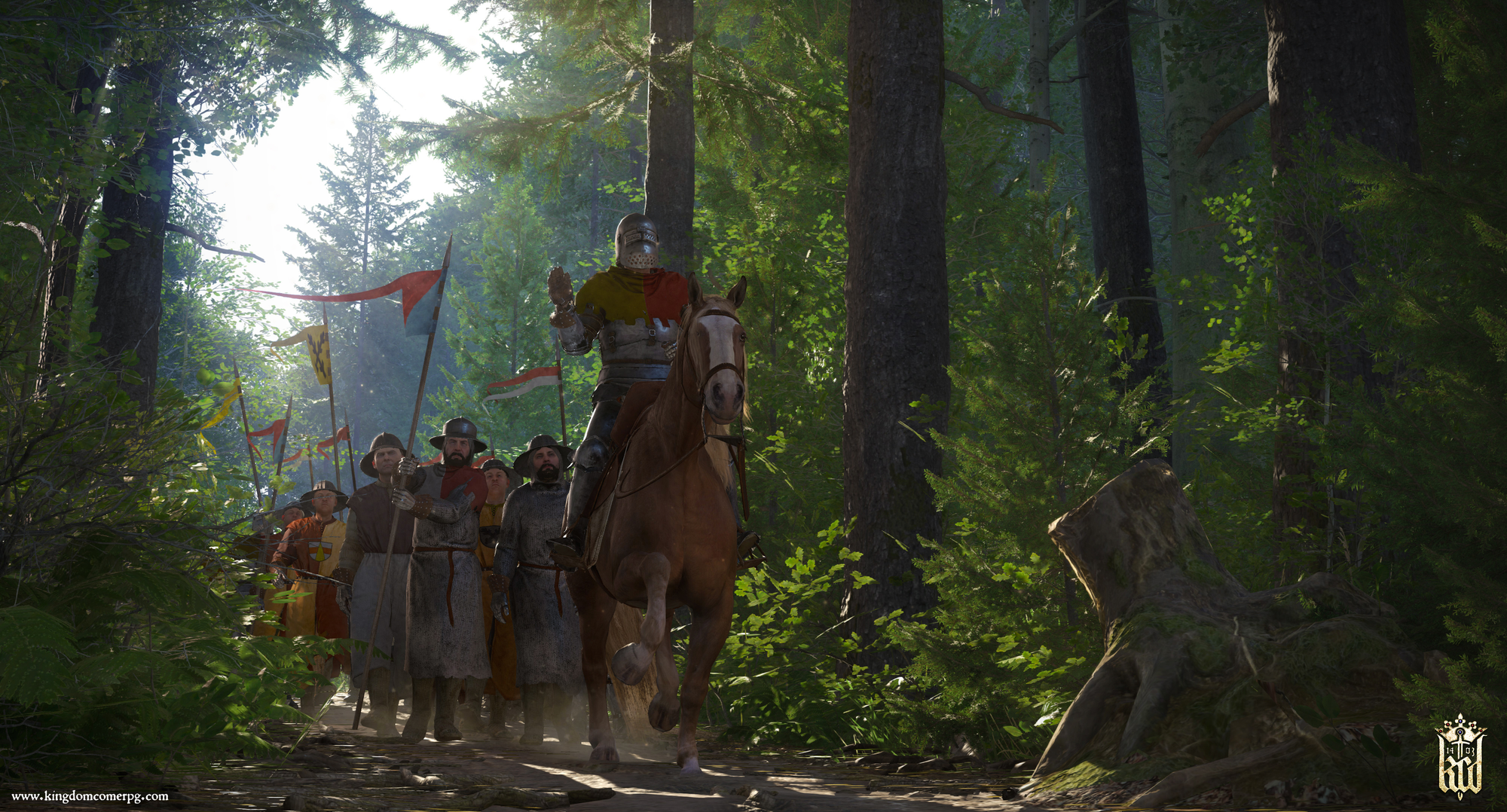
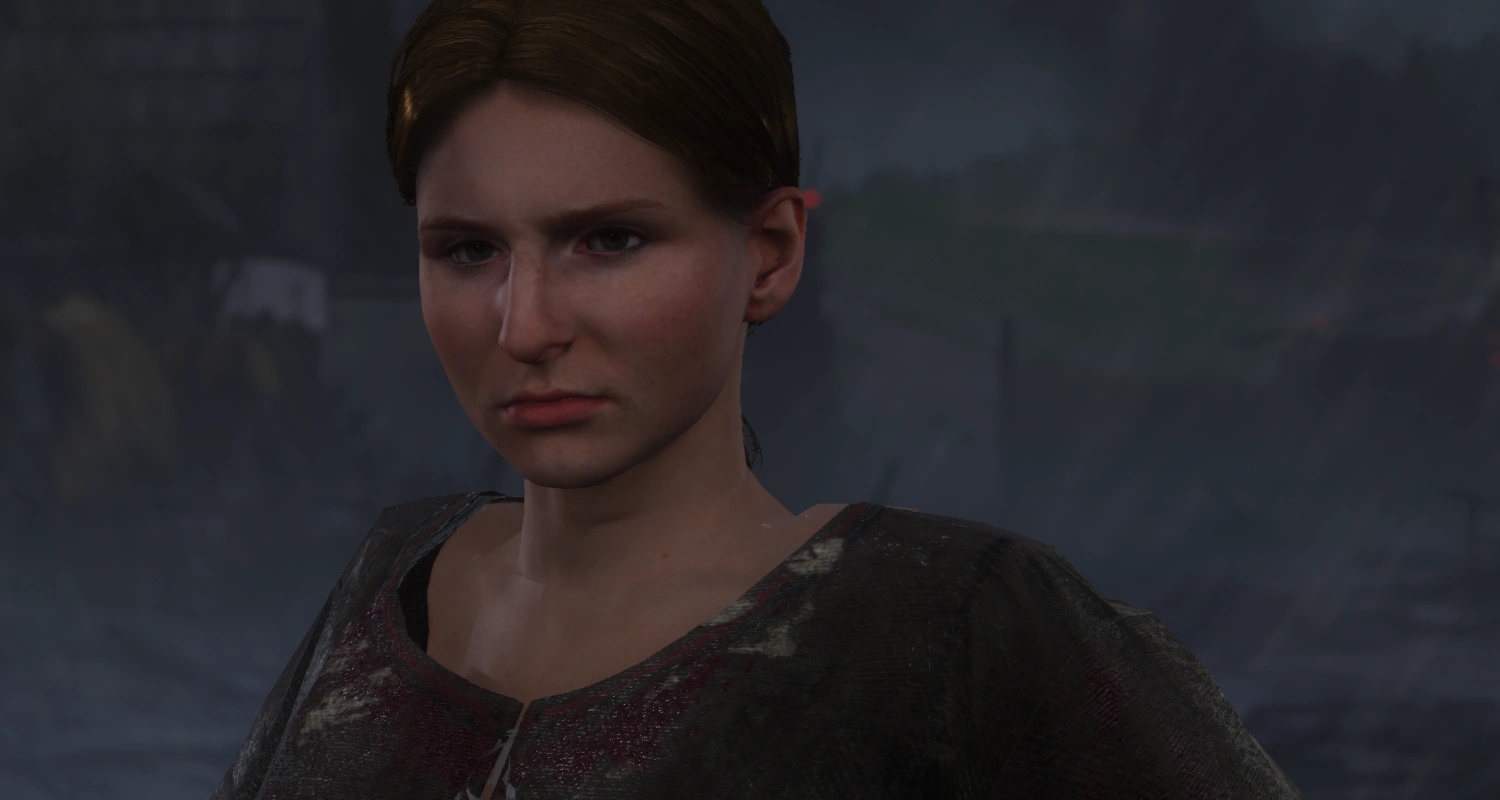
Kingdom Come: Deliverance is a pretty game. Running on CryEngine 3, it has a relatively realistic look and feel that lends itself to a grounded world and makes Bohemia feel real and lived in. For a game that released back in 2018, it looked strong at the time and still holds up in 2025. It is not just the fidelity, though. It is the commitment to realism, the feeling of riding into a small farm town with windmills, stables and shacks, juxtaposed against stone fortress cities that feel larger in their stores, taverns and crowds. The clothing people wear, the different armor, the flags flying for a city, these all provide a sense of identity to the major settlements. The visible split between peasants and nobles is part of what makes this RPG feel closely tethered to history and makes the world it depicts come across as grounded.
Formidable Foundations
It is worth looking at the original in retrospect, with the sequel now released. Many people adore the sequel, and much of what it accomplishes is built off foundations laid by the first game. Kingdom Come: Deliverance is still a worthwhile experience in 2025 even alongside KCD 2, because the groundwork, the blueprint set out in the original, is what the sequel fleshes out and expands upon. There is something unique and full of heart in this first game, and there are elements of its combat that I still find more distinct and satisfying by comparison to its successor.
Warhorse understood what so many people loved in RPGs, particularly Bethesda's go-anywhere, learn-by-doing approach to exploring and evolving with the world. What makes Kingdom Come: Deliverance special is its period-piece aesthetic over fantastical roots, along with a strong commitment to simulation and realism. Reactions from townsfolk and guards feel real. The mastery of swordplay feels real and mechanical, with combos and manoeuvres that turn each fight into a test of skill. A wealth of systems feed into that simulation and make Henry's journey, struggles and progression feel interwoven with the player's own journey through the world, and unlike many other RPGs you really feel it here, given how rough and bottom of the barrel the starting point is.
All of this is to say that these systems and this approach to RPG gameplay are familiar on the surface but unique and interesting in their own perfect way. There really is not another game quite like KCD, and despite some rough edges and systems that could use polish, the foundations this series is built upon are something special. Given where the series would go next, it is no surprise how astonishing that first blueprint turned out to be.
Conclusion
Now bringing this whole video together, Kingdom Come Deliverance is a unique and satisfying experience that is rough around the edges, it comes with friction that may turn off some players, but for those who click with those systems are in for unorthodox manual combat system, brutal start where you are weak, illiterate and everything is stacked against you and make it out into the open-world where the world is yours to tackle and overcome. There are some rough edges with how these systems may work, a lot of up hill battles in terms of conquering this game, and patience that comes with growing in a way that is unconventional by comparison to most RPGs, but both the journey and the destination are one that is worth seeing and experiencing because unlike a lot of RPGs where the steady upward scale to becoming unstoppable is feels like a natural conclusion to playing the game, KCD's is something that feels earned, and that coupled with a endearing and charming story is enough to make Kingdom Come Deliverance a great experience, and it makes me excited to see how Warhorse built on this in the critically acclaimed sequel.
Thanks for reading.
- Incredible depth in its approach to RPG systems, that actually have an impact on how events and moments in the world play out.
- Unique combat that makes learning how to approach melee-combat and encounters feel challenging and strategic.
- Skillsets like botany, hunting or using many of the different weapons have great progression, that interwines with you learning how to engage with the skill, along with leveling up the skill.
- Still evident bugs that can break quests or immersion at time, sparse but present.
- Systems like lockpicking are awkward and frustrating to engage with. They don't have a learning curve and highlight the weakness in some skillsets.